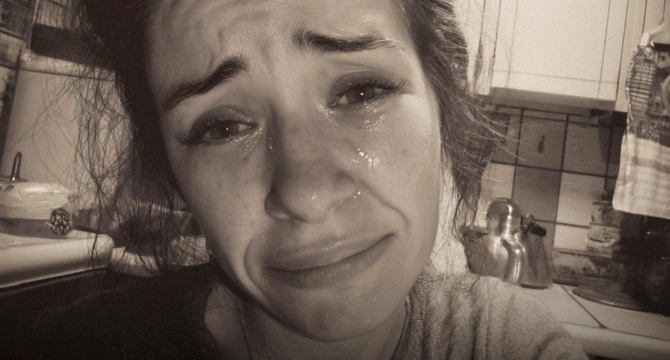
I’m 26, and for as long as I can remember, I’ve been on my own.
Not in the dramatic, movie-scene way people like to romanticize. Mine was the kind that starts in foster homes, in rooms with borrowed blankets and secondhand furniture, where you learn very early that comfort is temporary, and attachment is expensive.
I grew up in a foster family, never knowing who my real parents were or why they left me. Every version of the story hurt differently. Maybe they were too young. Maybe they were cruel. Maybe they were desperate.
Maybe I had simply been too easy to let go.
By the time I turned 15, I had already started working and refused to depend on anyone.
That sentence sounds clean when I write it out like that. It was never clean while I was living it. It looked like skipping lunch to save money.
It looked like pretending not to mind hand-me-down shoes that pinched my toes. It looked like smiling when people said, “You’re mature for your age,” because it was easier than telling them maturity is what happens when no one comes running when you cry.
I got good at not needing much.
Or, at least, I got good at making it look that way.
The neighborhood where I grew up was ordinary, with narrow streets, patchy sidewalks, and small homes pressed close together.
But just a few streets away, the road curved upward toward another world.
There was a mansion there. Everyone knew it.
It had tall iron gates, trimmed hedges, white stone columns, and windows that caught the light in a way that made the whole place look unreal. As a kid, I used to slow down when I passed it and stare through the bars. It felt like the kind of place where no one ever worried about rent or food.
At 18, I got a job as a housemaid there.
I still remember the first day I walked in through the service entrance, wearing shoes that were too stiff and a blouse I had ironed three times because I was terrified of looking careless.
The house was bigger inside than it looked from the road. Everything was in its place.
That was where I met Caleb and Vivienne.
The family living there was distant but polite, and over time, I got used to being invisible in their perfect life.
That is the simplest way to put it.
Caleb was one of those men who never raised his voice because he didn’t have to. He had a calm, clipped way of speaking that made everyone around him stand straighter.
Vivienne was elegant in a way that made me instantly aware of every wrinkle in my uniform. She was never unkind, but she was never soft either. They both treated me well enough.
But still, there was something about the way they looked at me.
I would be dusting the bookshelves in the study and glance up to find Vivienne watching me from the doorway for half a second too long. Or Caleb would hand me a tray and hold my gaze as if he were trying to remember something.
Once, Mrs. Dalloway, the longtime house manager, caught me noticing it.
She was 58, straight-backed, quiet, and impossible to read. She had worked for them forever and seemed to know every rhythm of the house before it happened.
“Is something wrong?” I asked her that day.
“Not everything strange is dangerous, Iris,” she told me.
That answer stayed with me because it was not an answer at all.
I told myself that I was imagining things. I told myself that rich people were odd. That was easier than considering any other possibility.
So I kept working.
Years passed like that.
I learned which floorboards creaked and which flowers Vivienne preferred in the dining room. I learned Caleb liked his tea exactly four minutes steeped. I learned Mrs. Dalloway noticed everything and commented on almost nothing. I learned how to move through expensive rooms without leaving any trace of myself behind.
And all the while, I kept the old story intact: I had been abandoned, unwanted, and forgotten.
It was easier to survive that version than to hope for anything else.
Until yesterday.
I was coming home from work when a postman stopped me right at the gate.
I had never seen him before. He was older, with silver at his temples. Later, I learned his name was Elias, but in that moment, he was simply a man standing between me and the rest of my life.
He looked at me strangely, like he already knew who I was, and handed me a worn, crumpled envelope.
“There’s no mistake. This is for you,” he said quietly.
My name was written on it, and there was no return address. The paper looked old enough to break if I gripped it too hard.
My hands started shaking when I noticed the date.
It was dated the day I was born.
For a second, the whole world went muffled.
I looked up at him. “What is this?”
Elias held my stare, calm and deliberate. “Something that was always meant to reach you. Just not before now.”
Before I could ask anything else, he gave a small nod and walked away.
I stood there outside the mansion gates with the envelope in my hands, feeling like I had picked up a live wire.
Then I opened it, my heart racing.
The paper was fragile, as if it had been waiting for years to be found. I unfolded it slowly and read the first line.
And in that moment, I realized the truth — my parents had been watching me my entire life.
The letter began without apology.
“If you are reading this, you have reached the age at which the arrangement made for your protection can no longer be justified without your knowledge.”
I read that sentence three times before the words even settled into meaning.
Arrangement. Protection. Knowledge. It sounded like legal language, not family. Not anything a daughter should find in a letter dated the day she was born.
Then came the first blow.
“Your biological parents are alive.”
I felt sick, but I kept reading because stopping felt impossible.
“They have remained in close proximity throughout your life.”
The wealthy couple I worked for. Caleb and Vivienne. They were my biological parents.
The next pages were copies of documents showing payments made quietly over the years to foster placements, educational accounts, and medical coverage.
There were legal instructions, signed authorizations, notes directing that I be kept under a different identity, notes confirming oversight, and notes confirming distance.
They had arranged for me to grow up nearby under supervision.
I had to sit down on the low stone edge beside the gate because my legs stopped belonging to me. The world kept going while mine was being cut open.
I kept reading.
The postman was acting under instructions set years ago. Elias had been entrusted with delivering the letter only when I turned 26. Not sooner. Not when I was a child. Not when I was crying myself to sleep in houses that smelled like other people’s dinner. Not when I was 15 and working because there was no one to trust.
Now. Only now.
A rage I had never let myself feel rose so fast it made me dizzy. They had watched me struggle while living in luxury.
At that point, every memory inside that mansion changed shape all at once. Caleb’s measured glances. Vivienne’s long silences. Mrs. Dalloway’s careful answers. The moments I thought I imagined. I had not been invisible. I had been observed.
Then came the explanation, and somehow it made it worse.
At the time of my birth, there had been an inheritance dispute tied to Caleb’s family estate. If my existence became public, I could be used to challenge control of the assets.
The letter used phrases like legal vulnerability and target of leverage. The message beneath them was simple enough: I had been hidden because I was dangerous to the wrong people and useful to the wrong people.
Maybe even unsafe.
So they created another identity for me, arranged my placement, funded my care, and monitored from a distance.
They were controlling me from the shadows.
They didn’t leave me. They kept me. And that difference should have comforted me.
But it didn’t.
Because nowhere in the letter did they say they could not bear to lose me. Nowhere did they say they loved me too much to risk my life. The closest they came to tenderness was a line written in Vivienne’s hand at the bottom of one page:
“We believed this was the only way to keep you safe.”
By the time I reached the final page, I was crying so hard I could barely read.
The last confirmation was the cruelest of all.
They had only chosen to reveal the truth after observing me for years and deciding I had become stable, self-sufficient, and emotionally capable of receiving it.
Even while I worked in their home.
Even while I cleaned their rooms, carried their breakfast trays, and stood three feet away from the people who had made me and hidden me.
They had been judging the right moment to tell me I was theirs.
Like I was a problem to be timed.
I don’t know how long I sat there outside the gate. At some point, Noah called because we were supposed to meet for coffee after my shift. He heard my voice and said immediately, “Iris, where are you?”
“I’m outside work,” I said, though I was barely speaking.
“What happened?”
I looked up at the mansion. At the windows that suddenly felt less like windows and more like eyes.
“My whole life just got rewritten.”
He was quiet for a second. “Do you need me there?”
Yes. The answer was yes in every way a person can need another person without wanting to admit it.
Noah was my closest friend, my coworker from my second job, and the one person who never tried to fix me by pretending my past made me inspirational. He just stayed.
“Yeah,” I whispered.
“I’m coming.”
When the call ended, I looked back down at the papers in my lap. I unfolded the first page again and read the line that had changed everything.
Your biological parents are alive.
Then I lifted my eyes to the house and understood something I had never let myself imagine.
I had not grown up abandoned. I had grown up under their gaze.
By the time Noah arrived, the light had shifted, and the mansion windows had gone gold with evening. He found me sitting outside the gate with the letter spread across my knees like evidence from a crime scene.
He read enough to understand, then stopped and looked at me.
“They’re in there?” he asked softly.
I nodded.
He turned toward the house and swore under his breath.
That almost made me laugh, which was such a strange thing to feel that it hurt. I wiped my face with the heel of my hand and stood up too fast. My body felt hollow, as if all my bones had been replaced with glass.
Everything around me looked unreal.
I thought of all the times they had watched me.
When I scrubbed mud from the entry tile after a storm. When I laughed once in the kitchen with Mrs. Dalloway and saw Vivienne pause in the doorway. When Caleb asked, too casually, whether I was planning to take classes. When Mrs. Dalloway pressed leftovers into my hands on holidays with an expression so guarded it now felt like guilt.
“Did she know?” I asked aloud.
Noah followed my eyes. “The house manager?”
I nodded.
I thought of Mrs. Dalloway saying, “Not everything strange is dangerous, Iris.”
Maybe that had been the closest anyone in that house ever came to warning me.
The wind lifted the edges of the papers. Noah took them gently before they could scatter. “You don’t have to go in.”
That was the question, wasn’t it?
Walk back in and face the people who had shaped my life from behind a curtain. Or walk away and leave them standing in the silence they had built.
I stared at the front door and tried to imagine opening it. Tried to imagine looking at Caleb and Vivienne and calling them anything that belonged to me. Mother. Father. Even their names felt contaminated now. Too formal for blood, too intimate for strangers.
Noah touched my arm. “What do you want to do?”
I looked at the mansion one last time and felt the weight of every year I had lived under their shadow without knowing it.
“I don’t know,” I said.
And for once, that felt like the most honest thing I had.
Because the truth was standing right in front of me now, built in stone and glass and carefully tended gardens. Whether I walked through those doors tonight or never again, I could not unknow what I knew.
They had not thrown me away. They had hidden me.
And somehow that hurt in a deeper place.
So, I stood there at the edge of the life I thought I understood, with the house watching and the letter in my hands and the ache of an unlived childhood opening inside me, and I realized some truths do not rescue you when they arrive.
They simply ask what you plan to do with the wreckage.
If someone keeps you safe but never lets you feel loved, is that protection, or just another kind of loss?

 admin
admin