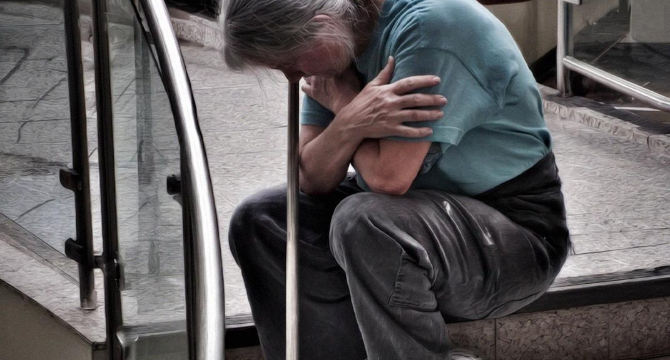
She had spent three decades scrubbing other people’s floors and praying her body would hold out one more week. Then one morning, her bank account changed by seven digits, and before she could understand why, the dead man she had loved seemed to knock on her door.
I’m 53, and my life has never been easy.
I grew up with nothing — no parents, no family, no one to rely on. Some people begin with a home and lose it later.
I never had one to lose.
I learned early how to stay small, how to make myself useful, and how not to expect kindness to last longer than a moment.
When you are young and alone, people call you independent as if it is a gift. It is not. It is what happens when no one comes for you.
I spent most of my childhood moving between temporary rooms and temporary faces. By the time I was a teenager, I already knew the look people got when they were tired of carrying someone else’s misfortune. So I stopped asking for much.
A bed was enough, soup was enough, and work was enough. I told myself enough was safer than hope.
Then I met Thomas.
I was 20, and he was 28, and for the first time in my life, someone looked at me as if I were not a burden or a problem to solve. He was kind and noticed small things.
He remembered if I looked cold. He saved the last good strawberry for me without making a performance of it. He asked questions and waited for real answers.
I had spent so many years bracing for disappointment that at first I did not know what to do with someone gentle.
Once, after we had been seeing each other for a few months, he touched my hand across a diner table and said, “Clara, you look like you’re waiting for me to leave.”
I laughed because I did not know what else to do.
“Maybe I am.”
He smiled, but there was sadness in it. “Then I’ll just have to keep staying.”
He did.
He married me one year later in a tiny ceremony with no family on either side worth inviting. I wore a plain dress. He wore a suit that did not quite fit at the shoulders. We had a grocery-store cake and cheap champagne and one perfect evening in a rented room.
It was still the happiest day of my life.
The only time I ever felt like I truly had something was when I got married. But even that didn’t last. My husband died in a car accident just a year after our wedding. One year… that’s all I got.
After that, something inside me broke.
I kept going, because I had to, but I stopped believing in things like happiness and life. That sounds dramatic, too, but grief is dramatic when it stays.
People think pain is loud, but the worst kind is often quiet. It is getting up because rent exists. It is eating because the body demands it even when the heart would rather refuse. It is folding clothes, washing dishes, taking buses, answering questions, and all the while feeling like the world has made some terrible clerical error by continuing without the one person who made it bearable.
For the next 32 years, I worked as a cleaner in a wealthy family’s home.
Mrs. Whitmore owned the kind of house I used to think only existed in magazines. Three floors, polished banisters, rooms no one seemed to use except on holidays, and windows so tall they made ordinary people feel like shadows.
I came in through the side entrance. I scrubbed floors, washed linen, dusted mantelpieces, cleaned bathrooms bigger than my whole first apartment, and watched expensive lives pass by without ever quite touching mine.
Mrs. Whitmore was distant but not cruel.
She paid on time and never shouted. She remembered my name, which is more than some employers manage. But she represented a whole world I was never invited into.
She hosted dinners with silver cutlery, which I was afraid to hold too tightly. She complained once that the wrong flowers had arrived for a luncheon, and I remember staring at the vases thinking I had once eaten toast for three days because I could not afford eggs.
Every day, I watched other people live the life I could never have.
I barely survived because I had no savings or support. Just endless work and exhaustion.
If I made enough to cover rent, something else broke. If I stayed healthy, the landlord raised the price. If I managed one quiet month, a bill arrived with my name on it and no mercy in it.
I told myself I could handle it because I had handled everything else. That is another lie poor people learn to live on. Not that we are okay. Just that breaking down is expensive.
And recently… even that started slipping away.
My health got worse. It began with dizziness, then pain in my joints, and then a cough that would not leave.
By the time I finally saw a doctor, I was told to rest, take the medication, and avoid physical strain for a while, as if rest were some simple thing I had been carelessly forgetting to do.
I hadn’t been able to work for over a month. Bills kept piling up.
I was drowning, and there was no way out.
I remember sitting at my kitchen table one night with three unpaid notices spread out in front of me and thinking, very calmly, So this is how it ends.
Then yesterday morning, everything changed.
I woke up late because I had barely slept. My chest felt tight, and my mouth was dry. I reached for my phone mostly to check whether the utility company had emailed another warning.
Instead, I saw a notification from my bank.
My balance: $1,000,000.
I stared at the screen, convinced it was a mistake.
I actually laughed once because the number looked absurd next to my name. My hands were shaking as I tried to make sense of it. I refreshed the app. Logged out. Logged back in. Same number.
One million dollars.
It did not feel real. It felt like someone had broken into the wrong account and dropped their miracle on my doorstep by accident.
I spent the next hour calling the bank, but they kept transferring me from one line to another.
I didn’t get any answers or explanations.
One woman told me the deposit was legitimate but could not tell me the source. Another said the account was attached to special release instructions and transferred me to a department that sent me to voicemail. Every hold melody sounded smug.
Finally, a man introduced himself as Mr. Hale.
His voice was formal and careful, like he was walking through a room full of breakable objects. “Mrs. Bennett, I can confirm the funds are yours.”
“Then tell me where they came from.”
“I’m afraid I cannot explain the full circumstances by phone.”
“Can you explain any circumstances by phone?”
He paused for a while, and I heard the sound of papers shifting. “Certain instructions were put in place a very long time ago. Those instructions are being followed exactly.”
“What instructions? By whom?”
“I’m sorry. You will receive documentation today.”
That was all he would give me.
And then…
There was a knock at the door.
I opened it, confused, my heart pounding.
A postman stood there, holding an envelope. He was older, maybe 65, with kind eyes and the grave expression of someone carrying something that mattered.
“This is for you,” he said. “From your husband.”
“What!?” I gasped, snatching the envelope from his hands.
For one wild second, I forgot Thomas had been dead for 32 years. That is what shock does. It takes the impossible and makes the body react before the mind catches up.
The envelope was old. Not yellowed enough to crumble, but aged and carefully kept. My name was written on it in Thomas’s handwriting.
I knew it immediately.
I had not seen those letters in decades, but grief teaches the body to memorize details the mind can barely bear to hold.
Eugene — because that is how he introduced himself when I looked up again — tipped his cap slightly and said, “I was instructed to place that in your hand on this exact date.”
My knees weakened.
“What date?”
He told me.
It was the anniversary of the day Thomas and I met.
For a second, all I could do was stare at him.
Then I shut the door, sat down at the table, and opened the letter.
The first line was enough to take the air out of my lungs.
My Clara, if this letter has reached you, then I was right about two things: time passed, and you stayed.
The letter was dated just three days before the accident that killed him.
I had to stop reading and press my hand over my mouth because my whole body started trembling. His voice came back to me through the page so clearly that it felt cruel. Thomas had always written like he spoke — simple, thoughtful, and precise.
He told me first that he loved me.
Not in some sweeping poetic way. In his way. Clear and steady.
He wrote that if I were reading this, then he had not been able to keep his promise to stay. He wrote that he was sorry for that more than any paper could hold.
Then came the part that made me gasp.
Before we got married, Thomas had invested a small amount of money. Just savings from years of work, placed into a long-term plan through an old family connection in finance. He had kept adding to it quietly, even after the wedding, because he wanted us to have protection someday.
After the accident, the investment remained untouched because of instructions he had already filed.
That was where Mr. Hale and the bank came in.
Thomas had arranged a structure so specific it made me cry just reading it. The money was to remain inaccessible for more than 30 years.
It would compound, mature, and only be released under strict conditions. I had to still be alive, the account had to show real need, and certain verification had to be made.
And on the day all conditions were met, the bank was to release the funds in full and ensure the letter reached me.
He had planned this before he died.
And he didn’t do it because he knew he would die, but because he knew life could turn cruel without warning, and he did not trust the world to be gentle with me if he was not there to do it himself.
Another sheet inside the envelope contained copies of his written instructions.
If Clara is fortunate and secure, let this continue to grow until she may choose it freely.
If Clara is living but in hardship, release all of it when the term is complete.
Do not notify her early. She would spend it surviving. I want her to have something left when surviving has taken too much.
I had to put the pages down then because I could not see.
All those years I had cursed the universe for leaving me nothing, Thomas had been taking care of me in the only way he could.
He had even thought about my worst years.
The time-based cruelty of it hit me first. Thirty-two years. Thirty-two years of struggling while the answer sat somewhere beyond my reach.
But as I kept reading, I understood why he had done it.
If the money had come to me at 21, I would have burned through it in rent, grief, bad decisions, desperation, and people who smelled weakness. If it had arrived at 30, I would have tried to stretch it and failed. Even at 40, I might have handed pieces of it to every emergency that came knocking.
Thomas knew me. More than that, he knew hardship. He knew that when people are drowning, they do not build futures. They grab whatever floats.
So, he protected it from me as much as for me.
Mr. Hale called again an hour later.
His tone was the same formal one, but now I heard something softer under it. “Mrs. Bennett, have you read the documents?”
“Yes.”
“Then I can confirm that the account matured this week and that the need verification was completed under the terms your husband set. The funds are unrestricted as of now.”
I swallowed hard. “He planned all this?”
“Yes, ma’am. Very carefully.”
“Did he… did he know he was dying?”
“No. The arrangements predated his death, but he amended instructions shortly before. The timing of the release remained unchanged.”
I thanked him, though the words felt too small.
After that, Eugene knocked one more time. I had not realized I had left the chain on the door and the second envelope on the floor outside. When I opened it properly, he stood there with his hat in both hands.
“He spoke about you once,” Eugene said.
I stared.
“He said you were the strongest person he knew, but that strength wasn’t the same thing as being spared.”
That broke me.
Because that was Thomas exactly. He never mistook survival for ease. He knew the difference.
When Eugene left, I sat back down at the table and read the letter again from the beginning.
Then again.
By the third time, I was not just crying for what had arrived. I was crying for every year I thought I had been completely alone.
The money did not erase anything.
It did not give me back my husband, my youth, my health, or the decades I spent choosing between medicine and groceries. But it changed the shape of those years. Not the suffering itself. The meaning around it.
I had told myself for so long that love left when Thomas died.
It hadn’t.
It had gone underground into forms and signatures. Into instructions at a bank. Into a sealed envelope guarded by time. Into a plan so patient it outlived my bitterness.
He couldn’t stay with me… but he made sure his love did.
That was the part I could not stop thinking about.
No one had ever planned for my future before. I had always been an afterthought in my own life. Something to be managed, employed, or overlooked. Thomas had been the only person who saw me and thought ahead.
Today, I still live in the same apartment, the radiator still rattles, and my medicine still tastes awful.
But the panic is gone.
I paid the overdue bills this morning. I called the clinic and booked the tests I had been putting off. I even phoned Mrs. Whitmore and told her I would not be coming back to work.
She was silent for a moment, then said, “I hope whatever has changed is something kind.”
For once, I could answer honestly.
“It is.”
I do not know yet what I will do with a second chance at stability.
I only know what it feels like to finally stand still without fear chewing at my ankles. I know what it feels like to buy food without adding the numbers twice. I know what it feels like to think, for the first time in decades, “Maybe I will be all right.”
Last night, before I went to bed, I put Thomas’s letter in the drawer beside me, where I could reach it if I woke afraid.
Old habits die hard.
But before I turned off the light, I touched the envelope and whispered, “You kept staying.”
And somehow, after all these years, that was true.

 admin
admin