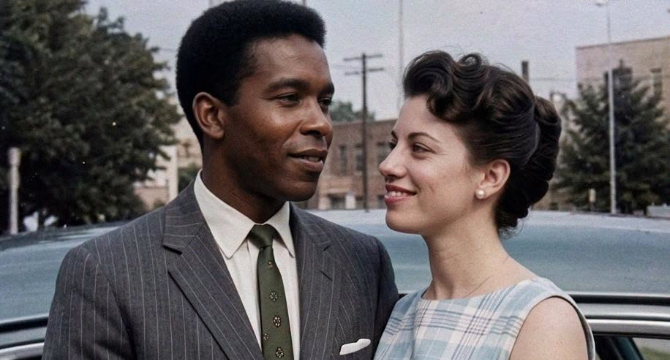
My father burned every letter from my first love. Seventy years later, that man stood on my porch holding the one message that survived, which proved neither of us had known the truth.
“Grandma?”
Grace’s voice came from the hallway.
There was something strange in it.
Not fear exactly.
More like she had opened the door and found someone who belonged to another century standing on the porch.
“There’s someone here for you,” she called. “He says his name is Samuel.”
My teacup stopped halfway to my lips.
For 70 years, I had not said that name aloud.
Not when my father died.
Not when my husband died.
Not when my children asked whether I had loved anyone before their father.
Samuel.
At 88, I thought I had buried that name so deeply there was no one left alive who could dig it up.
I set down the cup.
It rattled against the saucer.
“I’m coming.”
My knees had been unreliable for years, but that afternoon they felt 18 again.
Weak.
Terrified.
I walked into the hallway holding the wall.
Grace stood beside the open front door.
And there he was.
An old man in a pressed Sunday suit.
His white hair was neatly cut. A brown hat rested in one hand.
In the other, he held a yellowed envelope.
Its corners were soft, as though it had been opened and folded a thousand times.
He stared at me.
I stared back.
Time did something strange.
I saw the 90-year-old man.
But I also saw the 20-year-old boy who used to lean against the doorway of his uncle’s repair shop across from my father’s bakery.
The boy who could make me laugh with one look.
The boy my father ordered me never to see again.
Samuel’s mouth trembled.
“Hello, Ellie.”
Nobody had called me Ellie in decades.
I gripped the wall.
“Samuel?”
He smiled.
“I believe your father missed one.”
He lifted the envelope.
My knees nearly gave out.
Grace caught my arm.
“Grandma?”
“I’m all right.”
I wasn’t.
Samuel glanced at Grace.
“Maybe she should sit down.”
“I can decide when I need to sit.”
His eyebrows rose.
Then he laughed softly.
That laugh.
Seventy years disappeared.
I started crying.
Samuel looked down.
“Still stubborn.”
“And you’re still rude.”
Grace stared between us.
“Should I make coffee?”
Samuel looked at me.
“If she’ll let me inside.”
For one ridiculous second, I looked past him toward the street, afraid someone might see us together.
That was how deeply my father had planted the fear.
Even after 70 years.
Even after his death.
I stepped aside.
“Come in.”
Samuel sat across from me in the living room, still holding the envelope.
I could not stop staring at it.
“What is that?”
“You know what it is.”
“No.”
His expression changed.
“I suppose you don’t.”
My hands began shaking.
Samuel noticed.
“You never got it.”
It wasn’t a question.
“No.”
He closed his eyes.
“I spent 70 years thinking you had.”
I swallowed.
“Thinking I had what?”
“Read this.”
He handed me the envelope.
I tried to take it, but my fingers shook too badly.
It slipped.
Samuel caught it.
“I can read it.”
I nodded.
He carefully unfolded the paper.
Then he closed his eyes.
He didn’t look at a single word.
“Dear Ellie,” he began.
My breath caught.
“I have written 11 times, and I don’t know if any of my letters reached you. Otis says I should stop because your father will cause trouble. Maybe he’s right. But I need to try once more.”
Samuel’s voice grew rough.
“I have saved 67 dollars.”
Grace covered her mouth.
“I bought two bus tickets to Philadelphia. My cousin Leon says there is work for me at a watch shop, and he knows a woman who rents rooms to young couples.”
I stared at Samuel.
He knew every word.
“I know 67 dollars isn’t much. I know Philadelphia isn’t heaven. People will still stare. Some will say worse things than stare. But I think we’d have a chance to become ourselves there.”
Tears blurred my vision.
“Meet me at the Savannah bus station on the first Sunday of November. The bus leaves at 8:15, but I’ll be there from six.”
I covered my mouth.
“No.”
Samuel’s voice cracked.
“If you don’t come, I’ll understand it means your answer is no. I won’t ever bother you again.”
He opened his eyes.
“But I’ll wait until the last bus, Ellie. I’ll wait.”
Silence.
I looked at the letter.
“You memorized it.”
“About a week after I wrote it.”
“Seventy years?”
“Seventy.”
I was 18 again.
It was 1954 in a small Georgia town where everybody knew everybody’s business.
My father, Harold, owned the bakery on Main Street.
Across from us was Bell Brothers Repair.
Samuel worked there with his uncle Otis.
He could repair radios, bicycles, clocks, watches, almost anything with moving parts.
The first thing he fixed for me was my bicycle chain.
I was dragging the bicycle home one June morning when he called across the street.
“You planning to carry that thing all the way?”
“I can fix it myself.”
He nodded seriously.
“That’s why you’ve dragged it half a block.”
I pretended to hate him.
He repaired it in three minutes.
When I asked what I owed him, he said, “One slice of that peach pie your father thinks nobody can smell from across the street.”
I brought him two.
By August, I knew I loved him.
Samuel was Black.
I was white.
In Georgia in 1954, that was not merely something people whispered about.
It could become dangerous.
So we were careful.
We passed notes through my friend Ruth.
Met near the river after sunset.
Samuel barely looked at me when other people were around.
But alone, we talked about Philadelphia.
Chicago.
New York.
Places where he claimed people had better things to do than watch who walked beside whom.
Then someone saw us at the river.
My father was waiting at the kitchen table when I came home.
He didn’t shout.
That was the worst part.
He folded his newspaper and removed his glasses.
“You will not see that boy again.”
“I love him.”
My father stared at me as though I had announced I was sick.
“People like us don’t mix with people like him.”
“His name is Samuel.”
“I don’t care what his name is.”
“I do.”
His face hardened.
“It’s him or this family, Eleanor.”
People sometimes ask why I didn’t simply leave.
They ask from lives where an 18-year-old girl can have her own bank account, rent a room, or call someone for help without wondering whether that person will be punished for helping her.
I had 17 dollars.
No job.
No car.
No relative willing to take me in.
My father knew exactly how powerless I was.
After that, letters began arriving.
He burned them.
I watched him.
Eleven envelopes.
One by one into the stove.
“Please, Daddy.”
Another letter curled black around the edges.
“He’ll get over you.”
“I won’t get over him.”
“You will.”
Three months later, I was placed on a train north to marry Robert.
I had met him twice.
He was 27, worked in insurance, and came from what my father called “good people.”
Robert was not cruel.
That almost made it worse.
He deserved a woman who chose him.
Instead, he got me.
But we built a life.
Three children.
Six grandchildren.
Forty-nine years of marriage.
I grew to love Robert in the quiet way you love someone who stands beside you through sickness, mortgages, funerals, and children calling at midnight.
He died nine years ago.
I still miss him.
But some part of me remained 18 beside that Georgia river.
I believed Samuel stopped writing after the 11th letter.
I told myself he had given up.
Maybe found someone else.
Maybe what we felt had only seemed enormous because we were young.
Now he sat across from me holding number 12.
“You thought I said no?” I whispered.
“You didn’t come.”
“I never got the letter.”
“I know that now.”
“You waited?”
Samuel looked toward the window.
“Until 11:40 p.m.”
My legs gave out.
I sat back down.
“Every bus came in, I’d stand up.”
He gave a faint smile.
“There was a girl in a red coat. From behind, I thought she was you.”
I cried harder.
“Why didn’t you come to the house?”
“Your father had already warned Otis.”
I froze.
“What?”
“Harold came to the shop.”
Samuel said my father threatened to ruin Bell Brothers if Samuel came near me again.
He told Otis every white customer in town would disappear.
Then he threatened to have Samuel arrested.
Grace whispered, “Oh my God.”
Samuel nodded.
“Different time.”
“No,” I said. “Same world. Different year.”
He met my eyes.
“What happened after the station?”
“I kept my word.”
“You never wrote again.”
“You said no.”
“I didn’t.”
His eyes filled.
“I know.”
Something inside me broke.
Not because Samuel and I were guaranteed some beautiful 70-year life together.
Maybe Philadelphia would have destroyed us.
Maybe poverty, racism, fear, and two stubborn young people would have lasted six months.
But we should have been allowed to find out.
That was what my father stole.
Not a guaranteed happy ending.
A choice.
“I thought you didn’t fight for me,” I said.
Samuel stared at me.
“I thought you didn’t choose me.”
I laughed through my tears.
“Look at us.”
“Two obedient fools.”
“No.”
I looked at the letter.
“Two frightened children.”
After a while, I asked, “Did you marry?”
Samuel smiled.
“Yes.”
Her name was Lillian.
They married in 1961. She was a school librarian.
They had a son and two daughters.
“Did you love her?”
“Very much.”
I felt relief.
Samuel noticed.
“You thought I spent 70 years sitting at that bus station?”
I laughed.
“You always were dramatic.”
“So were you.”
Lillian died 12 years ago.
Samuel had become a watch repairman in Savannah and owned his own shop for 38 years.
Then I looked at the envelope.
“How did this survive?”
Samuel turned it over.
There was no postmark.
“I thought I mailed it.”
“But you didn’t?”
“Otis took it.”
His uncle had removed the envelope from the outgoing mail after my father’s threats.
Samuel never knew.
Otis had hidden it inside an old toolbox.
“How did you find it?”
“Otis’s daughter found it after he died.”
“When?”
“1978.”
I stared at Samuel.
“You’ve had this since 1978?”
“Yes.”
My anger came quickly.
“Then why didn’t you find me?”
“I did.”
My heart stopped.
“What?”
“I learned you were married. You had three children.”
He looked at his hands.
“I had Lillian and two children by then.”
“You could have told me.”
“Yes.”
“But you didn’t.”
“No.”
“Why?”
Samuel looked at me.
“What was I supposed to say? ‘Hello, Ellie. Turns out you didn’t reject me 24 years ago. Shall we blow apart two families so we can discuss it?'”
Grace looked away.
“I thought knowing would only hurt you,” he said.
I stared at him.
“You made the decision for me.”
“Yes.”
“Like my father.”
The words landed hard.
Samuel flinched.
Then nodded.
“Yes.”
I had expected him to defend himself.
He didn’t.
“I was wrong.”
That mattered.
“Why now?”
He smiled sadly.
“Because we’re 90 and 88. Our spouses are gone. And I got tired of carrying a letter that belongs to you.”
He held it out.
This time my hands were steady enough to take it.
“You came all this way to give me a letter?”
“Mostly.”
“Mostly?”
That old mischief appeared in his eyes.
“I wanted to see if you still wrinkled your nose when you’re angry.”
Grace laughed.
I touched my nose.
“I don’t.”
“You just did.”
For one moment, I was 18.
Samuel was 20.
My bicycle chain was broken.
And nothing terrible had happened yet.
We talked for four hours.
About Robert.
Lillian.
Our children.
The lives we had lived without knowing the truth.
There was no jealousy.
At our age, perhaps you understand something younger people don’t.
Loving one person does not prove you never loved another.
Robert was not a consolation prize.
Lillian was not Samuel’s second choice.
They were our lives.
Real lives.
Good lives.
But Samuel and I had been real too.
Before he left, Grace took our photograph on the porch.
Samuel wore his hat.
I held the letter.
He kissed my cheek.
Nothing more.
There was no need.
The following Sunday, he called me.
We’ve spoken every Sunday since.
Sometimes for ten minutes.
Sometimes for two hours.
Last month, Grace drove us back to Georgia.
The bakery is gone.
So is Bell Brothers Repair.
But the river is still there.
Samuel and I sat near the place where someone saw us together 70 years earlier.
“My father died believing he saved me,” I said.
Samuel looked across the water.
“People can do terrible things when they convince themselves they’re protecting someone.”
I thought about my father.
About Otis hiding the letter.
About Samuel finding me in 1978 and choosing silence.
Different men.
Different motives.
The same dangerous belief that someone else should decide which truth I could handle.
I keep Samuel’s letter beside my bed now.
Sometimes I read it.
Usually I stop at the last line.
I’ll wait.
For 70 years, I thought Samuel had not fought for me.
For 70 years, he thought I had chosen not to come.
Neither was true.
He waited at the Savannah station until 11:40 p.m.
I was already being pushed toward a life someone else had chosen.
We built entire lives around an answer neither of us had actually given.
I don’t spend much time imagining what would have happened if that letter reached me.
At 88, you learn not to torture yourself with alternate lives.
Maybe I would have gone.
I think I would have.
But I’ll never know.
And that is the part that still hurts.
My father burned 11 letters.
Otis hid the one that could have changed everything.
Then time did the rest.
Seventy years is a long time to misunderstand someone you loved.
But Samuel eventually stood on my porch with the truth in his hand.
Some things survive.
Even fire.
Even fear.
Even seventy years.
Sometimes all it takes is one letter nobody managed to burn.

 admin
admin