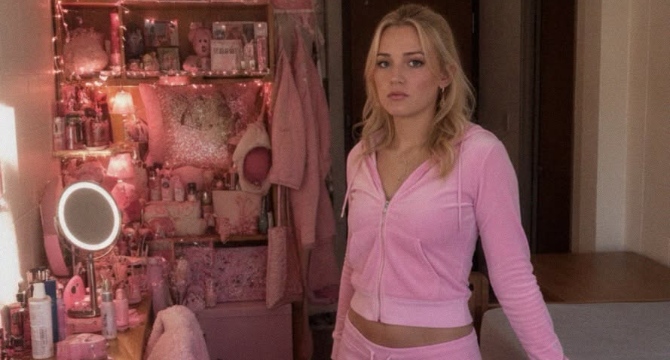
One comment during move-in changed the entire mood of the day. What happened next made me realize that sometimes the fastest way to expose entitlement is to let the wrong person keep talking.
I thought moving my daughter into college would be emotional.
I expected a few tears, too many boxes, and Emma pretending she wasn’t nervous.
I did not expect to be standing in a housing office less than two hours later because her new roommate had essentially told her she was too poor to belong there.
Emma had worked incredibly hard to get into that university.
She wasn’t there because somebody made a phone call for her.
She wasn’t there because our family had money.
She had earned scholarships, worked weekends throughout high school, and spent more nights studying at our kitchen table than I could count.
That morning, she had been glowing.
“This is really happening,” she said as we carried the last box into her dorm room.
“It is.”
She looked around.
The room wasn’t glamorous.
There were two narrow beds, two desks, a pair of dressers, and one window overlooking the courtyard.
Emma loved it anyway.
She had already picked out inexpensive storage bins, a comforter she found on sale, and a little desk lamp we’d had at home for years.
We had brought a mini fridge too.
It wasn’t new.
It had a tiny scratch near the handle, but it worked perfectly.
Emma was kneeling beside a box of books when the door opened.
Her new roommate walked in dressed head-to-toe in pink.
Pink sneakers.
Pink sweatshirt.
Pink suitcase.
Even her phone case was pink.
A woman and a man followed behind her carrying matching luggage.
The girl stopped in the doorway and looked at Emma’s side of the room.
Then she looked at the fridge.
The the comforter.
The the storage bins.
Her eyes traveled over everything.
“Oh… wow.”
Emma stood up and smiled awkwardly.
“Hi. You must be my roommate.”
“Yeah.”
The girl pointed at our mini fridge.
“That’s yours?”
“It works perfectly.”
She laughed.
“Okay, but we’re obviously getting a real one. We also need a microwave, coffee machine, air purifier, and probably a projector. I made a list. Your half should be around $600.”
Emma stared at her.
So did I.
I actually thought I had misheard.
The girl’s mother closed her eyes for a second.
Her father put down the suitcase he was carrying.
Emma recovered first.
“I’m not spending $600. I already brought everything I need.”
The girl’s expression immediately changed.
“Then how is this supposed to work?”
“What do you mean?”
“I mean, we have to make the room NICE. If you can’t chip in, maybe you shouldn’t be living here.”
I stepped closer.
“Did you seriously just say that?”
She shrugged.
“I’m not trying to be mean. I just expected a roommate who could afford the same lifestyle.”
Emma’s face went red.
I knew that look.
She wasn’t just angry.
She was embarrassed.
And that made me furious.
“I earned my place at this school,” Emma said.
“I never said you didn’t,” she replied with a smug little smile. “I’m just saying maybe you’d fit in better somewhere more… affordable.”
Even her own parents looked horrified.
Her mother finally spoke.
“Brielle.”
So that was her name.
Brielle barely glanced at her.
“What?”
“Enough.”
Brielle rolled her eyes.
“I’m just being honest.”
Her father looked uncomfortable.
“Brielle, that’s not honesty. That’s rude.”
She crossed her arms.
“I don’t see why everybody is acting like I said something horrible. I’m the one who has to live here.”
Emma looked down at the half-unpacked box beside her bed.
A few minutes earlier, she had been so excited about that room.
Now, she looked like she wanted to disappear from it.
That was when Brielle glanced at Emma’s clothes hanging inside the open closet.
Most of them were things we’d bought at regular department stores.
Some were older.
A few were thrifted.
Emma had never cared about labels.
Brielle apparently did.
She made a face.
“And honestly, I don’t want my friends coming over and thinking all this cheap stuff is mine.”
That was enough.
I grabbed my purse.
“Emma, come with me. We’re going straight to housing.”
Brielle actually laughed.
“Good luck. My dad is one of the university’s biggest donors.”
I stopped.
So did her parents.
Her father slowly turned toward her.
“What did you just say?”
Brielle’s smile vanished.
For the first time since she had walked into the room, she looked uncertain.
“Dad, I just meant…”
“No. Tell me exactly what you meant.”
Her mother stared at her.
Brielle looked between them.
“I meant that housing knows who you are.”
Her father’s face hardened.
“And?”
She swallowed.
“And they’re not going to move me because somebody complains.”
The room became painfully quiet.
Emma was standing beside me with her backpack clutched against her chest.
Brielle’s father looked at her, then at me.
“I’m sorry,” he said.
I nodded, but I was too angry to answer politely.
Brielle huffed.
“Oh my God. Can everyone stop acting like this is some huge thing?”
Her mother looked stunned.
“You told your roommate she didn’t belong here because you think she doesn’t have enough money.”
“That’s not what I said.”
We had all heard exactly what she said.
Emma finally spoke.
“You told me I’d fit in better somewhere more affordable.”
Brielle looked annoyed.
“Fine. Whatever. I’m sorry you took it that way.”
I almost laughed.
Not because it was funny.
Because I couldn’t believe she had somehow managed to make the apology worse.
Her father closed his eyes.
“Brielle, stop talking.”
She stared at him.
“What?”
“Stop.”
He turned to me.
“You should go to housing.”
Brielle’s mouth fell open.
“Dad.”
He ignored her.
Then, he looked at Emma.
“And you should tell them exactly what happened.”
Brielle’s entire expression changed.
“You can’t be serious.”
Her father finally looked at her.
“I am completely serious.”
“But you’re on the donor board.”
“I know.”
“So do something.”
His face changed.
There was no embarrassment anymore.
He looked angry.
“I am going to do something.”
For half a second, Brielle seemed relieved.
Then, he picked up his phone.
“I’m calling the housing office too.”
Her relief disappeared.
“Why?”
“Because if you used my name to threaten another student, they’re going to hear about it from me before they hear about it from anyone else.”
Brielle stared at him.
Her mother sat down slowly on the edge of the empty bed.
“This is unbelievable,” she whispered.
Brielle’s eyes filled with anger.
“You’re seriously taking her side?”
Her mother looked at Emma.
“No. I’m taking the side of basic decency. We did not raise you to be cruel, Brielle.”
That shut Brielle up.
For about five seconds.
Then, she looked at me.
“This is ridiculous. We haven’t even lived together yet.”
“Exactly,” I said. “And you’ve already told my daughter she doesn’t belong here.”
Emma touched my arm.
“Mom.”
I looked at her.
Her face was still red, but something had changed.
She wasn’t shrinking anymore.
“Let’s go,” she said.
So we did.
We left Brielle standing in the middle of the room with her parents.
As Emma and I walked down the hallway, I could hear Brielle arguing behind us.
Her voice carried all the way to the stairwell.
“This is my room too!”
Then her father’s voice followed.
“And my donations do not make it more yours than hers.”
Emma stopped walking.
She turned toward me.
“Did he really just say that?”
“He did.”
For the first time since Brielle arrived, Emma smiled.
But I wasn’t smiling yet.
Because as we headed toward the housing office, one question kept running through my mind.
Brielle had clearly believed her father’s money gave her power at that school.
I was about to find out whether the school believed it too.
The housing office was packed.
Parents were asking about keys, missing furniture, meal plans, and room assignments.
Emma and I waited near the front desk.
Neither of us said much.
I could tell she was second-guessing herself.
Finally, she whispered, “Maybe I should just let it go.”
I turned toward her.
“Why?”
“Because I don’t want to start college being the girl who complained about her roommate on the first day.”
“You didn’t start this.”
“I know.”
“Then don’t carry the embarrassment for the person who did.”
Emma looked down.
Before she could answer, a woman stepped out from behind the desk.
“Emma?”
We both stood.
“I’m Denise, the assistant director for residential life. Come with me, please.”
My stomach tightened.
We followed her into a small office.
There was another person inside, a resident coordinator named Callie.
Denise closed the door.
“Emma, I understand there was an issue with your roommate this morning.”
Emma looked surprised.
“You already know?”
Denise nodded.
“Her father called.”
That caught both of us off guard.
Denise sat behind her desk.
“He was very clear that he wanted us to hear about what happened directly from you. He also made it clear that his relationship with the university should have no influence on how we handle it.”
Emma blinked.
“Oh.”
“So,” Denise continued, “tell me what happened.”
Emma did.
She repeated everything.
The $600 list.
Brielle telling her maybe she shouldn’t live there.
The comment about her clothes.
Then she repeated the donor threat.
Denise didn’t interrupt.
Callie took notes.
When Emma finished, Denise leaned back.
“Was anyone else present?”
“My mom.”
I nodded.
“And Brielle’s parents.”
Denise looked at Callie.
“Four witnesses.”
Then, she turned back to Emma.
“I want to be careful about something. Students disagree over shared purchases all the time. No roommate is required to pay for appliances or decorations they didn’t agree to buy.”
Emma nodded.
“But this goes beyond a disagreement over a refrigerator,” Denise continued. “Telling another student they do not belong here because of their finances is not an acceptable way to begin a shared living arrangement.”
Relief crossed Emma’s face.
I hadn’t realized until then how badly she needed to hear someone from the university say that.
Denise folded her hands.
“What outcome do you want?”
Emma hesitated.
“I don’t know.”
“That’s okay.”
“I don’t want to get anyone kicked out.”
“Nobody is talking about that.”
Emma looked relieved.
“I just don’t think I can live with her now.”
Denise nodded.
“That’s reasonable.”
There was a knock.
Callie opened the door.
Brielle was standing outside with both parents.
Her expression was completely different from before.
No smug smile.
No laughter.
Denise asked them to come in.
The office was small, so Brielle and Emma ended up sitting almost directly across from each other.
Brielle wouldn’t look at her.
Denise addressed her first.
“Brielle, I’ve heard Emma’s account. I want to hear yours.”
Brielle crossed her arms.
“I already apologized.”
Her father looked at her.
“No, you didn’t.”
She glared at him.
“You weren’t even listening.”
“I heard every word.”
Denise remained calm.
“Did you ask Emma to contribute approximately $600 toward appliances and decorations?”
“Yes.”
“Did she say no?”
“Yes.”
“Did you then tell her that maybe she shouldn’t be living there?”
Brielle shifted in her chair.
“Not exactly.”
Emma looked at her.
Brielle sighed.
“I said maybe she’d fit in better somewhere more affordable.”
Her mother winced.
Denise wrote something down.
“And did you make a comment about her clothing?”
Brielle’s cheeks flushed.
“I said I didn’t want people thinking her stuff was mine.”
“You said her cheap stuff,” Emma corrected.
Brielle looked at her.
“Fine.”
Her father leaned forward.
“No. Not fine.”
Brielle snapped, “Whose side are you on?”
His answer came immediately.
“The side that doesn’t use my money to make another 18-year-old feel inferior.”
Brielle froze.
So did I.
It was the first time anyone had said her age aloud.
Maybe that was what made the whole thing sound even uglier.
This was supposed to be Emma’s first day of college.
Brielle had turned it into a test of whether she looked rich enough to share a room.
Denise looked at Brielle.
“Did you tell Emma that your father is one of the university’s biggest donors?”
Brielle didn’t answer.
Her father did.
“Yes, she did.”
“Dad.”
“No. We’re done pretending.”
Brielle’s eyes filled with tears.
“I was angry.”
Her mother shook her head.
“Being angry doesn’t explain why you thought his donations were a weapon.”
Brielle looked down.
For the first time, she had nothing to say.
Denise turned toward Emma.
“I can offer a reassignment.”
Emma nodded quickly.
“Okay.”
Then, Denise continued.
“But given the circumstances, I don’t think you should be the student required to relocate.”
Brielle’s head snapped up.
“What?”
Denise looked at her.
“Emma had already checked into the room and begun unpacking before this incident occurred. You have also made it clear that you don’t believe the two of you are compatible.”
“So she’s staying?”
“Yes.”
Brielle stared at her.
“What about me?”
“We have another available placement.”
Her shoulders relaxed slightly.
“Where?”
Callie checked her tablet.
“Marston Hall.”
Brielle’s expression fell.
“The older building?”
“Yes.”
“I requested this dorm in October.”
Denise nodded.
“I understand.”
“It has communal bathrooms.”
Her father sat back in his chair.
I saw Emma glance at me.
Neither of us said a word.
Brielle looked at her father.
“You’re not going to say anything?”
He stared at her for a long moment.
Then he said, “You told Emma maybe she’d fit in better somewhere else.”
Brielle’s face went pale.
Her mother looked away.
Her father continued.
“Now housing has offered you somewhere else.”
“Dad, that’s not the same thing.”
“No. It isn’t.”
His voice stayed calm.
“Emma didn’t ask for this. You created the situation yourself.”
Brielle started crying.
Not loudly.
Just angry, embarrassed tears.
For a moment, I almost felt sorry for her.
Then, she looked at Emma.
“You wanted this.”
Emma surprised me.
“No.”
Brielle frowned.
Emma sat straighter.
“I wanted to unpack my room and start college.”
Nobody spoke.
“I didn’t care what kind of clothes you wore,” Emma continued. “I didn’t care what your parents donated. I didn’t care if you wanted a coffee machine or a projector. I just didn’t want to be treated like I was less than you because I didn’t want to spend $600.”
Brielle wiped her face.
Emma added, “You decided that wasn’t good enough.”
Her father looked proud of Emma.
I know that sounds strange.
But he did.
Denise explained that the reassignment could happen that afternoon.
Brielle would move her belongings.
Emma would remain where she was.
There would also be documentation of the incident and a follow-up meeting with residential life.
Brielle looked humiliated.
But no one humiliated her.
That was the important part.
Nobody mocked her.
Nobody yelled.
Nobody called her poor.
Nobody told her she didn’t belong.
She was simply being required to live with the consequences of what she had done.
When we returned to the dorm, Brielle’s suitcases were still sitting near the door.
Her father picked up the largest one.
She stood beside him silently.
Then, he turned to Emma.
“I’m sorry your first day started this way.”
Emma nodded.
“Thank you.”
He glanced at the little scratched mini fridge.
Then he smiled.
“For what it’s worth, that thing looks perfectly fine to me.”
Emma laughed.
“It works perfectly.”
“I believe you.”
Brielle looked embarrassed.
Her mother hugged Emma before leaving.
“I’m sorry too.”
Then, she followed them into the hallway.
Brielle was the last one out.
She stopped at the door.
I thought she might apologize.
She didn’t.
Maybe she wasn’t ready.
But she also didn’t make another cruel comment.
She simply left.
That evening, Emma and I finished unpacking.
We put her books on the shelf.
We hung her clothes.
We plugged in the mini fridge.
Then, Emma stood in the center of the room and looked around.
“It actually looks nice,” she said.
“It looked nice this morning.”
She smiled.
A few days later, she texted me a photo.
She had met the student assigned to Brielle’s old space temporarily while housing sorted out permanent placements.
There were two coffee mugs on the desk and that same little fridge under the window.
Emma wrote: “Apparently my cheap stuff didn’t destroy my college experience after all.”
I laughed harder than I should have.
But what stayed with me wasn’t the room.
It was something Emma told me later.
When Brielle said she didn’t belong, for a few seconds, Emma had believed her.
That hurt more than anything.
Because Emma had spent years earning that place.
Brielle had needed less than 20 minutes to make her question it.
But Brielle’s father’s money didn’t decide who belonged there.
Neither did her clothes, her appliances, or the price of anything sitting in that dorm room.
Emma had earned her place.
And when Brielle tried to use privilege to push her out, the person she expected to protect her was the first one to refuse.
In the end, Emma kept the room Brielle said she couldn’t afford to belong in.
Brielle was the one who had to leave it.

 admin
admin