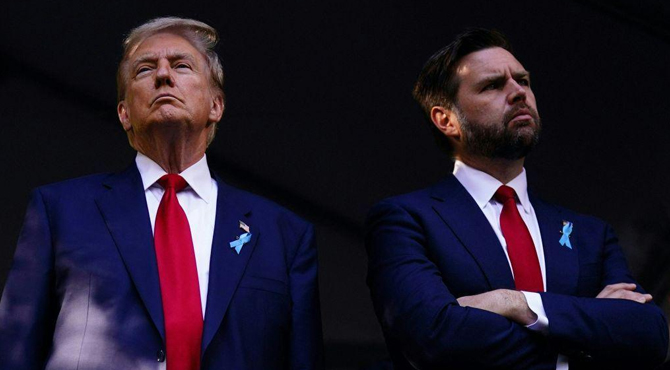
For more than a year after taking office, President Donald Trump maintained a relatively stable team, with no major personnel changes. That stability began to unravel in mid-March, when a wave of departures swept through the administration, affecting top officials across the Cabinet, intelligence agencies, and military leadership.
The latest shake-up came Wednesday, when the Pentagon confirmed that Navy Secretary John Phelan would be stepping down.
Here’s a closer look at the key exits shaping Washington this spring.
Kristi Noem
Kristi Noem, the former governor of South Dakota, led the Department of Homeland Security’s aggressive immigration crackdown, a cornerstone of Trump’s campaign agenda.
Her tenure, however, was overshadowed by controversy. Two fatal shootings of American citizens by federal officers in Minneapolis drew national attention. After the second incident, Trump sidelined Noem and dispatched border adviser Tom Homan to manage the situation.
Noem also faced bipartisan criticism in Congress over delays in disaster relief funding. Lawmakers blamed a policy requiring her personal approval for contracts and grants exceeding $100,000.
Her departure ultimately followed revelations that she told the Senate Judiciary Committee the president had approved a $220 million advertising campaign featuring her. Trump later denied knowledge of the initiative.
After leaving DHS, Noem was appointed special envoy to “The Shield of the Americas,” a multinational anti-drug trafficking effort. She was replaced by former Senator Markwayne Mullin.
Pam Bondi
Pam Bondi assumed leadership of the Justice Department after Trump withdrew the nomination of Matt Gaetz for attorney general.
During her tenure, Bondi oversaw the release of files tied to the investigation of Jeffrey Epstein, complying with a law that Trump initially opposed but later signed.
Her handling of those documents sparked sharp criticism on Capitol Hill. Representative Thomas Massie described the matter as “bigger than Watergate.”
Bondi left the administration earlier this month to enter the private sector. Her deputy, Todd Blanche, is now serving as acting attorney general.
Lori Chavez-DeRemer
Former Oregon congresswoman Lori Chavez-DeRemer announced her resignation Monday, also citing a move to the private sector.
Her exit came amid an investigation by the Labor Department’s inspector general, led by Anthony D’Esposito. Reports alleged an inappropriate relationship with a member of her security detail and misuse of department resources for personal travel.
Additional accusations involved her husband, who was reportedly barred from Labor Department headquarters following complaints from staff.
Chavez-DeRemer denied the allegations, claiming they were driven by “deep state actors” working with biased media to undermine the administration.
Keith Sonderling has taken over in an acting capacity.
Joe Kent
Joe Kent resigned on March 17 in protest of U.S. military action in Iran.
In a letter to Trump, Kent argued that Iran posed “no imminent threat” and claimed the strikes were influenced by external pressure, including from Israel.
A former Army warrant officer, Kent’s wife, Navy officer Shannon Kent, was killed in a 2019 suicide bombing in Syria.
Trump rejected Kent’s claims. Joe Weirsky is currently serving as interim director.
John Phelan
The most recent departure involves John Phelan, who stepped down effective immediately, according to Pentagon spokesperson Sean Parnell.
Phelan, a political fundraiser with no prior military experience, reportedly clashed with Defense Secretary Pete Hegseth over shipbuilding reforms and his close ties to the president.
His exit comes during heightened military activity, including a U.S. Navy blockade of the Strait of Hormuz.
Hung Cao will serve as acting Navy secretary.
Earlier in April, Hegseth also removed Army Chief of Staff Randy George, officially described as a retirement.
