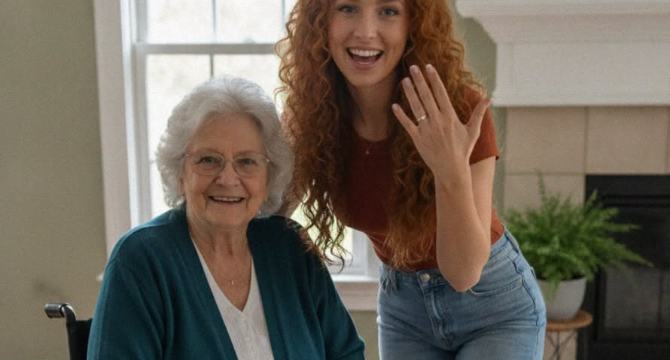
Lily had spent months making sure Emma’s wedding would be everything she wanted. Then, just days before the ceremony, her granddaughter asked her to make one final sacrifice that made Lily wonder whether Emma was embarrassed to be seen beside her.
Three days before the $38,000 wedding I had paid for, my granddaughter came to my house.
I thought she had wedding jitters until she voiced her request that left me in shock.
Emma did not say what she wanted immediately.
I was excited to see her a few days before her wedding, given that she had been busy.
She arrived carrying the final seating chart.
Emma spent several minutes pretending she had come to discuss table numbers.
She moved place cards around on my kitchen table and avoided my eyes.
She spoke too quickly about the vineyard paths.
“They’re narrower than we expected,” she said. “And Ken has a really specific visual plan for the photographs.”
I watched her straighten a card that was already straight.
“What does that have to do with me?”
I also wondered why Ken, the photographer I hired, would have a visual plan.
Wasn’t he supposed to implement the bride and groom’s requests?
Would I have to fire him and hire another photographer?
Emma’s fingers stopped moving.
“Grandma, please don’t take this the wrong way.”
People only said that when they knew exactly how their next words should be taken.
She explained that moving my wheelchair between the ceremony lawn and the terrace would slow everyone down.
She said the photographs were planned around sunset.
She said the vineyard had steps in some places.
I didn’t understand why she was lying.
I knew the venue had ramps because I had asked before signing the contract.
Then she began using words like “timeless” and “elegant pictures.”
Finally, she looked down.
Then she mentioned what exactly was bothering her.
“Your wheelchair is going to be in every picture.”
For a moment, I honestly thought I had misunderstood her.
Was she saying that my wheelchair would ruin the aesthetic of her wedding photos?
Emma rushed to fill the silence.
“We’ll still take one picture with you before the ceremony. A really nice one. Then while we’re doing the big family groups, you could wait inside where it’s comfortable.”
“Inside where?”
She hesitated.
“Near the kitchen.”
Was I to wait near the kitchen while the rest of the family took part in the wedding pictures?
At the wedding I had paid for.
The venue, the flowers, the photographer, the music, the food, and the open bar.
Every invoice had come to me, and I had paid every one without complaint.
When Emma got engaged, she had sat in that same kitchen with tears running down her face.
She said she had always dreamed of marrying her fiancé, Noah, at a vineyard.
Her parents, Cynthia and Silas, could not afford it.
Emma and Noah had little savings and student loans.
I decided to sell the lake cabin my late husband and I had owned for 37 years.
Confined in a wheelchair, I didn’t see myself spending much time there.
I used part of that money to give her the wedding she wanted.
Six months before her wedding, I suffered a stroke.
I recovered better than the doctors expected, but my left leg never fully did.
I could stand with support and take a few steps on good days.
Most days, I used a wheelchair.
Emma visited me twice during rehabilitation.
Both times she hugged me, took pictures, and posted them online with captions about strength, family, and gratitude.
She told everyone how thankful she was that I would still be at her wedding.
I believed her.
Now she stood in my kitchen asking me to disappear after one photograph.
“Are you embarrassed by me?” I asked.
Her face tightened.
“That’s not fair.”
“It is a simple question.”
She exhaled sharply.
“I just don’t want people looking at the pictures and noticing your wheelchair before they notice me.”
That was the moment something inside me broke.
This was like a competition between Emma and my wheelchair.
She was acting like I was sitting in the wheelchair willingly to outshine her.
I looked at the young woman I had loved since the first time my daughter, Cynthia, placed her in my arms.
I wondered when she had started acting in such a condescending and disrespectful way towards her loved ones.
“Do you still expect me to attend?” I asked.
Emma rolled her eyes.
“Of course. Just please cooperate for one day, especially when it comes to the pictures.”
Then she gathered her seating chart and left.
I remained at the table until I heard her car pull away.
After that, I opened the wedding folder and called the vineyard.
I asked a question that made the coordinator go completely silent.
“Rose, whose name is on those signed contracts about this wedding?”
The coordinator took a long pause.
“I mean, the wedding is Emma’s, but it’s your name on the contracts because you made the payments.”
“The venue’s contract has my name?”
I heard keys tapping.
“Yes, yours.”
“And the catering agreement?”
“Yours.”
“The flowers, rentals, food, music, and bar package?”
“All under your account. Even the outside vendors were coordinated with us, just as you requested.”
I looked at Emma’s abandoned copy of the seating chart.
“If I withdrew authorization for the event, what would happen?”
Rose did not answer for several seconds.
When she did, her voice had changed.
“Because you are the contracting client, we would stop services. There would be cancellation fees, especially this close to the date. Some deposits are nonrefundable.”
“But Emma cannot instruct you to proceed using my agreements?”
“No. She isn’t named as the client or guarantor.”
“What would she need to do if she still wanted the wedding?”
“She would have to sign new contracts and cover all fees herself.”
“She would have to do the same with the outside vendors?”
“Yes, assuming the vendors agreed and were still available.”
Rose lowered her voice.
“Lily, has something happened?”
I looked toward the photograph on my mantel.
Emma at nine years old, standing between me and my husband at the lake cabin.
She was holding a fish no bigger than her hand.
“Yes,” I said. “But I need one night before I decide what to do. I’ll call you in the morning.”
Rose promised she would not make any changes without hearing from me.
That night, I could not sleep.
I wheeled myself into the spare bedroom where I kept the boxes from the cabin.
I had not opened them since the sale.
The first box held old photographs.
My husband, Thomas, repairing the dock.
Cynthia teaching Emma how to skip stones.
Silas burning hamburgers while insisting the grill was faulty.
Emma asleep in a hammock, her mouth open, one muddy shoe missing.
None of the pictures were elegant.
In one, Thomas had a bandage across his forehead after walking into a low beam.
In another, my blouse was stained with berry juice.
Half of them were crooked or badly lit.
I loved every one.
Selling the cabin had hurt, but I had told myself the place had fulfilled its purpose.
Thomas was gone.
My leg had begun troubling me even before the stroke.
The upkeep was becoming too much.
When Emma cried about the vineyard, I convinced myself I was doing something sweet for my granddaughter.
Sometime after midnight, I found another photograph I had forgotten about.
Emma stood on the porch with her arms around me.
On the back she had written, “Best grandma in the world. Thank you for everything.”
I stared at the word everything until it no longer looked real.
The next morning, I called Ken, the photographer.
He answered cheerfully.
“Lily, how are you? The wedding is almost here. Ain’t we all excited?”
“Emma told me you created a specific visual plan.”
“A visual plan? No, no. That’s usually something the bride or groom provides.”
“You didn’t create a plan that requires me to stay out of the family photographs because of my wheelchair?”
There was a gasp.
Then he said, “Excuse me?”
I repeated the question.
Ken’s voice became careful.
“No. Absolutely not.”
“I was told you said that moving me would take too long.”
“We discussed adding a few minutes between locations so no one would feel rushed. I already know the venue covers accessibility well, so I have no reason to be worried.”
“Well, Emma said the wheelchair would ruin the look.”
Another silence followed, but this one carried anger.
“Lily, I would never agree to that. I have photographed brides in wheelchairs, grandparents using oxygen, children with walkers, amputees, and all kinds of families.”
I closed my eyes.
“My job is to photograph people as they are, not remove anyone who doesn’t match a theme.”
“So there was no request from you?”
“None. In fact, Emma asked me last week whether I could frame certain group photographs so the wheelchair wouldn’t show.”
“And what did you tell her?”
“I told her I would not hide a person because of their mobility aid. She dropped the subject. I didn’t tell anyone because I thought she wasn’t serious about it.”
That was the revelation that made my decision simple.
Emma had not misunderstood a photographer.
She had lied and used him as cover.
I thanked Ken and called Rose.
“I want to withdraw authorization for every service under my name.”
Rose inhaled slowly.
“Are you certain?”
“Yes. Please calculate all refunds, minus the legitimate nonrefundable fees. Notify the vendors that I am canceling my contracts.”
“The entire wedding?”
“No,” I said. “I am not canceling Emma’s wedding. I am canceling everything I paid for. If she still wants to marry Noah on Saturday, she is free to arrange and finance it herself.”
Rose did not ask for details. She only said she would send written confirmations.
Within an hour, my phone began ringing.
Emma called first.
I let it go to voicemail.
Then Cynthia called.
“Mom, what happened? Emma says the vineyard contacted her and said the event has been canceled.”
“The services under my contracts have been canceled, not the wedding.”
“Why?”
So I told her everything.
I repeated every word Emma had said, including where she planned to seat me.
Cynthia began crying before I finished.
“Oh, Mom.”
Silas took the phone.
“Did she really say she didn’t want people noticing your wheelchair?”
“Yes.”
He was quiet for a long moment.
“We’re coming over.”
By the time they arrived, Emma had already called several relatives.
Her version was that I had become emotional, misunderstood a photography schedule, and canceled her wedding without warning.
That story might have worked if I had remained silent.
I had not.
Ken had also called Noah after receiving notice that the contract was ending.
Rose had preserved the emails regarding accessibility.
Cynthia and Silas heard the truth directly from me.
Emma arrived 20 minutes later.
She entered without knocking.
“How could you do this to me?”
Cynthia stood between us.
“Emma, lower your voice.”
“You canceled my wedding!”
Lily, I reminded myself. Stay calm.
“I canceled my contracts and services.”
“It’s the same thing!”
“No. It only feels like the same thing because you expected my money to remain available regardless of how you treated me.”
Her face crumpled, then hardened again.
“I was not thinking clearly. I acted badly.”
“You lied about Ken.”
“I didn’t lie.”
“I spoke to him.”
The color left her face.
Silas looked at his daughter as if he had never seen her clearly before.
Emma turned toward Cynthia.
“Mom, you know how stressful this has been. Everything has to happen at certain times. Grandma moves slowly now, and I was trying to find a solution.”
Cynthia flinched.
“Your grandmother had a stroke.”
“I know that.”
“Then why are you speaking about her like she’s not someone you love anymore?”
Emma began to cry.
Two days earlier, those tears would have broken me.
Now I noticed where her eyes kept going.
The wedding folder.
“Can you call them back?” she asked. “Please. We can fix the photo issue.”
I could see right through her.
She didn’t say, “I am sorry I humiliated you.”
Or, “I was cruel.”
Just, “We can fix the photo issue.”
“You are sorry the wedding is gone,” I said. “You are not yet sorry for what you did.”
“That’s not true.”
“Then tell me what hurt me.”
She opened her mouth.
Nothing came out.
I waited.
Finally, she said, “I made you feel excluded.”
“You planned to exclude me.”
Her eyes dropped.
Noah arrived while we were still sitting there.
Ken had told him enough to make him demand the rest from Emma.
He looked devastated.
“Did you really plan to put your Grandma near the kitchen?”
Emma wiped her face.
“It wasn’t like that.”
Everyone in the room seemed to speak at once.
I raised my hand.
“I am not asking anyone to stop their wedding. I am not asking anyone to punish Emma. I have made one decision about my money.”
Then I looked at her.
“I forgive you because I love you. But I’m not paying for your wedding anymore. You will have to figure out how to get married with your own finances.”
Emma stared at me.
“You’d really let me lose everything?”
“No,” I said. “If you lost anything, you did that all by yourself.”
She left with Noah.
For the next day, I heard pieces of what followed.
The vineyard could offer a new contract, but the full balance was due immediately.
The florist had already given out the ordered flowers.
The caterer would not extend credit.
The open bar required insurance and payment in advance.
There was no way Emma and Noah could replace $38,000 in 48 hours.
They postponed the wedding.
For nearly a month, Emma did not speak to me.
Then Cynthia told me Emma and Noah had started counseling.
They both realized they had ignored serious problems.
Emma admitted she had become consumed by how the wedding would look online.
Every choice had turned into a performance.
She had begun seeing people as parts of the picture.
Noah had begun seeing warning signs he had dismissed as stress.
Three months later, Emma called.
Her voice was quiet.
“We’re getting married at the civil office next Friday.”
I waited.
“I would like you to come,” she said. “We paid the fee ourselves. We just want something small with family, and we want you there.”
“Will there be photographs?”
“Yes.”
“And my wheelchair?”
Her breath caught.
“In every picture you’re willing to be in.”
I attended.
There were 12 family members in the room.
Emma wore a simple cream dress.
Noah wore the same suit he had bought for the vineyard.
Cynthia carried grocery-store flowers tied with ribbon.
After the ceremony, we gathered outside beneath a plain stone arch.
Ken was there.
Emma had paid him for one hour.
When he began arranging us, she walked behind my chair and placed both hands on my shoulders.
“I’d like Grandma to be in the front line,” she said.
I looked up at her.
Her smile was not polished.
Her eyes were swollen from crying while reading her vows.
The wind kept blowing strands of hair across her face.
The picture was not timeless and elegant.
But it was beautiful.
Afterward, Emma knelt beside my wheelchair.
“I know this doesn’t undo it,” she said. “I know inviting you today doesn’t prove I’ve changed.”
“No,” I said. “It doesn’t.”
She nodded, accepting the answer.
“But I am trying.”
“I can see that.”
Our relationship is still strained.
She calls more often now.
Sometimes I answer. Sometimes I need time.
I have forgiven her, but forgiveness did not return us to the cabin where we hugged each other warmly.
It did not take us back to where I believed giving her everything would make her happy.
Some things, once broken, do not become what they were.
They become something new, if both people are patient enough to rebuild them.
The framed photograph from the civil ceremony now sits beside the old picture from the lake cabin.
I am seated in my wheelchair, with Emma’s hands resting on my shoulders.
When I look at it, I notice the chair.
Of course I do.
It is part of me now.
But it is not the first thing I see.
The first thing I see is the joy and love in the people around me.

 admin
admin