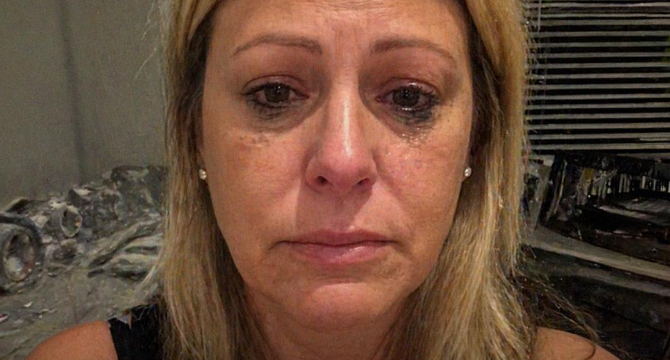
I grew up without a father, and for as long as I can remember, there was always a question hanging over my life: Where was he, and why did he leave?
It followed me everywhere.
It sat beside me at school plays when other fathers stood in the back with cameras around their necks. It pressed against my chest at father-daughter dances, where I pretended I did not care and told my mom I had too much homework anyway.
It whispered in my ear every birthday when the doorbell rang, and for one foolish second, I imagined a man standing there with flowers and an apology.
But no one came.
My mom, Marissa, raised me on her own.
She was a nurse, the kind who came home with sore feet and tired eyes but still found the energy to make grilled cheese sandwiches and ask about my day. She loved me fiercely. I never doubted that.
Still, love did not fill every gap.
When I was little, I would ask about him in simple ways.
“Did he have my eyes?”
Mom would pause, her hand stilling over the laundry basket.
“Yes,” she would say softly. “A little.”
“Was he tall?”
“Yes.”
“Did he want me?”
That question always changed the air in the room.
My mom never gave me a clear answer. Every time I asked, she would just say, “It’s complicated,” and change the subject.
As a child, I accepted that phrase because children accept what they are given. As a teenager, I hated it. And as an adult, I began to understand that “complicated” was often just a locked door people did not want opened.
But I never let it go.
My name is Avril, and by the time I turned 18, I had already searched every drawer in my mother’s bedroom. I was not proud of it, but shame did not stop me.
I looked through old envelopes, faded photographs, hospital papers, anything that might give me a name beyond the one my mother refused to say.
I found nothing.
Or maybe she had made sure I found nothing.
At 21, I requested a copy of my birth certificate.
My father’s name was blank.
At 24, I paid for an ancestry test and waited for the results as if they might finally hand me the missing half of my life. A few distant cousins appeared, but no one close enough to give me the answers I needed.
At 27, I hired my first investigator with money I should have used for rent. His name was Silas, and he had an office above a tax preparation business that smelled like coffee and old carpet.
“I’ll be honest,” he told me, tapping his pen against my file. “With no name and no paper trail, this could take time.”
“I have time,” I said.
Back then, I thought I did.
I called men who sounded confused, angry, or afraid. I wrote emails to strangers with the same stiff opening: “My name is Avril, and I am looking for my biological father.”
I visited county offices and read names until they blurred. I stared at old photos of my mother from her 20s, studying every man standing too close to her.
My friends tried to be kind at first.
Then they became worried.
“Why does it matter so much?” they would ask.
“Because I need to know who I am,” I would answer, even when I wasn’t sure it was true anymore.
The truth was, I had built a life that looked full from the outside. I had a small apartment with too many books, a steady job as a project coordinator, and a plant on my windowsill that had survived longer than most of my relationships.
I had routines. Monday grocery runs. Thursday takeout. Sunday morning calls with Mom, where we discussed everything except the one thing between us.
Years passed. I built a life, a career, routines… but that empty space never really went away.
Every birthday and every milestone brought him back to my mind.
Was he alive? Did he ever think about me?
Then, last week, everything changed.
I was at home, going through emails, when my phone rang. Unknown number.
I almost didn’t pick up.
Something about unknown numbers always made my stomach tighten. They were usually spam calls, debt collectors looking for someone else, or worse, another lead that would end in disappointment.
Still, my thumb hovered over the screen.
The phone kept ringing.
I finally answered.
“Hello?”
For a second, there was only silence. Then I heard a voice.
A man’s voice.
“Hi… sweetheart,” he said, hesitating. “It’s me.”
My heart stopped.
The room seemed to shrink around me.
My laptop screen glowed on the coffee table. Somewhere outside, a dog barked. My own breathing sounded too loud.
I stood so quickly that my knee hit the table.
“Who is this?” I asked, but my voice had already begun to shake.
He inhaled, and somehow, in that breath, I heard age. Fear. Regret.
“Avril…”
No stranger said my name like that.
My hand flew to my mouth.
“Dad?” I whispered.
There was a pause, and then he spoke again, his voice urgent, almost shaking.
“Daughter, hi… we have less than 24 hours.”
“Less than 24 hours for what?” I asked.
My voice sounded small, almost childlike, and I hated that. I had imagined this moment for 32 years. I had pictured myself calm, maybe cold. I thought I would demand answers with my shoulders straight and my heart guarded.
Instead, I was standing barefoot in my living room, gripping my phone like it was the only thing keeping me upright.
“For me to explain,” he said. “And for you to hear the truth before someone else turns it into something ugly.”
I swallowed hard.
“Are you really my dad?”
A ragged breath came through the line.
“My name is Callum,” he replied. “And yes, Avril. I am your father.”
The words landed so heavily that I had to sit down.
For a few seconds, I could not speak. The name meant nothing and everything at once.
Callum.
I repeated it silently, trying to fit it into the empty space I had carried since childhood.
“Where have you been?” I asked, and my voice cracked on the last word.
“I know,” he murmured. “I know what that sounds like.”
“No, you don’t,” I snapped, tears already burning my eyes.
“You don’t know what it was like. You don’t know what it felt like watching everyone else have someone show up for them. You don’t know how many records I searched or how many strangers I called. You don’t know how many times Mom told me, ‘It’s complicated,’ like that was supposed to be enough.”
“I do know your mother said that,” he answered quietly.
The anger inside me faltered.
“You spoke to her?”
“I loved her. More than I knew how to handle.”
I pressed my fingers to my temple. “Then why did you leave?”
There was a pause, and when he spoke again, his voice sounded older.
“I didn’t leave you because I didn’t want you. I left because I was told it was the only way to keep you safe.”
My chest tightened.
“Safe from what?”
“From the people I worked for. I was young and stupid, and I got involved with men who used fear like a business card. I thought I could walk away when your mother got pregnant. They made it clear I couldn’t. They threatened her. They threatened you before you were even born.”
The room seemed to tilt around me.
“I went to the police,” he continued. “I gave evidence. I entered protection for a while, but your mother refused to come with me. She said she would not raise a baby under a false name, running from the shadows. So we made the hardest choice. I disappeared, and she erased me from your life.”
I shook my head, even though he could not see me.
“No. Mom would have told me.”
“She wanted to,” he said gently. “But she was scared. I made her promise not to say my name. I thought silence would protect you.”
A bitter laugh escaped me. “It didn’t protect me. It broke me in pieces you never had to see.”
“I deserve that,” he admitted. “I deserve all of it.”
I wiped my cheeks with the heel of my hand. “Why now?”
His breathing changed.
It grew thinner, uneven.
“Because I’m dying, sweetheart.”
The word knocked the breath from me.
“I have cancer. It spread faster than they expected. I don’t have long. But that isn’t why I said less than 24 hours.”
“What does that mean, then?” I whispered.
“There’s a hearing tomorrow morning. One of the men I testified against is being released unless I give a final sworn statement. My doctors arranged it at the hospital. After that, they’re moving me to hospice, and I don’t know if I’ll still be able to speak clearly.”
My hand trembled against the phone.
“I wanted you to hear the truth from me first,” he added. “Not from court records. Not from your mother’s fear. From me.”
I closed my eyes. For 32 years, I had waited for this moment, and now that it was here, it did not feel like victory. It felt like grief wearing my father’s voice.
“Where are you?” I asked.
He gave me the hospital name, only 40 minutes away.
When I arrived, he was smaller than I expected. Pale, thin, with gray hair and my eyes. My exact eyes.
He cried the moment he saw me.
“I’m sorry,” he said, reaching for my hand. “I’m so sorry, Avril.”
I wanted to punish him with silence. I wanted to ask every cruel question I had saved since childhood. But his fingers were warm and shaking, and he looked at me like I was both miracle and regret.
So I sat beside him.
“You missed everything,” I told him through tears.
“I know.”
“My first steps. School plays. Graduation. Bad birthdays. Good birthdays.”
“I know,” he whispered.
“And you don’t get to fix that with one phone call.”
“No,” he agreed. “I don’t.”
I studied his face, searching for the stranger and finding pieces of myself instead.
“But you get to tell me what you can,” I said.
So he did. He told me about meeting Mom at a diner after her shift. About how she laughed with her whole face. About holding me once in the hospital when I was a newborn, hidden behind a curtain, while my mother cried and begged him to leave before she changed her mind.
By morning, I was still holding his hand.
Before they wheeled him away for the statement, he looked at me and said, “I never stopped loving you.”
I believed him.
Not because it fixed anything. It did not.
But because sometimes the truth arrives too late to heal the wound, yet still early enough to stop it from becoming your whole life.
When my mother called that afternoon, crying before I even answered, I said, “Mom, I know.”
She broke down.
And for the first time, I did not feel like a daughter chasing a ghost. I felt like a woman standing in the truth, painful as it was, finally whole enough to breathe.
