I thought the ugliest thing I’d witness on that subway was a grown man humiliating a mother for feeding her newborn. Then someone laughed, everyone else stayed silent, and I remembered a note I’d been carrying for 20 years.
“Are you a cow or what? Have some shame and cover up.”
The man’s voice cut through the subway car so sharply that almost everyone turned at once.
I did too.
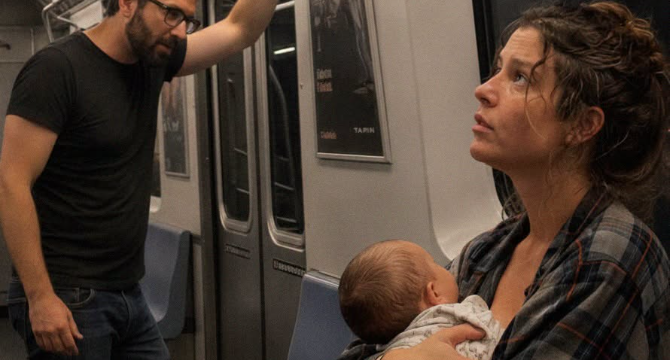
A young woman sat several seats away with a newborn pressed against her chest. A thin cotton blanket covered her shoulder and most of the baby’s head.
I’d walked right past her when I boarded.
I hadn’t even realized she was breastfeeding.
Apparently, the man standing over her had.
“What do you think this is, a bathroom?” he demanded.
The woman stared up at him.
“I’m sorry?”
“You heard me. Nobody wants to see that.”
She couldn’t have been more than 25. Her hair was pulled into a loose knot, there were dark circles beneath her eyes, and a diaper bag was wedged between her sneakers.
The baby couldn’t have been more than a few weeks old.
It was 94 degrees outside, and our subway car had no air conditioning.
Until that moment, nobody had been talking.
Then someone laughed.
A guy standing beneath the subway map.
Just one short laugh.
But the man heard it.
And I watched his shoulders change.
He had an audience now.
“You don’t respect anybody,” he said. “Feeding him like an animal in front of everyone. Have some shame!”
The mother’s face went red.
“I am covered.”
She was.
The advertisements above her showed more skin than she did.
But she immediately started pulling at the blanket anyway.
The baby lost his latch.
He whimpered.
“I’m sorry,” she said.
That bothered me almost as much as the man did.
She was apologizing to him. For feeding her hungry baby.
“Then cover yourself properly.”
“I’m trying.”
The blanket slipped.
She grabbed for it with one hand while supporting the baby’s head with the other.
The faster she tried to fix everything, the worse it became.
The baby started crying.
The man shook his head dramatically.
“Unbelievable.”
Now everyone was watching.
Some openly.
Others through phone screens or reflections in the windows.
I stood beside the doors with my work bag between my feet.
And did nothing.
I’ve taught 16-year-olds for 22 years.
I know exactly what it looks like when a room decides somebody is fair game.
It doesn’t happen all at once.
One person tests the boundary.
Someone laughs.
Someone else looks away.
And the person doing the hurting understands something important.
Nobody is going to stop them.
The man stepped closer to her.
“Did you hear me?”
She pressed back against the seat.
“Yes.”
“Then cover up or get off.”
The baby screamed.
She bounced him against her chest, trying to soothe him.
“I’m just feeding my son.”
“Then feed him at home.”
“We’ve been at the doctor all afternoon.”
“I don’t care where you’ve been.”
Her eyes filled.
That was when the subway car disappeared from around me.
For a few seconds, I was back in Room 214.
Twenty years earlier.
Aaron was 16.
Quiet kid.
Excellent writer.
Terrible public speaker.
He had a stutter that became much worse when he was nervous.
One afternoon, Aaron stood in front of my class giving a presentation on “The Great Gatsby.”
He’d practiced with me twice after school.
He knew the material.
Then he got stuck on the word “American.”
“A-A-A-American.”
A boy in the back repeated it.
“A-A-A-American.”
Three students laughed.
Aaron tried again.
The boy copied him again.
More laughter.
I remember exactly where I was standing.
Beside my desk.
I knew I needed to stop it.
But instead of speaking immediately, I looked toward the boy and gave him the teacher stare.
The one that’s supposed to say, “That’s enough.”
It wasn’t enough.
He did it again.
The room exploded.
I waited maybe three seconds.
Maybe five.
I’ve spent 20 years remembering it as much longer.
“Enough!” I finally snapped.
Everyone went quiet.
Aaron didn’t finish his presentation.
He sat down.
After class, I asked him to stay.
He said, “I’m fine.”
I knew he wasn’t.
The next morning, an envelope was sitting on my desk.
Inside was a request to transfer out of my class, already signed by his mother.
At the bottom, he’d written one sentence.
“I know you eventually told them to stop. I just wish you hadn’t waited.”
I kept that note.
For twenty years.
The subway lurched.
Room 214 disappeared.
The young mother was still in front of me.
Still crying.
And once again, I was standing there waiting for somebody to decide what kind of room we were in.
The man leaned over her.
“Cover up or get off.”
Nobody moved.
Not the man reading his newspaper.
Not the college girl wearing headphones.
Not the woman sitting two seats away.
Not the delivery driver holding the overhead rail.
Not me.
One second.
Then two.
Aaron’s handwriting flashed through my mind.
“I just wish you hadn’t waited.”
I picked up my bag.
The man was still talking as I walked toward him.
“People like you think you can do whatever you want.”
The mother was wiping her face with her wrist.
“I’m sorry.”
“Stop apologizing,” he snapped. “Just cover yourself.”
I stopped beside him.
“Sir.”
He turned.
“What?”
I put my hand on the rail beside his.
“Say it again.”
He frowned.
“Excuse me?”
“What you just said to her.”
He stared at me.
I raised my voice.
“Say it again. Louder. So everyone can hear you.”
The car went quiet.
Even the baby seemed quieter.
The man’s eyes moved over me.
I was 61, five-foot-four, wearing sensible shoes and carrying a canvas bag full of essays I hadn’t graded yet.
I was not intimidating.
He almost smiled.
“I’m talking to her.”
“I know.”
“So mind your business.”
“You made it everybody’s business when you decided to perform for the whole car.”
His smile disappeared.
The guy by the subway map snorted again.
The bully glanced toward him.
There it was.
The reassurance he’d been looking for.
“What?” he said to me. “You’re okay with this?”
“I’m okay with a hungry baby eating.”
“In public?”
“Yes.”
“That’s disgusting.”
“No. What’s disgusting is frightening a woman holding a newborn because you know she can’t easily walk away from you.”
His face tightened.
“You don’t know anything about me.”
“I know you’ve spent the last five minutes shouting at someone who hasn’t raised her voice once.”
He looked around.
Until then, I’d thought he was angry.
That was when I realized I was wrong.
He was checking the room.
Checking the faces.
Counting.
The laughter had told him something.
So had our silence.
He hadn’t started this because he was brave.
He’d started it because he’d read the room correctly.
Forty adults.
One exhausted mother.
And nobody willing to be first.
He pointed at me.
“Nobody asked you to play hero.”
“I’m not.”
“Then sit down.”
“No.”
The train rattled into the tunnel.
He looked toward the guy who’d laughed.
The guy immediately looked at his phone.
Then the bully looked at the older man with the newspaper.
Nothing.
The college girl stared at the floor.
For one terrible second, I wondered whether I’d misread them too.
Whether I really was alone.
Then a woman’s voice came from behind him.
“She’s covered.”
The bully turned.
The woman sitting two seats from the mother had spoken.
She moved her tote bag from the empty seat beside her.
“And even if she wasn’t,” she said, “that still wouldn’t give you the right to talk to her like that.”
The man stared at her.
“Mind your business.”
A metal pole squeaked behind me.
The delivery driver had stood up.
“She heard you,” he said.
The bully turned again.
The driver stepped into the aisle.
“We all heard you.”
He looked directly at the man.
“Now leave her alone.”
And just like that, the arithmetic changed.
The bully looked around the subway car again.
Thirty seconds earlier, he’d found permission everywhere.
Now he couldn’t find it anywhere.
The older man lowered his newspaper.
The college girl pulled out one earbud.
A woman near the doors shook her head.
Nobody shouted.
Nobody threatened him.
They simply stopped looking away.
“I’m allowed to have an opinion,” he muttered.
The woman with the tote bag answered before I could.
“Then have it without humiliating somebody.”
A few passengers nodded.
His face reddened.
He pointed toward the mother.
“She’s the one doing this in front of everybody.”
The delivery driver stepped closer.
“She’s feeding a baby.”
“Nobody wants to see it.”
“I didn’t see anything,” the college girl said.
Another voice came from farther down the car.
“Neither did I.”
The bully looked at me.
I didn’t say anything.
I didn’t need to anymore.
That was the strange part.
I’d thought standing up meant I’d have to defeat him somehow.
Find the perfect words.
Be louder.
Be tougher.
Instead, all I’d really done was make it easier for the second person to speak.
Then the third.
The train began slowing.
“86th Street,” the announcement crackled overhead.
The bully moved toward the doors.
“You people are ridiculous.”
Nobody answered.
The doors opened.
He stepped onto the platform.
For a second, he turned as if he wanted the last word.
The woman with the tote bag stared straight at him.
So did the delivery driver.
And so did I.
The doors closed between us.
I don’t believe 86th Street was his stop.
It was just the first place he could get away from us.
For several seconds, the subway car was silent except for the baby’s crying.
Then everybody seemed to move at once.
The woman beside the mother slid farther down the bench.
“Here, honey. Give yourself some room.”
The delivery driver took off his jacket.
“Would this help?”
The mother looked at him uncertainly.
He held the jacket between her and the aisle like a curtain.
“You feed him. I’ve got this.”
Her mouth trembled.
“Thank you.”
The college girl crouched beside the stroller.
“Do you want me to move this closer?”
“Please.”
Someone offered tissues.
Another passenger asked whether she needed help carrying the stroller when she got off.
Twenty minutes earlier, none of these people had known one another.
Two minutes earlier, none of them had moved.
Now there were three strangers standing between her and the aisle.
The baby found his latch again.
His cries became little hiccups.
Then silence.
I sat across from her.
She wiped her cheeks.
“I’m sorry.”
I stared at her.
“For what?”
“All this.”
She gestured vaguely toward the car.
“I didn’t mean to cause a scene.”
“You didn’t.”
“I should’ve brought a bottle. I thought we’d be home before he got hungry.”
“You fed your hungry baby. That’s all you did.”
She looked down.
“I know.”
But she didn’t sound like she knew.
That’s when I noticed the guy beneath the subway map.
The one who’d laughed.
He’d been staring at his phone since I’d confronted the bully.
Now he put it away.
He reached into his backpack and pulled out an unopened bottle of water.
For a moment, he just held it.
Then he walked over.
“Hey.”
The mother looked up.
He extended the bottle.
“You should probably drink something.”
She looked at the water.
Then at him.
“No, thank you.”
His hand remained out.
“It’s sealed.”
“I know.”
Something changed in his face.
Maybe he understood.
Maybe he didn’t want to.
“I was just trying to help.”
She adjusted the blanket around her son.
“No, thank you.”
He started to turn away.
Then stopped.
“Look, before, I wasn’t laughing at you.”
The mother lifted her eyes to his.
“You were.”
He froze.
Two words.
She hadn’t raised her voice.
She hadn’t insulted him.
But the whole car seemed to hear them.
His face reddened.
“I didn’t mean anything by it.”
She looked down at her baby.
“He thought you did.”
The man’s hand slowly dropped.
She didn’t answer.
He stood there another second before returning to his place.
The bottle disappeared back into his bag.
Nobody rescued him from the embarrassment.
I was glad.
Not because I thought one stupid laugh made him a terrible person.
But because he’d learned something I’d learned 20 years earlier.
Silence isn’t the only way to help cruelty.
Sometimes a laugh will do.
The mother glanced at me.
“Can I ask you something?”
“Of course.”
“How did you do that?”
“Do what?”
“Walk over. You didn’t look scared.”
I almost laughed.
“I teach high school.”
That got the smallest smile out of her.
“So you’re used to crazy people?”
“Professionally.”
She laughed.
It was brief, but it changed her whole face.
Then she became serious again.
“I don’t think I could’ve done that.”
“You shouldn’t have had to.”
“But everyone else was just sitting there.”
I looked around the car.
Some passengers had returned to their phones.
The older man had raised his newspaper again.
The delivery driver was still holding his jacket.
“I was sitting there too.”
She frowned.
“Not for long.”
Long enough.
I thought about leaving it there.
Instead, I said, “I had a student once.”
I told her about Aaron.
How he’d stuttered during a presentation.
How another boy had imitated him.
How the room had laughed.
And how his teacher, the person who was supposed to protect him, had waited several seconds too long.
“You?”
“Me.”
“What happened?”
“He transferred out of my class.”
Her expression changed.
I told her about the note.
“What did it say?”
I could still see the handwriting.
“I know you eventually told them to stop. I just wish you hadn’t waited.”
She was quiet.
“How long ago?”
“Twenty years.”
“And you still remember it?”
“Every word.”
The train began slowing again.
She looked toward the station sign.
“This is me.”
Immediately, the college girl stood.
“I’ll get the stroller.”
“You don’t have to.”
“I know.”
The delivery driver lowered his jacket.
The woman with the tote helped gather the diaper bag.
The young mother stood carefully with her sleeping baby against her chest.
Then she looked around at all of us.
And said the one thing I couldn’t shake afterward.
“I’m sorry for all the trouble.”
Again.
After being shouted at.
After being called an animal.
After trying to feed a newborn in a sweltering subway car while a stranger humiliated her.
She was still apologizing.
I touched her arm.
“You didn’t cause trouble.”
She looked at me.
“He did.”
Her eyes filled again, but this time she smiled.
“Thank you.”
The doors opened.
The college girl carried the stroller onto the platform.
The mother followed with her baby.
Then they disappeared into the crowd.
I went back to my place near the doors.
The man who’d offered the water was still standing beneath the subway map.
Our eyes met.
He looked away.
I didn’t hate him.
I couldn’t.
Because 20 years earlier, I’d done something uncomfortably similar.
I’d known someone was being humiliated.
I’d known I should act.
And I’d waited to see what everybody else would do.
The difference between us wasn’t that I was braver.
The difference was that Aaron had taught me what waiting can cost.
The next morning, I arrived at school early.
I unlocked Room 214 and sat behind my desk.
Then I opened the bottom drawer.
Aaron’s note was still there.
The paper had yellowed at the edges.
I’d read that final sentence hundreds of times over the years.
“I just wish you hadn’t waited.”
For 20 years, I’d heard an accusation.
That morning, I heard something else.
An instruction.
Don’t wait for someone else.
On that subway, 40 adults knew that young mother didn’t deserve what was happening to her.
Thirty-nine of us were waiting for someone else to prove it was safe to say so.
The cruelty had looked powerful because it was loud.
It wasn’t.
It had been living on our silence.
Sometimes cruelty only needs one person willing to be loud.
Stopping it can start the same way.
Someone just has to be first.

 admin
admin