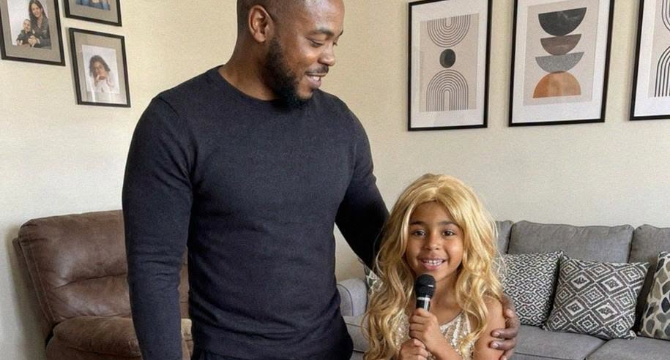
My daughter had fought for two years to find her voice. It took her teacher five seconds to crush it, until my husband revealed why he recognized her.
“YOU AND I HAVE MET BEFORE. Fourteen years ago.”
Mrs. Joshua stared at my husband as if he had just spoken another language.
The Career Day sign-in sheet trembled slightly in Pitter’s hand.
Behind him, 20 parents sat in complete silence.
So did the children.
Maya was still standing at the front of the classroom in her little silver shoes, frozen in the exact spot where she had stopped dancing.
Her mouth was closed.
Too tightly.
I knew that look.
For two years, I had watched words disappear behind it.
“Maya,” I whispered.
She did not look at me.
Mrs. Joshua recovered first.
“I think you’re mistaken.”
Pitter shook his head.
“No.”
He looked down at the sign-in sheet, then placed it carefully on her desk.
“I didn’t pick this up because I need anyone’s information.”
His voice was quiet.
That somehow made the room even more tense.
“I picked it up because there are 20 parents sitting here, and I want every one of them to hear what happened to the last person who was told singing wasn’t a real job.”
Mrs. Joshua’s face changed.
Only slightly.
But I saw it.
So did Pitter.
“Please,” she said. “This isn’t appropriate.”
He gave a short, humorless laugh.
“You just laughed at my seven-year-old daughter in front of her entire class.”
“I was encouraging realistic goals.”
“No. You humiliated her.”
Her cheeks reddened.
“I did not humiliate anyone.”
Pitter pointed toward Maya.
“Look at her.”
Mrs. Joshua did.
Maya’s hands were clenched against the sides of her yellow dress.
Her chin trembled once.
Then stopped.
That was worse.
When Maya became overwhelmed, she did not always cry.
Sometimes she simply disappeared behind herself.
Mrs. Joshua’s expression softened.
But Pitter was not finished.
“Fourteen years ago,” he said, “you stood on a stage at the Fairmont Arts Center wearing a blue dress.”
Mrs. Joshua went completely still.
The room seemed to shrink around us.
“You sang ‘Blue Moon Harbor.'”
Her hand gripped the edge of her desk.
“How do you know that?”
“Because I was there.”
I looked at my husband.
This was new to me too.
Before we married, Pitter had worked sound for theaters, churches, community concerts, and small festivals.
I knew that.
I did not know he remembered Mrs. Joshua.
“You were good,” he said.
She looked down.
“Stop.”
“No.”
Her eyes snapped toward him.
“You don’t know anything about me.”
“I know what happened after your second song.”
For the first time, she looked afraid.
Not afraid of Pitter.
Afraid of whatever memory he had dragged into the classroom.
Pitter’s voice softened.
“Your father was sitting in the third row.”
Mrs. Joshua closed her eyes.
Suddenly I understood that this was not some vague recognition.
He really did know her.
Fourteen years earlier, Mrs. Joshua had been 25.
Her first name was Danielle.
She had entered a regional music showcase at the Fairmont Arts Center.
Pitter had been working backstage that night.
He remembered her because her rehearsal had made half the sound crew stop what they were doing.
“You had this huge voice,” he said. “But every time you weren’t singing, you looked terrified to hold the microphone.”
Mrs. Joshua whispered, “Please.”
Pitter continued.
Not cruelly.
Almost sadly.
“Your father came backstage.”
Her breathing changed.
“He told you music was a hobby.”
Her lips parted.
Pitter repeated the words slowly.
“A hobby for people with rich husbands.”
Mrs. Joshua sat down.
One of the parents behind me whispered, “Oh my God.”
Pitter looked toward Maya.
Then back at the teacher.
“You remember what he said next?”
Mrs. Joshua rubbed both hands over her face.
“Don’t.”
“He told you to stop embarrassing yourself and think of a real job.”
Nobody moved.
Fifteen minutes earlier, Mrs. Joshua had looked at my daughter and said almost the same thing.
Singing is a fantasy.
Think of something realistic.
Not make-believe.
Pitter’s voice cracked slightly.
“Fourteen years, Danielle.”
Mrs. Joshua stared at him.
“And today I watched you say your father’s words to my seven-year-old. Almost word for word.”
She started crying.
Not dramatically.
Her shoulders simply folded.
Then the tears came.
I wish I could say I felt satisfied.
I didn’t.
I was furious with her.
But watching someone realize they had become the person who hurt them is not satisfying.
It is awful.
Mrs. Joshua covered her mouth.
“I didn’t mean to hurt her.”
Pitter answered immediately.
“I know.”
She looked at him.
“Then why are you doing this in front of everyone?”
Pitter glanced at the parents.
“Because you hurt her in front of everyone.”
That finally made Mrs. Joshua really look at Maya.
I stood and went to my daughter.
“Maya.”
She looked at me.
“Baby, come sit with me.”
She shook her head.
I held out my hand.
Still nothing.
Then she tried to speak.
Her lips moved.
No sound came out.
Her jaw locked harder.
My heart shattered.
For two years, we had worked on that exact moment.
Maya’s speech impediment became severe when she was five.
At home with Pitter and me, she could usually talk.
Around strangers, words often caught.
The harder she tried to push them out, the worse it became.
People would tell her to slow down.
Take a breath.
Try again.
Each suggestion only made her more aware that everyone was waiting.
By six, she sometimes stopped speaking completely outside our apartment.
At birthday parties, she hid behind me.
At restaurants, I ordered for her.
If another child asked her name too quickly, she sometimes burst into tears.
Then her speech therapist, Dr. Levin, discovered something.
Maya did not stutter when she sang.
Not once.
One afternoon, after Maya struggled for nearly a minute to ask for water, Dr. Levin said, “Can you sing it?”
Maya stared at her.
Then she sang, “Can I have some water?”
Perfectly.
Her eyes went huge.
She sang it again.
That night, she sang everything.
“Can we have pizza?”
“I can’t find my socks.”
“Dad is in the bathroom.”
Pitter laughed so hard at that one he had tears running down his face.
From then on, music became part of therapy.
Not because we expected Maya to become famous.
Not because we were trying to create some child performer.
Singing gave her a place where words did not feel dangerous.
Then, slowly, confidence followed.
She started ordering for herself.
Answering teachers.
Speaking to store clerks.
Introducing herself without hiding behind me.
Last week, when her new school announced Career Day, Maya came home glowing.
“I’m going to tell them I’m going to be a singer.”
She practiced for days.
She wrote a tiny song about standing under bright lights.
Added two dance steps.
Asked me whether professional singers could wear sparkly shoes.
I told her I thought it was mandatory.
The morning of Career Day, she nearly changed her mind twice.
But she walked to the front of that classroom.
She opened her mouth.
And she sang.
Five seconds later, Mrs. Joshua laughed.
Now Maya was standing in that same spot, unable to say my name.
Pitter came over.
He did not touch her immediately.
He crouched beside her.
“Maya?”
Her eyes moved toward him.
“You don’t have to talk.”
Her lower lip trembled.
“You don’t have to sing either.”
She swallowed.
“We can go home.”
Mrs. Joshua stood.
“Maya.”
My daughter flinched.
Mrs. Joshua saw it.
Her face broke all over again.
“I’m sorry.”
Maya stared at the floor.
Mrs. Joshua moved away from her desk but stayed several feet back.
“I embarrassed you.”
Maya’s fingers twisted together.
“And what I said was wrong.”
Mrs. Joshua looked around the classroom.
“I told all of you this morning that Career Day was about imagining who you might become.”
Her voice shook.
“Then Maya imagined something I once wanted for myself, and I laughed at her.”
She looked toward Pitter.
“I haven’t thought about that showcase in years.”
He said nothing.
“My father wasn’t a bad man.”
Pitter’s expression tightened.
Mrs. Joshua stopped.
Then she nodded to herself.
“That’s not the point, is it?”
“No.”
She took a breath.
“My mother died when I was 17.”
The room remained silent.
“My father raised three children. Money was always tight. He worried constantly.”
She gave a sad little smile.
“I wanted to study music.”
Mrs. Joshua had been accepted into a college music program.
She even received a partial scholarship.
But it was not enough.
Her father refused to help with the rest.
He told her musicians struggled.
That singers spent their lives waiting tables while begging strangers to listen.
That teaching came with a salary, insurance, and respect.
“He told me if I chose music, I was choosing to struggle alone.”
“So you became a teacher,” Pitter said.
She nodded.
“The Fairmont showcase was supposed to be my last performance.”
Her father came because she begged him.
Then, backstage, he told her exactly what she had repeated to Maya.
Music was a hobby.
Get a real job.
Stop embarrassing yourself.
Mrs. Joshua finished her performance that night.
Then she stopped singing.
Not professionally.
Not at weddings.
Not at church.
Not around family.
“I haven’t sung on a stage since.”
The room was painfully quiet.
Then a little boy named Jordan raised his hand.
Mrs. Joshua stared at him.
“Do teachers count as real jobs?”
A few adults laughed nervously.
She managed a small smile.
“Yes.”
“Do singers?”
Her smile disappeared.
She looked at Maya.
“Yes.”
Jordan lowered his hand.
It was such a simple exchange.
But something in the room changed.
Pitter looked at Mrs. Joshua.
“The problem isn’t that you became a teacher.”
She nodded.
“The problem is I started believing my father was right.”
“More than that.”
She waited.
“You started protecting children from disappointment by teaching them not to dream too loudly.”
Mrs. Joshua looked down.
I finally spoke.
“And you had no idea what singing meant to Maya.”
She looked at me.
“No.”
So I told her.
About the stutter.
The mute episodes.
Dr. Levin.
The first sentence Maya ever sang.
The two years it took her to stand in that classroom.
Mrs. Joshua’s face drained of color.
“I didn’t know.”
“You didn’t ask.”
“I know.”
I was still angrier than Pitter.
Maybe because I had watched Maya cry in therapy rooms.
I had watched children finish her sentences because they got impatient.
“You saw a seven-year-old performing and decided she needed to be corrected.”
Mrs. Joshua nodded.
“I’m sorry.”
“Sorry doesn’t undo what happened.”
“No.”
“But what you do next matters.”
She looked at Maya.
She did not ask my daughter to forgive her.
I respected that.
Instead, she turned toward the class.
“I owe Maya an apology in front of everyone because I embarrassed her in front of everyone.”
She took a breath.
“Maya, I was wrong to laugh at you. I was wrong to call singing make-believe. Singing is a real profession, and even if you choose something completely different when you’re older, I had no right to make your dream feel foolish.”
Maya watched her.
Mrs. Joshua continued.
“And I should never laugh when any of you tell me what matters to you.”
Then she sat down.
Pitter turned to Maya.
“We can leave.”
Maya looked toward the door.
Then toward the little speaker beside Mrs. Joshua’s desk.
Something changed in her expression.
She walked over to Pitter and whispered into his ear.
His eyes widened.
“Are you sure?”
She nodded.
He looked at me.
I was terrified for her.
If she tried and froze again, I didn’t know what it would do to her confidence.
But then I realized that was exactly the problem.
Too many adults deciding which risks children should be allowed to take because we were afraid for them.
Pitter handed Maya the wireless microphone.
She walked back to the front.
Her hands shook.
Mrs. Joshua stood.
“I can leave.”
Maya shook her head.
Mrs. Joshua sat again.
Nobody spoke.
My daughter’s lips parted.
Nothing came out.
My heart stopped.
Then Maya closed her eyes.
And sang.
Softly at first.
One note.
Then another.
The words came.
The same little Career Day song she had practiced in her room.
Her voice trembled, but it did not break.
She sang about standing beneath bright lights.
About holding a microphone.
About writing songs that made sad people smile.
She even did the two ridiculous dance steps she had practiced.
Nobody laughed.
When she reached the final line, she opened her eyes.
“I’m Maya, and someday you’ll know my name.”
The room erupted.
Every parent stood.
The children clapped.
Pitter was crying openly.
So was I.
Maya’s entire face turned red.
Then she smiled.
Mrs. Joshua remained seated.
She was crying too.
But she clapped.
Quietly.
Not to make herself part of Maya’s moment.
She simply clapped for her.
Afterward, Mrs. Joshua approached Pitter.
“How did you remember me?”
He smiled sadly.
“Because you were the best singer that night.”
She looked stunned.
“You won the audience vote.”
“I didn’t know that.”
“What?”
“I left before they announced it.”
Pitter stared at her.
“Why?”
“My father said we were going home.”
Later, Pitter contacted someone he still knew from the old Fairmont crew.
Within an hour, he received a photograph.
Twenty-five-year-old Mrs. Joshua stood onstage in a blue dress, one hand gripping a microphone.
Mrs. Joshua stared at it for a long time.
“Could you send that to me?”
“Of course.”
Before we left, Maya tugged my hand.
“Can we go now?” she whispered.
Four words.
No stutter.
I nearly collapsed from relief.
The next week was not perfect.
Maya barely spoke at school on Monday.
On Tuesday, she asked me to walk her all the way to the classroom door.
Wednesday was better.
Thursday, she ordered her own lunch.
Dr. Levin reminded us that one cruel moment could frighten Maya, but it could not erase two years of progress.
The work was still there.
So was her courage.
Mrs. Joshua surprised us too.
She reported the incident to the principal herself.
The school required her to complete additional training on speech disorders and classroom anxiety.
Then she started a Friday music hour.
It wasn’t a talent show.
There were no grades or winners.
Children could bring a song, instrument, poem, drawing, or simply sit and listen.
Maya participated the second week.
She sang half a song.
Then she became nervous and stopped.
Mrs. Joshua smiled.
“Thank you, Maya.”
Nothing else.
No demand that she finish.
No encouragement that secretly meant pressure.
Just thank you.
Three months later, the school held its spring arts night.
Maya signed up.
Pitter and I sat in the second row.
She wore the same silver shoes from Career Day.
When the curtain opened, she walked to the microphone alone.
She sang.
Not perfectly.
She missed one note.
Forgot a word.
Started the second verse again.
Nobody cared.
When she finished, the applause was enormous.
Mrs. Joshua walked onto the stage to introduce the next student.
Then she stopped.
“Actually, before we continue, I need to do something.”
She picked up another microphone.
“I haven’t done this in 14 years.”
My hand flew to my mouth.
She started singing.
No music.
Just her voice.
The first note shook.
The second did not.
She was beautiful.
Not because she sounded perfect.
Because I knew how long that voice had been trapped inside her.
Maya watched from the side of the stage.
Then she started singing along.
Two other children joined.
By the final chorus, half the students backstage were singing.
Pitter leaned toward me.
“That’s the song.”
“What?”
“The one she sang at Fairmont.”
I looked at Mrs. Joshua again.
Fourteen years earlier, someone she loved convinced her that her voice was something childish she needed to outgrow.
She spent years believing him.
Then, one Friday morning, she almost passed that wound to my daughter.
She could have defended herself.
She could have blamed stress.
She could have complained about Pitter embarrassing her publicly.
Instead, she recognized what she had done.
That did not erase it.
But it mattered.
Maya still says she wants to become a professional singer.
She’s seven, so last month she also wanted to own a horse ranch and become an astronaut.
I have no idea what she will become.
Maybe she will sing professionally.
Maybe she will become an accountant who terrifies people at karaoke every weekend.
It doesn’t matter.
Her dream was never a contract with her future.
It was simply the first future she had ever been brave enough to say out loud.
That was what Mrs. Joshua almost took from her.
And that was what Pitter understood before I did.
When he walked toward that desk, he wasn’t trying to prove Maya would become famous.
He was defending her right to imagine herself becoming something.

 admin
admin