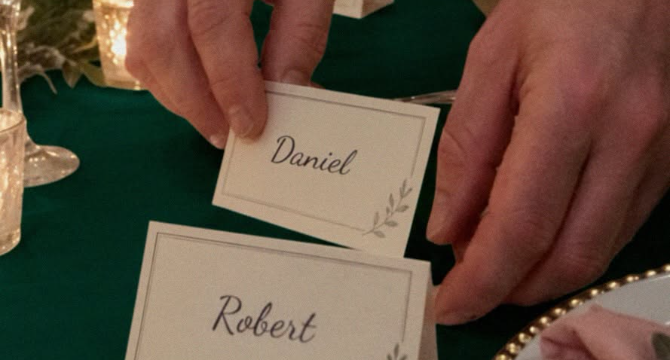
My uncle spent my mom’s 70th birthday forcing everyone to switch seats. We thought he was being ridiculous until the photos arrived a week later and I realized every move he’d made had been part of a plan.
My mom’s birthday was supposed to be simple.
We’d planned to have just family over to share good food and old stories. Even a few embarrassing childhood photos.
Instead, my Uncle Richard spent the entire evening quietly rearranging everyone like pieces on a chessboard.
“No, sit over there.”
“Actually, trade places with your cousin.”
“Would you mind moving one chair down?”
At first, people laughed.
Then they started getting annoyed.
My older brother, Michael, had barely settled into his chair when Richard tapped his shoulder.
“Could you switch with Daniel?”
Michael stared at him.
“I’ve already moved twice.”
“One more time.”
“Why?”
Richard glanced toward Mom.
“Because I’m asking nicely.”
Michael sighed and carried his plate to the other end of the table.
A few minutes later, Richard moved my cousin Sarah beside Aunt Lisa.
Then he switched my younger brother, David, with our uncle Paul.
By dessert, almost everyone had changed places at least once.
Mom watched the whole thing from the head of the table, smiling as if she knew something the rest of us did not.
“Richard,” she finally said, “are you directing a movie or celebrating my birthday?”
Everyone laughed.
Richard leaned down and kissed the top of her head.
“You’ll thank me later.”
Mom looked up at him.
Her smile changed.
It became softer. Almost sad.
But the moment passed so quickly that I convinced myself I had imagined it.
That evening, we took dozens of photographs.
Mom with her three children.
Mom with her grandchildren.
Mom beside the enormous chocolate cake David had ordered.
Mom laughing so hard at one of Michael’s stories that she had to wipe tears from her eyes.
It was the happiest I had seen her in months.
A week later, the photographer emailed me the gallery.
I opened it after dinner while sitting alone at my kitchen table.
My husband, Evan, was upstairs helping our daughter with homework.
I expected to choose a few pictures for frames and send the rest to the family.
Instead, I noticed Uncle Richard.
He appeared in the background of almost every photograph.
In one, he was pointing toward an empty chair.
In another, he was whispering to Sarah.
In a third, he was guiding Michael toward the seat beside David.
At the time, all the moving had seemed random.
Looking at the pictures now, it did not.
Every time Richard changed the seating, he placed two people together who normally avoided each other.
Michael and David had not spoken properly in nearly three years.
They had argued after Dad died over what to do with his workshop. Michael wanted to sell the tools, while David wanted to keep everything exactly as Dad had left it.
The disagreement became cruel.
Words were said that neither of them apologized for.
At Mom’s birthday, Richard had seated them side by side.
One photograph showed Michael leaning toward David, both of them laughing.
I could not remember the last time I had seen that.
Another picture showed Aunt Lisa beside my daughter, Sophie.
Lisa had stopped attending family gatherings after her husband died. She always claimed she was busy, but Mom told me the truth.
Lisa could not bear being around happy couples.
At the party, Sophie had apparently asked about the silver bracelet on Lisa’s wrist.
The photographer captured Lisa holding it out while Sophie listened.
In the next photograph, Lisa was smiling.
Then I found a picture of Sarah sitting beside her father.
They had been estranged for almost a year after he missed her college graduation.
Neither had spoken about it.
Yet in the photograph, Sarah’s hand rested on his arm.
Her eyes were red. His were too.
I scrolled back to the beginning and realized that none of it looked accidental.
I immediately called Richard.
He answered on the fourth ring.
“Everything okay?” he asked.
“What was with all the seat swapping?”
There was a pause.
“What do you mean?”
“You know exactly what I mean.”
He said nothing.
I turned my laptop toward me and opened the photograph of Michael and David.
“You put people beside each other who hadn’t spoken in years.”
Still nothing.
“Richard, how did you know where everyone should sit?”
His breathing changed.
Then he sighed.
“I didn’t.”
“What?”
“I was following the instructions.”
“Instructions?” I repeated. “What instructions?”
Another long pause.
“She made me promise I wouldn’t tell anyone until after the party.”
I frowned.
“Who?”
His voice lowered.
“Your mother.”
I looked at the photograph of Mom cutting her cake.
She was smiling directly at the camera.
“What are you talking about?” I demanded.
“She planned every seat,” he said.
“Why?”
Richard did not answer immediately.
When he finally spoke, his voice sounded broken.
“Because she already knew who wouldn’t be there next time.”
“What does that mean?”
Before he could answer, my phone buzzed against my ear.
A text message had arrived.
It was from Mom. Three words.
“READ MY LETTER.”
I stared at the screen.
“Richard?”
“You need to go to her house.”
“Is she okay?” I asked.
“She’s resting.”
“That isn’t an answer.”
“No,” Richard admitted. “It isn’t.”
I grabbed my keys and called Evan from the bottom of the stairs.
“I need to go to Mom’s.”
He saw my face and did not ask questions.
“I’ll come with you.”
“No. Stay with Sophie.”
I drove the entire way with Mom’s message open on the passenger seat.
“READ MY LETTER.”
The porch light was on when I arrived.
Richard opened the door before I knocked.
He looked older than he had at the party.
His eyes were swollen.
“Where is she?” I asked.
“Upstairs.”
I pushed past him.
Mom was asleep in her bedroom.
A lamp glowed beside her.
For a moment, I stood in the doorway watching her breathe.
She looked smaller than I remembered.
Her skin was pale.
A glass of water sat untouched on the nightstand.
Richard touched my arm.
“Let her sleep.”
“What is happening?”
He handed me a thick envelope.
My name was written across the front in Mom’s handwriting. I carried it downstairs.
Richard sat opposite me at the dining table. It was the same table where we had celebrated her birthday.
The decorations were gone, but one gold ribbon still hung from the chandelier.
I opened the envelope.
Inside was a folded letter and several pages covered in names.
The first page began:
“My darling Emily,”
“If you are reading this, then Richard finally told you the truth.”
“Please don’t be angry with him.”
“I made him promise.”
My hands began to shake.
I looked up.
“What truth?” I asked him.
Richard covered his mouth.
“Keep reading.”
I forced my eyes back to the page.
“Six months ago, the doctors found cancer in my pancreas.”
“By the time they discovered it, it had already spread.”
“They offered treatment, but they told me it would not give me much time.”
“I chose to spend that time feeling like myself.”
I stopped reading.
“No…” I whispered. “This can’t be…”
Richard reached toward me.
I pulled away.
“No…”
“She didn’t want anyone treating her like she was already gone.”
“She lied to us,” I said.
“She was scared you would turn every conversation into a goodbye,” Richard explained.
“She should have told me.”
“I know.”
My voice rose.
“I’m her daughter.”
“I know.”
“She went through this alone.”
“She wasn’t alone.”
I looked at him.
“I went to every appointment,” he said. “I was there with her.”
The anger drained out of me.
He looked down at his hands.
“She told me because I live nearby. She said one person knowing was enough.”
I pressed the letter against the table.
“How long?”
“The doctor said weeks. Maybe a few months.”
A sound left my throat that I did not recognize.
Richard moved beside me and wrapped his arms around my shoulders.
For several minutes, I cried into his shirt.
When I could breathe again, I unfolded the remaining pages.
They were seating charts.
Every person’s name had a note beside it.
“Michael — next to David.”
“They both believe the other chose anger over grief. Neither understands that they lost the same father. Make them talk about the fishing trip when David fell into the lake. They always laugh at that story.”
I remembered the photograph in which Michael was leaning toward David, and both of them were laughing.
Underneath, Mom had written, “I don’t want them standing on opposite sides of my funeral pretending they are strangers.”
My vision blurred from uncontrollable tears.
The next note said:
“Lisa — next to Sophie.”
“Lisa thinks no one needs her anymore. Sophie needs to know the women in our family survived heartbreak before she was born. Ask Sophie to notice the bracelet. Ben gave it to Lisa on their first anniversary.”
I covered my mouth.
Another page.
“Sarah — beside her father.”
“Paul missed her graduation because he had a panic attack in the parking lot. He was ashamed and lied about being stuck at work. Sarah believes she was not important enough. Make him tell her the truth.”
I looked at Richard.
“Did he?”
Richard nodded.
“They cried through dinner.”
There were more.
Cousins who had stopped speaking after a business failed, an aunt who believed she had been excluded from Christmas, and a grandson who thought his grandmother disapproved of him when she had actually kept every article he had published.
Each seat had been chosen to repair something.
Each note revealed a hurt Mom had noticed while the rest of us looked away.
At the bottom of the final page, she had written:
“Families rarely fall apart because of one terrible thing.”
“They fall apart because people collect small hurts and protect them until they become walls.”
“I cannot tear every wall down.”
“But I can move the chairs.”
I lowered the page.
Richard wiped his eyes.
“She spent weeks planning it.”
“All those conversations at the party…” I whispered.
“She knew exactly what she was doing.”
“Why didn’t she just tell people to make peace?” I asked.
“Because people defend their grudges when you confront them.”
He smiled sadly.
“Your mother said food and proximity might accomplish what advice never could.”
I looked toward the stairs.
“She planned her own goodbye.”
“No,” Richard said.
I turned to him.
“She planned what would happen after it.”
A floorboard creaked above us.
Mom stood at the top of the stairs, one hand gripping the railing.
She wore her blue robe.
Her hair was loose around her shoulders.
“Emily?”
I ran to her.
I had intended to be careful. Instead, I wrapped my arms around her so tightly that she laughed weakly.
“Oh, sweetheart,” she said.
“You should have told me,” I whispered as tears trickled down my cheeks. “Mom… you should’ve told me.”
“I know.”
“I would have been there.”
“I know, Em.”
“You didn’t have to protect me.”
She placed her hand against my cheek.
“I wasn’t protecting you.”
“Then why?”
“I was protecting the time.”
I stared at her.
She slowly descended the stairs, leaning on me.
When we reached the living room, I covered her with a blanket.
Richard brought tea, though none of us drank it.
Mom looked at the pages in my lap.
“So, you found my little scheme.”
“You moved an entire family around like furniture.”
“Someone had to.”
I tried to smile.
It collapsed into tears.
“How could you sit there knowing it might be your last birthday?”
She took my hand.
“Because it wasn’t sad while it was happening.”
Her thumb brushed across my knuckles.
“I watched Michael forgive David.”
“They didn’t forgive each other.”
“They started.”
She glanced toward the photographs on my phone.
“I watched Lisa laugh. I watched Sarah hold her father’s hand. I watched Sophie listen to a story about someone she never met.”
Her eyes filled.
“For one evening, no one was waiting for someone else to apologize first.”
I leaned against her shoulder as I had when I was a child.
“I’m not ready.”
“No one ever is.”
“What am I supposed to do without you?”
She was quiet for a moment.
Then she touched the seating chart.
“Keep moving the chairs.”
I cried harder.
Mom held me until neither of us could pretend we were being brave.
We told the family the next morning.
Michael arrived first. Then David.
When they entered Mom’s bedroom, they stood on opposite sides of the bed.
Mom looked at them and sighed.
“For heaven’s sake. Do I have to assign seats again?”
David laughed through his tears, and Michael moved closer.
By afternoon, everyone knew.
There was anger, shock, and questions Mom did not have the strength to answer.
But no one left.
For the next three weeks, Mom’s house was never quiet.
People came carrying photographs, flowers, blankets, and stories.
Michael and David repaired Dad’s workshop together.
They decided not to sell it.
Sarah and her father began having breakfast every Sunday.
Aunt Lisa invited Sophie to help organize Uncle Ben’s old travel photographs.
Mom watched it all from her chair beside the window.
One evening, I asked whether she regretted hiding her illness.
“Yes,” she said.
The answer surprised me.
“I regret every day you could have held my hand at the hospital.”
I looked down.
“But I don’t regret the birthday,” she said.
“Why?”
“Because you all looked at me as your mother, sister, aunt, and grandmother.”
She smiled faintly.
“Not as a dying woman,” she whispered.
We didn’t waste another day. Someone was always at the house.
There were board games with the grandchildren, old photo albums spread across the dining room table, and arguments that finally turned into apologies.
Mom said very little. She didn’t have to.
She watched the family she’d spent a lifetime holding together begin holding each other instead.
A few weeks later, early on a Sunday morning, she slipped away peacefully.
Richard was on one side of her bed, and I was on the other.
Her final words were not dramatic.
She looked toward the hallway, where voices drifted from the kitchen.
Then she whispered, “They’re still together.”
I squeezed her hand.
“Yes.”
She smiled.
“Good.”
After the funeral, no one knew where to sit at the reception.
For years, we had automatically returned to our usual groups.
This time, Michael pulled out the chair beside David.
Sarah sat with her father.
Lisa called Sophie over.
Richard stood near the doorway, watching everyone.
I walked to him.
“You’re not moving anyone.”
He shook his head.
“I don’t have to.”
Months later, the birthday photographs arrived in a large album.
We gathered at Mom’s house to look through it.
The final page held a wide photograph of the entire family around the table.
No one was perfectly posed.
Michael was laughing, David was looking at him, Sarah’s head rested against her father’s shoulder, and Lisa held Sophie’s hand.
Mom sat in the center.
Her face was turned toward all of us.
She was not looking at the camera.
She was looking at what she had repaired.
Richard placed a small card beneath the photograph.
It contained one sentence from her letter, “I cannot make them stay together, but I can remind them how it feels.”
That photograph now hangs in my hallway.
People often tell me it is beautiful.
They do not know why.
They do not know it was taken during Mom’s final birthday.
They do not know everyone in it had arrived carrying years of resentment.
They do not know that the woman at the center was quietly dying.
They only see a family sitting close together.
Maybe that was exactly what Mom wanted.
She did not spend her last birthday celebrating 70 years of life.
She spent it making sure the people she loved would not spend the rest of theirs apart.

 admin
admin