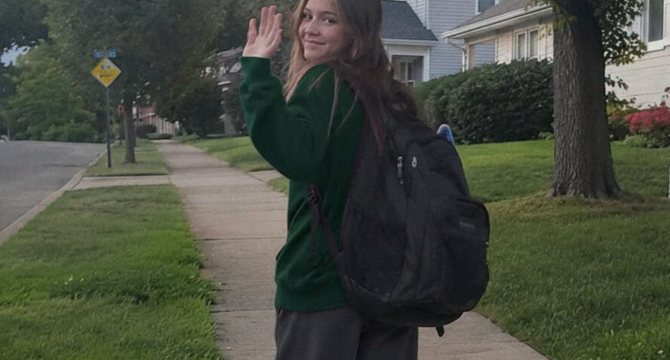
I still replay that night in my head more often than I’d like to admit.
If only I’d looked up from the kitchen just once. If only I’d trusted the knot in my stomach instead of convincing myself I was overreacting.
People always say regret comes afterward. They’re wrong. Sometimes it arrives before anything happens at all, quietly begging you to pay attention. I just didn’t listen.
My daughter Stasy was 14 that summer.
Old enough to want independence.
Yet, young enough that I still counted the minutes whenever she left the house.
She liked to remind me that none of her friends had parents who worried as much as I did.
She wasn’t entirely wrong. I’d always been protective, maybe too protective.
When she was little, I’d stand at the end of the driveway until her school bus disappeared around the corner.
If she spent the night at a friend’s house, I’d sleep with my phone on my pillow.
She teased me about it constantly.
“You know I’m not six anymore, right?”
“I know.”
“You act like I’m crossing the country every time I leave the house.”
“I’m your mother. It’s in the job description.”
She’d roll her eyes, but she’d always smile afterward. That smile made every embarrassing moment worth it.
The evening everything changed started like dozens before it. It was the first Saturday in July, hot enough that the air still felt heavy long after sunset.
I’d invited three college friends over for dinner.
We hadn’t all been in the same room for almost eight years.
Life had scattered us across different cities.
Jobs.
Marriages.
Children.
Divorces.
Somehow, every conversation began with, “Do you remember when…?”
By six o’clock, the kitchen smelled like garlic, grilled chicken, and fresh bread.
Music drifted softly through the house.
Someone opened a second bottle of wine. For the first time in weeks, I felt relaxed.
Stasy wandered into the kitchen wearing jean shorts and an oversized sweatshirt she’d stolen from me months earlier.
“Mom?”
I looked up from the salad bowl.
“Can I go to Chloe’s for a little while?”
“Tonight?”
She nodded.
“She’s packing for camp tomorrow.”
I smiled.
“Didn’t she leave this morning?”
Stasy didn’t even hesitate.
“No, they changed it.”
She said it so casually that I never questioned it. That sentence would haunt me later.
“How long?”
“I don’t know.”
She shrugged.
“Maybe an hour.”
“Homework done?”
She grinned.
“Mostly.”
“Stasy.”
“It’s done.”
I laughed.
“Better.”
She reached for a dinner roll.
I gently slapped her hand away.
“Those are for the guests.”
“I am a guest.”
“You live here.”
“So?”
“So you don’t qualify.”
She stole the roll anyway.
“I’ll walk. It isn’t far.”
She was right. Chloe lived five houses away. You could stand on our front porch and see the top of her family’s maple tree.
The entire neighborhood was one of those quiet suburban developments where everyone waved from their driveways and kids rode bicycles until the streetlights came on.
I still hesitated.
Something about that evening felt off.
I couldn’t have explained why.
Nothing looked unusual.
Nothing sounded unusual.
But a tiny voice inside me whispered, “Go with her.”
It wasn’t fear.
Not exactly.
Just one of those instincts parents learn not to ignore. Except, sometimes we ignore them anyway because we don’t want to become the parent who worries about everything.
I dried my hands on a towel.
“Text me the second you get there.”
She groaned dramatically.
“Mom.”
“I’m serious.”
“I know.”
“You’ll text?”
“I promise.”
She wrapped her arms around me for one quick hug.
“Love you.”
“I love you too.”
Then she headed toward the front door. I watched through the window as she walked down the sidewalk.
She never looked back.
That was the last time I saw my daughter that night.
A few minutes later, the doorbell rang. My friends arrived almost together.
The house quickly filled with laughter.
Someone brought dessert; the rest insisted on helping in the kitchen.
Stories overlapped.
Old memories resurfaced.
Every few minutes I’d glance toward my phone resting beside the fruit bowl.
Nothing.
“Everything okay?”
My friend Rachel noticed me checking it again.
“Yeah.”
I smiled.
“My daughter promised she’d text when she got to a friend’s house.”
Rachel laughed.
“You’ll survive five minutes.”
“I know.”
I slipped the phone back into my pocket.
Ten minutes passed.
Then 20.
I caught myself checking again.
Still nothing.
She forgot.
Teenagers forgot things.
Especially texts to their parents.
I remembered being 14. If my mother had asked me to check in every five minutes, I’d probably have forgotten too.
Half an hour passed.
The conversation shifted to old professors.
Someone started telling the story of the disastrous spring break trip we’d all sworn never to mention again.
Everyone laughed.
I did too.
But only for a moment.
My eyes drifted back toward the clock above the stove.
Almost 40 minutes since she left.
The knot in my stomach returned.
I unlocked my phone. No messages, no missed calls.
Nothing.
I typed a quick text.
“Everything okay?”
I watched the little blue bubble disappear.
No reply.
I slipped the phone into my pocket again.
“Don’t embarrass her,” I told myself.
“She’s probably talking with Chloe.”
“She’ll answer eventually.”
I wanted to believe that.
I almost did.
Then another 20 minutes slipped away. I excused myself from the table and stepped onto the front porch.
The warm night wrapped around me.
The street was quiet, and porch lights glowed softly up and down the block. I looked toward Chloe’s house.
Dark.
That was strange.
Maybe they were in the backyard.
Maybe…
No.
The feeling in my chest returned stronger than before.
Without letting myself think any longer, I scrolled through my contacts and tapped Dora’s number.
She answered after the second ring.
“Hi, Maddie.”
Her voice sounded sleepy.
“I’m so sorry to bother you this late.”
“That’s okay.”
“I just wanted to make sure the girls weren’t driving you crazy.”
There was a pause. Then Dora laughed softly.
“I’m sorry?”
“Stasy came over about an hour ago.”
Silence.
Finally, Dora spoke again.
“Maddie…”
Her voice had changed.
“What are you talking about?”
I frowned.
“Stasy. My daughter.”
Another silence, longer this time.
Then came the sentence that made my knees go weak.
“Chloe is at sleepaway camp in Maine.”
I gripped the porch railing.
Dora continued quietly.
“She left this morning.”
My mouth went dry.
“But…”
I whispered.
“Stasy said…”
“But…”
I could barely force the words out.
“Stasy said Chloe was packing for camp.”
Dora’s voice softened.
“Maddie, honey… Chloe left with the church group at nine this morning.”
The world seemed to tilt beneath my feet.
I looked down the street toward Chloe’s house.
Every light was off.
No cars in the driveway except Dora’s, no movement behind the curtains, nothing.
“I…” I realized I couldn’t breathe properly. “She never came?”
“No.”
The word landed like a punch.
“I’ve been home all evening. If Stasy had knocked, I would’ve answered.”
A wave of nausea rolled through me.
“I have to go.”
“Maddie—”
But I had already ended the call. For one frozen second, I simply stood there on the porch.
Then instinct took over.
I ran.
Not inside.
Down the sidewalk.
“Stasy!”
My voice echoed through the warm night.
No answer.
Five houses suddenly felt much farther than they ever had before. I reached Chloe’s porch in seconds and pounded on the front door.
Dora opened it almost immediately.
One look at my face and she wrapped her arms around me.
“She isn’t here,” I whispered.
“When did she leave your house?”
“A little after seven.”
Dora frowned.
“Have you called her?”
I pulled out my phone with shaking hands.
Three unread messages.
Advertisement
Not from Stasy.
Rachel.
“Need help with dessert?”
Another from one of my guests.
“Everything okay?”
My thumb found Stasy’s name.
I pressed Call.
Straight to voicemail.
Again.
Voicemail.
Again.
Nothing.
Dora rested a hand on my shoulder.
“I’m calling Mark.”
Her husband.
“He’ll check the walking trail.”
I nodded without hearing most of what she said.
My hands had started trembling so badly I nearly dropped my phone.
I dialed 911. The dispatcher answered calmly.
“Nine-one-one. What’s your emergency?”
“My daughter.”
My voice cracked.
“She’s 14. She left my house over an hour ago. She never got where she said she was going.”
The dispatcher immediately became focused.
“Ma’am, what’s your daughter’s name?”
“Stasy.”
“What was she wearing?”
“Jean shorts. My gray sweatshirt. White sneakers. Brown hair. She has a silver charm bracelet with tiny stars on it.”
The bracelet.
She never took it off.
I’d given it to her on her 13th birthday after she’d saved for months to buy matching ones for both of us.
Mine was around my wrist.
Hers should have been too.
The dispatcher asked more questions.
Height.
Weight.
Medical conditions.
Recent photographs.
As I answered, neighbors began stepping onto their porches.
People had heard me shouting.
Lights flicked on one after another.
Doors opened.
The neighborhood that had seemed so peaceful an hour earlier suddenly felt enormous, and impossibly dark.
By the time I hurried back toward my house, my guests were already outside.
Rachel met me halfway down the driveway.
“Maddie, what happened?”
I could barely say the words.
“Stasy’s missing.”
Silence.
Then chaos.
Phones appeared, people split into groups without needing to be told, someone checked the neighborhood park.
Another headed toward the small creek beyond the cul-de-sac.
Mark arrived carrying a flashlight.
“I’m checking every yard.”
“I’ll go with you.”
“No.”
He shook his head.
“You stay near your phone.”
“In case the police call.”
I hated him for being right.
Minutes felt like hours. Every passing car made my heart leap, and every barking dog sent someone running.
I called Stasy again.
Nothing.
I started replaying every conversation we’d had that afternoon.
Had she seemed upset?
No.
Angry?
No.
Distracted?
Maybe. No…
That wasn’t right.
She’d been excited.
Why?
About Chloe?
Or something else?
Then another memory surfaced.
When I’d asked if Chloe had already left for camp, Stasy hadn’t paused to think.
She’d answered immediately.
“They changed it.”
Not “I think they changed it.”
Not “Her mom said they changed it.”
Just “They changed it.”
Like she’d already rehearsed the answer.
My stomach twisted.
She hadn’t forgotten to tell me where she was going.
She’d lied.
But why?
What could possibly have been worth lying to me about?
A pair of police cruisers turned onto our street, their blue lights washing silently across the houses.
An officer climbed out and walked quickly toward me.
“I’m Officer Daniels.”
He held a small notebook.
“We’re going to find your daughter.”
I wanted to believe him.
Instead, I looked down the quiet street where I’d watched Stasy disappear less than two hours earlier.
I had let her walk only five houses.
Five houses.
If I’d walked with her…
If I’d insisted…
If I’d listened to that tiny voice telling me something wasn’t right.
None of this would be happening.
Then someone shouted from farther down the block.
“Maddie!”
It was Mark.
He was standing in front of a small ranch house that had sold only a few weeks earlier. His flashlight beam was fixed on something lying on the front steps.
My heart stopped.
I started running.
I reached Mark just as he lowered the flashlight.
He didn’t say a word; he simply pointed.
Something silver lay on the top step.
For a heartbeat, my mind refused to recognize it.
Then I dropped to my knees.
It was Stasy’s bracelet. The tiny silver stars caught the flashlight beam as I picked it up with shaking fingers.
The clasp had come loose.
One of the tiny silver stars was caught between two porch boards.
“No…”
The word escaped before I realized I’d spoken.
Mark crouched beside me.
“Are you sure it’s hers?”
I couldn’t answer.
I simply held out my own wrist.
Officer Daniels hurried over.
“What did you find?”
I held up the broken bracelet.
His expression immediately changed.
He gently took it from my hand.
“Did your daughter wear this tonight?”
I nodded.
“Every day.”
He studied the clasp.
“It could’ve come off accidentally.”
I looked at the front door.
“This house…”
The officer followed my gaze.
“Does anyone live here?”
“I think it sold.”
Mark nodded.
“About two weeks ago.”
“I haven’t met the new owner.”
The house sat in complete darkness. No porch light, and no television flickering through the windows.
Officer Daniels climbed the three front steps and knocked firmly.
No answer.
He knocked again.
Still nothing.
I wrapped my arms around myself.
“What if…”
I couldn’t finish the sentence.
The officer tried the doorknob.
Locked.
He stepped back.
“Ma’am, do you know if anyone has seen the new owner?”
Mark shook his head.
“The moving truck came last week. That’s all I know.”
Another officer arrived beside us.
“The neighbors across the street said they saw lights on earlier.”
Officer Daniels frowned.
“When?”
“About an hour ago.”
My heart pounded harder.
An hour ago. The same time Stasy disappeared.
The officer walked slowly toward one of the front windows.
The blinds weren’t completely closed.
Just enough of a gap remained to see inside.
He leaned forward.
Then froze.
“What is it?” I called.
He didn’t answer.
Instead, he stepped aside.
“Ma’am…”
“I think you should look.”
My legs felt strangely weak as I climbed the steps.
Every terrible possibility crowded into my mind. I pressed my face against the narrow opening between the blinds.
At first, all I saw was a softly lit living room.
Moving boxes.
A bookshelf.
A floral armchair.
Then my eyes drifted toward the far side of the room. An elderly woman sat in a rocking chair with a book open in her lap.
I frowned. Something about her seemed… familiar.
Before I could place it, another figure walked into the room carrying two steaming mugs.
Jean shorts.
Gray sweatshirt.
Brown ponytail.
Stasy.
She smiled at the woman, said something I couldn’t hear.
Then laughed.
Laughed.
I stumbled backward so quickly I nearly fell off the porch.
“She’s…” My voice cracked. “She’s inside.”
Officer Daniels reached for his radio.
I grabbed his arm.
“No.”
He looked at me, confused.
“My daughter isn’t…” I swallowed hard. “…she isn’t scared.”
She hadn’t looked frightened or trapped. She looked comfortable, safe, like she’d been exactly where she’d intended to go all along.
The front door opened before anyone could say another word.
The elderly woman stepped onto the porch.
She looked first at the officers.
Then at me.
For several seconds, neither of us moved.
The years had changed her. Her hair had turned completely white, and her shoulders had stooped.
But I would have known those eyes anywhere.
My breath caught.
“Mom?”
Behind her, Stasy appeared in the doorway.
She looked from me to the woman standing beside her.
Then back again.
Her smile slowly disappeared. “You know each other?”
My mother looked at me with tears already filling her eyes.
“I didn’t expect…” She stopped herself. “I didn’t think it would happen like this.”
I stared at her.
The bracelet was still clenched tightly in my hand.
One question drowned out every other thought in my mind.
“What are you doing here?”
My mother looked past me at the flashing police lights.
Then at the neighbors gathering across the street. Understanding slowly spread across her face.
“Oh, no.”
Her voice was barely a whisper.
“You thought she’d disappeared.”
I stared at her.
“Answer me. What are you doing here?”
Before she could speak, Stasy stepped onto the porch.
“Mom…”
She looked genuinely confused.
“I told you I was going to Chloe’s.”
“I know what you told me.”
My voice shook.
“Chloe is in Maine.”
Her expression fell.
“I…”
She looked down at her shoes.
“I’m sorry.”
“Sorry?”
I could hear my own heartbeat.
“I called the police.”
“I thought someone had taken you.”
Tears filled her eyes. “I never wanted that.”
“Then why would you lie to me?”
She opened her mouth.
Closed it again.
Finally, she looked toward the woman beside her.
“I didn’t think you’d let me come.”
Silence settled over the porch. I slowly turned to my mother.
“You knew?”
She immediately shook her head.
“No. I swear to you, Maddie, I didn’t.”
I laughed bitterly. “Really? You just happened to move five houses from my house? Without telling me? And somehow my daughter ends up here?”
“I didn’t ask her to come.”
“Then explain it.”
“I will.” She glanced toward the officers. “But maybe…”
Officer Daniels stepped forward.
“Ma’am, now that we’ve confirmed your daughter is safe, we’ll leave the rest to your family.”
I nodded numbly.
He looked at Stasy.
“You’re not in any trouble.”
She whispered, “Okay.”
Within a few minutes, the patrol cars pulled away. The neighbors slowly returned to their homes. And the street became quiet again.
Only the three of us remained standing on the porch.
My mother looked smaller than I remembered.
Older, fragile.
For years, I’d imagined what I’d say if I ever saw her again.
I’d rehearsed angry speeches, questions, accusations.
Instead, the only thing I managed was, “How?”
She looked down at her hands.
“I moved in three weeks ago.”
“I know that part.”
“No.”
She gave a sad smile.
“I mean… How Stasy found me.”
She glanced toward my daughter.
“It wasn’t planned.”
I frowned.
“What do you mean?”
“It started with lemonade.”
Stasy looked embarrassed.
“The moving truck came while you were at work.”
“I was riding my bike. I saw her carrying boxes.”
She looked at my mother.
“She looked tired.”
“So…”
“I asked if she wanted some lemonade.”
I blinked.
“That’s it?”
Stasy nodded.
“She said yes.”
My mother smiled faintly.
“She reminded me of someone.”
My stomach tightened.
“Me?”
She nodded.
“The same stubbornness. The same way you used to put your hands on your hips whenever you thought you were right.”
Despite everything, a tiny, unwanted smile almost escaped me.
Stasy continued quietly.
“I came back the next day. And the next. We talked about school, books, Grandpa.”
I looked up sharply.
“You talked about my father?”
My mother nodded.
“Only because she asked.”
“I didn’t tell her who I was.”
“You expect me to believe that?”
“I didn’t want her to feel trapped.”
She looked directly at me.
“I’ve made enough mistakes trying to force people to forgive me. I wasn’t going to make another one.”
I searched her face for any sign she was lying.
I couldn’t find one.
“So when did she find out?”
Neither of them answered immediately. Finally, Stasy reached into the pocket of her sweatshirt and pulled out a faded photograph.
The edges were worn.
The colors had almost disappeared.
I recognized it instantly.
It had once sat in a silver frame on our living room shelf.
Years ago. Before I’d packed every reminder of my mother into a box and hidden it in the attic.
The picture showed me at 14 standing between my parents.
Laughing.
“I found this on her bookshelf,” Stasy said quietly. “I asked who the girl was.”
My mother lowered her eyes.
“I told her she was my daughter.”
Stasy looked at me.
“Then I asked what your daughter’s name was.”
My mother took a shaky breath.
“I said, ‘Maddie.'”
Stasy gave a small, uncertain laugh.
“I told her, ‘That’s my mom’s name.'” She paused. “She just… started crying.”
My mother’s eyes filled with tears.
“I couldn’t pretend anymore.”
Stasy looked back at her.
“I asked if you were my grandma.”
My mother nodded once.
“Then I asked why I’d never met you.”
My mother swallowed.
“I told her…” Her voice broke. “…that if she wanted that answer, she had to ask you.”
I closed my eyes.
I already knew the question waiting for me. And suddenly, I realized tonight had never really been about Chloe.
It had never even been about my mother.
It was about a 14-year-old girl trying to understand why half of her family had disappeared before she was even born.
I couldn’t look at either of them.
Instead, I stared at the photograph in Stasy’s hands.
I’d forgotten it even existed. Not because it wasn’t important, but because remembering it hurt too much.
“You wanted answers,” I said quietly.
Stasy nodded.
“I still do.”
I turned to my mother.
“Go ahead.”
She looked startled.
“What?”
“Tell her. You’ve obviously waited long enough.”
My mother didn’t speak. She simply looked at the photograph, then she shook her head.
“No.”
Stasy frowned.
“No?”
“This isn’t my story to tell.”
I laughed once.
Short.
Bitter.
“That’s convenient.”
“No.”
She met my eyes.
“It’s the truth. I spent years trying to speak for you. I’m not making that mistake again.”
For a long moment, no one moved. Then Stasy looked at me.
“Mom…Please. I don’t want to choose sides. I just want to understand.”
Those words hurt more than I expected.
Because she wasn’t asking who had been right, she was asking why she’d grown up with half her family missing.
I sat down slowly on the porch step.
The anger I’d carried for 15 years suddenly felt heavy, exhausting.
I looked at the dark street.
“When your grandfather died…” My voice caught. “…everything changed.”
My father had suffered a massive heart attack on an ordinary summer afternoon.
He was 63 and healthy.
He was still working in his garden that morning.
By dinner… He was gone.
For weeks, the house felt like it had stopped breathing. Mom barely left her bedroom. I buried myself in work.
We grieved in completely different ways.
At first, we told ourselves it was temporary.
That we’d find our way back to each other.
Instead, every conversation became an argument.
She wanted me to move home.
I couldn’t.
I had a job.
A mortgage.
A life I’d built.
She said I was abandoning her.
I said she was trying to control me.
Neither of us listened.
Neither of us knew how to admit we were drowning.
One afternoon, she said something she’d spend years regretting. “If your father mattered as much to you as he did to me, you’d still be here.”
I looked down at my hands.
“I packed a suitcase that night. I told her if she couldn’t see how hard I was trying, then maybe we shouldn’t see each other at all.”
Silence settled over the porch.
Stasy looked from me to my mother.
“That’s it?”
Neither of us answered.
She frowned.
“You stopped speaking because you were both heartbroken?”
I closed my eyes.
When she said it that simply, it sounded almost impossible.
My mother wiped at her tears.
“I kept waiting for her to call.”
“I kept waiting for you to call,” I whispered.
“I wrote letters. I never mailed them.”
“So did I.”
I looked at her.
For the first time in fifteen years, I believed her.
For a long time, nobody spoke. The only sound came from crickets somewhere across the street.
Stasy sat beside me on the porch step.
She slipped her hand into mine.
“I don’t understand.”
I looked at her.
“What don’t you understand?”
“If you both missed each other…” She glanced at my mother. “…why didn’t either of you just say so?”
I almost laughed.
Not because it was funny, but because I’d asked myself the same question a thousand times over the years.
“I thought she didn’t want me anymore.”
The words came out before I could stop them.
Across from me, my mother’s face crumpled.
“Maddie…”
“I did.”
I looked away.
“When Dad died, every conversation became another argument. You stopped asking how I was doing. You only told me how I should be grieving.”
She slowly nodded.
“I know.”
“I thought if I could keep you close, I wouldn’t lose both of you. I didn’t realize I was pushing you away.”
I swallowed hard.
“You were.”
She closed her eyes.
“I know that now.”
Silence settled between us again. It wasn’t the angry silence I’d carried for years. It was heavier than that. The silence of two people finally admitting they had both been wrong.
Stasy looked from one of us to the other.
“So…” She hesitated. “Nobody stopped loving anybody?”
I felt tears sting my eyes.
“No.”
My mother answered at the same time.
“Never.”
The word echoed in the warm night.
Stasy frowned.
“Then I really don’t understand.”
Neither did I.
Not anymore.
For 15 years, I’d replayed our last argument so many times that I’d convinced myself it had to be about something unforgivable.
Standing there now, I realized it wasn’t.
It had been two broken people trying to survive the same loss in completely different ways. And neither of us had known how to reach across the distance afterward.
My mother slowly reached into the pocket of her sweater.
She pulled out a folded piece of paper.
The edges were soft from being handled so often.
“I wasn’t sure if I’d ever get to give this to you.”
She handed it to me.
“I wrote it the week after I moved here.”
I looked at the date. Three weeks earlier.
“I wanted to come to your door.” She smiled sadly. “I must have driven past your house 20 times.”
“Every time I parked…I convinced myself you’d be happier if I left.”
I unfolded the letter.
It wasn’t long.
“Maddie,”
“I don’t know if you’ll ever forgive me.”
“I’m not even sure I deserve it.”
“I just wanted to live close enough that, if you ever decided to give me another chance, I wouldn’t be too far away.”
“If that day never comes, I’ll still be grateful that I got to see my granddaughter laugh from across the street.”
“Love, Mom.”
I couldn’t read another word.
The paper blurred through my tears.
My smiled laughed through her tears, then took one hesitant step toward me.
Then stopped.
She didn’t hug me; she didn’t assume.
She waited.
I closed the distance instead.
The hug wasn’t graceful or dramatic.
It was awkward.
Careful.
Fifteen years is a long time to carry hurt.
It doesn’t disappear in a single embrace.
But for the first time, it felt lighter.
The rest of that summer didn’t erase the years we’d lost.
Nothing could.
Healing turned out to be much quieter than forgiveness.
It looked like Sunday dinners.
Coffee on Tuesday mornings.
My mother teaching Stasy the cookie recipe my grandfather used to make every Christmas.
Old photographs spread across the kitchen table.
Stories I’d forgotten, stories Stasy had never heard.
Sometimes we’d still stumble into old pain.
Sometimes conversations ended early because one of us wasn’t ready.
But the silence between us was different now.
It wasn’t empty.
It was healing.
Three weeks before school started, Stasy walked to Chloe’s house again.
This time Chloe was actually home from camp.
As she reached the front door, my phone buzzed. A text.
“Made it 😊”
I smiled.
A second message appeared almost immediately.
“Happy now?”
I laughed.
“Always.”
Behind me, my mother looked up from the tomatoes she was slicing in my kitchen.
“She made it?”
I held up my phone. “She remembered.”
My mother smiled. “I suppose some promises are worth keeping.”
I looked out the window as Stasy disappeared through Chloe’s front door.
A month earlier, I thought the worst mistake I’d ever made was letting my daughter walk five houses alone. I had spent that night terrified my daughter had disappeared five houses away.
Turns out, the harder journey had never been measured in houses.
It had been measured in years of silence.

 admin
admin