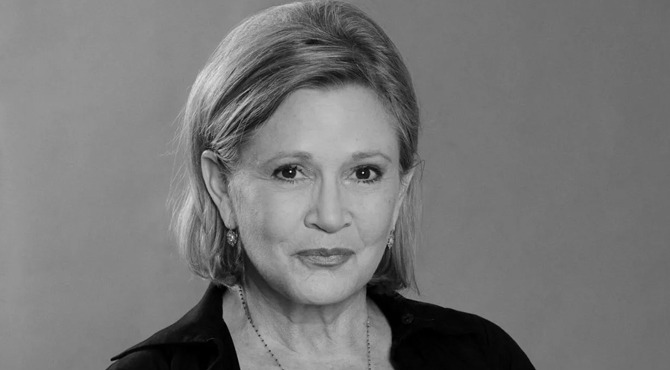
Carrie Fisher was one of those rare public figures who felt larger than the roles she played, yet more human than the mythology that surrounded her. Her death on December 27, 2016, at the age of 60, marked the end of a life that was as brilliant as it was complicated—shaped by fame, resilience, wit, creativity, and an unflinching honesty about mental health that helped change public conversations around it.
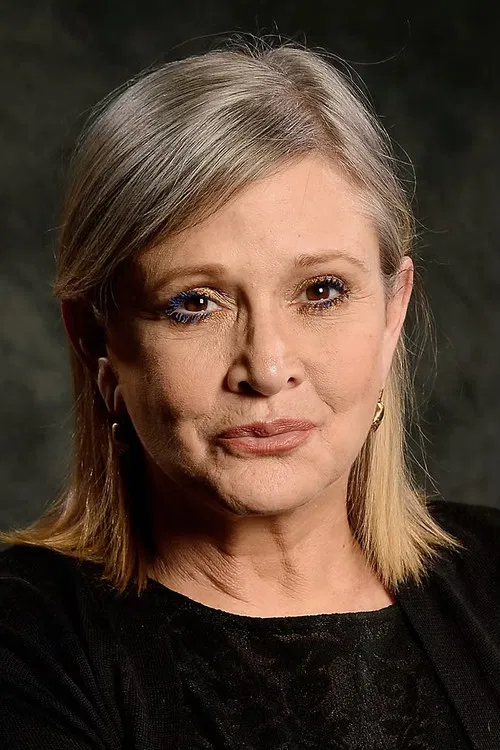
A Star Born Into Hollywood Royalty
Carrie Fisher was born on October 21, 1956, into one of Hollywood’s most famous families. Her mother was legendary actress and singer Debbie Reynolds, and her father was singer Eddie Fisher. From the very beginning, Carrie was surrounded by cameras, stage lights, and public attention. But unlike the polished image often associated with Hollywood royalty, Fisher grew up witnessing both the glamour and the fragility behind fame.
That duality would later become one of the defining themes of her life and work: the idea that what the world sees is often very different from what is lived behind closed doors.
Becoming Princess Leia: A Cultural Icon
For millions of people around the world, Carrie Fisher will forever be known as Princess Leia Organa from Star Wars: Episode IV – A New Hope and its sequels. When the film was released in 1977, it changed cinema history—and Fisher, just 19 years old at the time, became an instant icon.
Princess Leia was not a passive fairy-tale princess. She was sharp, strategic, fearless, and outspoken. She led rebellions, challenged authority, and refused to be rescued in the traditional sense. Fisher’s performance helped redefine what female characters could look like in blockbuster cinema.
Yet, Fisher often spoke candidly about how being Leia both elevated and overshadowed her. It brought her global recognition, but also boxed her into a single identity in the public imagination—something she spent much of her life navigating with humor and honesty.
Beyond the Screen: Writer, Humorist, and Storyteller
While acting made her famous, writing made her voice unforgettable.
Carrie Fisher became a celebrated author, known for her sharp, self-deprecating, and deeply intelligent writing style. Her semi-autobiographical novel Postcards from the Edge was widely praised for its raw honesty about addiction, mental illness, and Hollywood life. It was later adapted into a film starring Meryl Streep.
She followed it with other works including “Wishful Drinking” and “The Princess Diarist,” both of which blended humor with painful personal truth. Fisher had a rare ability to turn suffering into language that was not only readable but strangely comforting. She didn’t romanticize struggle—she dissected it, laughed at it, and invited others to do the same.
Living with Mental Health Challenges in the Public Eye
One of Fisher’s most important legacies is her openness about bipolar disorder and addiction. At a time when mental health was still heavily stigmatized, especially in Hollywood, she spoke publicly about her experiences with psychiatric treatment, medication, and recovery.
She once described her condition with characteristic wit, refusing to be defined by it while also refusing to hide it. This honesty helped many people feel less alone in their own struggles and contributed to broader cultural shifts in how mental illness is discussed.
Her approach was never about perfection—it was about survival, humor, and truth.
Return to the Galaxy: A Later Legacy
In 2015, Fisher returned to her most famous role in Star Wars: The Force Awakens, reprising Princess Leia as General Leia Organa. Her return was met with overwhelming affection from fans who had grown up with her character.
Her final on-screen appearance came in Star Wars: The Last Jedi, released after her death. The performance carried a haunting sense of closure, as audiences saw Leia’s strength and vulnerability one last time.
A Legacy of Wit, Strength, and Honesty
Carrie Fisher’s legacy cannot be reduced to a single role or achievement. She was an actress, yes—but also a writer, a humorist, a mental health advocate, and a cultural commentator with a sharp eye for hypocrisy and absurdity.
What made her truly unique was her refusal to be polished into a simplified image. She embraced imperfection publicly, turning her own life into a conversation about survival and self-awareness.
In a world that often demands curated identities, Fisher offered something far more honest: a messy, brilliant, deeply human voice that never stopped speaking the truth as she saw it.
Closing Reflection
Carrie Fisher once wrote and spoke often about the idea that pain is inevitable, but suffering is partly optional—depending on how we choose to interpret and carry it. Her life embodied that philosophy in all its contradictions.
She left behind performances that defined generations, books that continue to resonate, and a public legacy that reshaped how vulnerability can coexist with fame.
More than anything, she remains a reminder that strength does not have to be silent, and that even in the spotlight, it is possible to be entirely, unapologetically human.
