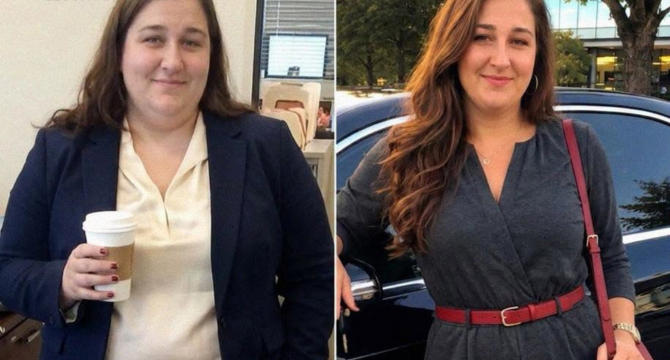
The office was always quietest at 6:47 in the morning. I liked it that way: the hush of empty cubicles, the low hum of printers warming up, and the smell of paper and toner, which somehow felt safer than perfume or cologne. At twenty-seven, I had two degrees, a notebook full of color-coded systems, and a desk so organized people joked it looked staged. What they did not joke about, at least not to my face, was my body.
I was a size 26. I had heard every comment, every sideways glance, every dessert-table whisper. I had also learned that numbers on a spreadsheet did not care what I weighed. Ryan did.
It was meant as a warning.
The first time I met him, he glanced at me over the rim of his coffee cup during my interview and tilted his head like I was a mildly inconvenient delivery.
“You went to two grad schools for this?” he asked.
“Yes,” I said. “Quantitative finance and applied analytics.”
He set the cup down.
“You’ll make coffee,” he said. “That’s a better fit for you.”
I caught errors in models the senior analysts swore were airtight.
I remembered laughing once, softly and politely. It could have been taken as friendly or a warning. It was meant as a warning. Still, I took the job. I needed the reference, the résumé line, and the kind of experience recruiters actually returned calls for. I told myself I could outlast him.
So I arrived early. I left late. I caught errors in models the senior analysts swore were airtight. Every night, around seven, when the lights on our floor dimmed to motion-sensor mode, Ryan walked past my desk and dropped a stack of files in front of me.
“Fix this before morning,” he said.
The next morning, I sat in the back of the conference room while Ryan walked three investors through my findings.
He never asked. He never thanked me.
I rebuilt investor decks at midnight. I corrected forecasts that, left alone, would have cost the firm millions. One Tuesday, I caught a leak in a portfolio valuation that had been quietly bleeding the company for two quarters. I flagged it in a clean two-page memo and sent it to Ryan before dawn.
The next morning, I sat in the back of the conference room while Ryan walked three investors through my findings.
“It was a subtle leak,” Ryan said, tapping the screen with my numbers on it. “Most people would have missed it.”
It was the slow realization that Ryan was building his career on a silence he assumed I would never break.
“Brilliant work, Ryan,” the lead investor said. “Truly brilliant.”
Ryan smiled like a man receiving a gift he believed he had earned. He did not look at me. He did not say my name. He never said my name in those rooms. I stared at the carpet and tried to feel nothing.
“You alright back there?” one of the junior associates whispered.
“Fine,” I said. “Just tired.”
It was not tiredness. It was the slow realization that Ryan was building his career on a silence he assumed I would never break.
The Henderson restructure had taken me five nights.
Six months in, my desk had become a graveyard of files that should have had my name on them. I told myself the reference was worth it. I told myself every analyst started somewhere. I told myself the bruise on my pride would heal once I had a title that matched my work.
Then came Thursday night. I was leaving late, as usual, when I passed the bar across the street from the office. Through the window, I saw Ryan holding court, drink in hand, the same investors from Tuesday’s meeting laughing around him.
“That Henderson restructure,” Ryan was saying, loud enough to carry, “took me three nights. Three. But that’s the job.”
The Henderson restructure had taken me five nights. He had not opened the file once. I stood on the sidewalk in the cold, and something inside me went very quiet. Not furious. Quiet, the way a room goes still right before someone finally says what nobody wants to hear.
Ryan waved me in without looking up.
The next morning, I knocked on his door before he had finished his coffee.
“Got a minute?”
Ryan waved me in without looking up.
“This isn’t fair, Ryan,” I said. “The Henderson deck was mine. The forecasts were mine. The leak I found last quarter would have cost this firm seven million dollars, and you let them shake your hand for it. The team should know.”
He set down his mug slowly, like he was savoring something.
Ryan leaned back and laughed, full and open-mouthed, like I had told him a joke at a dinner party.
“You think this is about fair?”
“I think it’s about honest.”
Ryan leaned back and laughed, full and open-mouthed, like I had told him a joke at a dinner party.
“You know what your problem is?” he asked.
“Enlighten me.”
“Before you talk to me again,” he said, “try learning how to control yourself around a dessert table. Then maybe we’ll discuss what your work is worth.”
The next morning, the lobby scanner beeped red.
The words landed exactly where he aimed them. I felt my face heat. I felt my hands curl against my skirt. But I did not cry. I did not shout. I only looked at him until his grin began to falter.
“Okay, Ryan,” I said quietly. “Okay.”
I walked out of his office, past the cubicles, past the kitchen where I had been told I belonged. I made it to the elevator before my knees started shaking.
The next morning, the lobby scanner beeped red. I tried again. Red. Security walked over, polite and embarrassed.
A junior assistant brought down a cardboard box.
“Ma’am, I’m sorry. Your access has been revoked.”
“By whom?”
“Ryan’s office. As of yesterday afternoon.”
A junior assistant brought down a cardboard box: my mug, my planner, and a photo of my mother. Six months of my life, packed by someone who did not know my name.
“Is there a letter? Severance? Anything?”
I made myself a promise right there on the curb.
The assistant could not meet my eyes.
“He said you’d understand. Your six-month review came back negative. That’s all the paperwork there is.”
Six months, they had told me at signing. Six months before the contract converted. He had timed it to the day. I stood on the sidewalk holding that box while people in suits moved around me like water around a stone. No paycheck. No reference. No warning. The reference I had endured him for had evaporated in one sentence about a dessert table.
I didn’t cry. I made myself a promise right there on the curb, my hands aching from the cardboard. Ryan would one day know exactly who I was. By then, it would be too late for him to look away.
The first real win came on a rainy Tuesday.
The sidewalk promise did not pay rent. For three months, I slept on my friend Tasha’s couch and ate ramen while cold-emailing every small business owner I could find. I offered to audit their books for a quarter of what established firms charged. Most ignored me. A few said yes.
The first real win came on a rainy Tuesday. A boutique skincare startup wanted me to review its valuation before signing with a buyer. I spent two nights with the numbers.
“Your buyer is lowballing you by forty percent,” I told the founder over the phone. “And the valuation report has a falsified revenue line. Walk away.”
She told three friends. Those three told nine more.
She went quiet.
“How did you catch that in two days?”
“I’ve been catching things like that for years,” I said. “Other people just put their name on it.”
She told three friends. Those three told nine more. Within two years, I had a real office, two employees, and a waiting list. Within seven, I had a second company that bought distressed financial firms and rebuilt them from the inside out. I stopped eating in shame. I started walking, then running, then sleeping eight hours a night. My body changed, but more importantly, I stopped checking the mirror for permission.
I closed the folder slowly.
One evening, my chief of staff, Diane, dropped a folder on my desk. She had once been a senior operations director at Ryan’s firm. She had stayed quiet then. She did not stay quiet now.
“You’re going to want to see who’s bleeding clients this quarter,” she said.
I opened the folder. Ryan’s firm was down thirty percent. Two partners had already walked.
“Interesting,” I said.
“Interesting enough to acquire?”
I closed the folder slowly.
Months later, I flew to a national business forum.
“Start the quiet conversations. No press. No leaks. I want clean paperwork, clean financing, and no theatrics until the deal is final.”
Diane nodded, then paused at the door.
“For what it’s worth, I should have said something back then.”
“You’re saying it now,” I told her. “That counts.”
Months later, I flew to a national business forum. I had been invited as a keynote speaker, but the event organizer, Marcus, had hinted at an award as well. That morning, I stopped at the coffee station in the hallway. I was reaching for a cup when I heard him.
He was older, heavier around the jaw.
“Well, well,” Ryan said behind me. “Still carrying drinks?”
I turned. He was older, heavier around the jaw. His suit cost more than the one he used to wear, but he wore it worse. He squinted at me for half a second, the way a man squints at a name he cannot quite place.
“Have we met?” he asked. “You look familiar.”
“I get that a lot.”
I smiled.
He gave me the same once-over he used to give me across his office.
“No sugar, right?”
He laughed, the same dismissive laugh from years ago, and reached past me for a stirrer.
“Good memory,” he said.
The squint disappeared, written off. He gave me the same once-over he used to give me across his office. This time, it couldn’t touch me.
“Word of advice,” he said. “Tonight’s a serious crowd. Don’t hover near the speakers.”
“I’ll keep that in mind.”
“And the Business Leader of the Year is…”
He walked away. I watched him go, cup warm in my hand, and felt nothing where rage used to live. Marcus appeared at my elbow with a quiet smile.
“They’re ready for you,” he said. “You’re up next.”
I set the cup down and smoothed my jacket. Ryan had walked away from the coffee station without noticing the black document box in my other hand, or the stage he had just told me to avoid.
“And the Business Leader of the Year is…”
I walked toward the stage with the black box tucked under my arm.
Marcus paused, and the room held its breath.
“…the founder of Meridian Holdings.”
Applause rose like weather. I walked toward the stage with the black box tucked under my arm. Ryan sat frozen in the front row, color draining from his face as recognition finally landed. I reached the microphone and set the box down gently.
“Ten years ago,” I began, “a man told me I belonged near a coffee pot, not a boardroom. He told me to control myself around a dessert table before I dared ask for credit.”
I lifted a signed document so the cameras could catch it.
A murmur rippled through the crowd.
“I believed, for a long time, that I needed his approval. That my worth had to be measured by someone who could not see past my body.”
I opened the box.
“This is not an award keepsake.”
I lifted a signed document so the cameras could catch it.
“These are the final acquisition papers for Northline Capital. The board signed this morning, and the announcement was cleared for release at this event. As of right now, Meridian Holdings owns the majority stake.”
I looked directly at Ryan. He did not move.
The silence was absolute. Five hundred people, and not a glass clinked.
“The firm will be restructured,” I continued. “New leadership. Transparent credit. A culture built on dignity and merit. Anyone who measures worth by appearance will no longer have a seat at my table.”
I looked directly at Ryan. He did not move.
“Thank you,” I said, and stepped down.
He stood as I passed his row.
The applause swelled behind me, but I was already moving toward the lobby.
“Wait,” he whispered. “Please. Let me explain.”
I paused, just for a moment.
“No sugar, right?”
A photographer rushed forward, asking for a photo of us together. I shook my head and kept walking. The applause swelled behind me, but I was already moving toward the lobby, toward something quieter, toward the part of the evening that belonged only to me.

 admin
admin