By sixteen, Maddie felt less like a friend and more like the sister I had picked out for myself.
My older brother, Ryan, drove us to camp that year in our father’s old station wagon.
Dad had been gone two years by then, and Ryan, only nineteen, tried hard to fill that space.
“You two behave,” he told us at the drop-off.
“We never behave,” Maddie said, grinning.
“That’s what scares me.”
Ryan drove us to camp
I remember the bonfire on the last night.
Maddie pulled me aside and whispered that she needed to tell me something important in the morning.
I remember Ryan standing at the edge of the firelight, watching us, his face unreadable.
Morning never came for that conversation.
Maddie was gone.
She needed to tell me something
Her bunk was empty.
Her backpack was missing.
Her sneakers were left behind in the dirt.
The counselors searched the woods.
The police searched the lake.
Nobody found a single thread of her.
The police searched the lake.
Ryan came home that same afternoon with a swollen lip and dried blood crusted on his collar.
“What happened to you?” I asked him in the hallway.
“Nothing, Helen. Drop it.”
“Ryan, where’s Maddie?”
“I said drop it.”
My mother stood in the kitchen doorway with her arms folded.
“Ryan, where’s Maddie?”
She told me to go upstairs.
She told Ryan to pack a bag.
By Friday, my brother was on a bus to our uncle’s ranch in Montana.
I caught him at the curb before he climbed in.
“Did you do something to Maddie?”
He looked at me for a long, terrible moment.
She told Ryan to pack a bag.
His eyes were wet, but his mouth stayed shut.
For twenty-seven years, that silence answered every question I never asked again.
I grew up.
I married a kind man named Tom.
I had two daughters who never met their uncle, because their grandmother told them he was dangerous.
I grew up.
I let her say it.
I let her say a lot of things.
Last Thursday afternoon, I stopped at the grocery store.
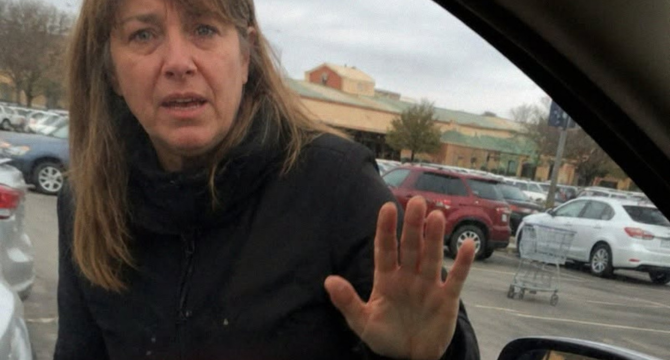
I was loading bags into my trunk when I heard shouting near the cart return.
I got into my car and locked my doors.
Then someone slammed against my window.
I heard shouting.
I stared at the woman.
The parking lot noise faded into a strange, muffled hum.
Maddie stood there, real and breathing, twenty-seven years older but unmistakable.
“Get in the car,” I whispered.
She walked around to the passenger side.
I unlocked the door with a shaking finger.
Maddie stood there.
“You’re alive,” I said.
“I’m alive.”
“Where did you go? Maddie, where have you been for twenty-seven years?”
She turned a receipt over in her lap, smoothing the creases like it was a holy thing.
“My aunt moved us out the morning after the bonfire. Three states away. By Sunday I was enrolled in a new school with a new last name.”
“Where did you go?”
“That’s not possible.”
“It’s possible if someone pays for it.”
She showed me the receipt.
A number was circled on it — $15,000
“The morning after I disappeared, your mother offered my aunt fifteen thousand dollars.”
“Maddie, my mother didn’t have that kind of money. My father had just died. We were drowning.”
“It’s possible if someone pays for it.”
She looked at me then.
Her eyes held something I hadn’t seen since we were sixteen.
Pity.
“Helen. Your father left you and Ryan a life insurance trust. Did you ever see a penny of it?”
The question landed like a slap.
I opened my mouth, then closed it.
Pity.
College loans.
Two jobs through nursing school.
My mother crying about the gas bill every winter.
“No,” I said quietly. “There was no trust. She told us he didn’t have one.”
“There was a trust.”
“How would you know that?”
“There was no trust.”
“Because Ryan told me. The night of the bonfire.”
I gripped the steering wheel until my knuckles went white.
“Ryan was always quiet about your family, but that night he said he’d found bank statements in your mom’s closet. He said she’d been moving money for months. He asked me what I thought he should do.”
“And what did you tell him?”
“Because Ryan told me.”
“I told him to confront her. That same night.”
The split lip.
The way my mother sent Ryan away.
Pieces I had carried around as separate, broken things suddenly clicked into a shape I recognized.
“He did it. He went home and confronted her,” I said.
The split lip.
“And then someone came pounding on my aunt’s trailer door at four in the morning with an envelope.”
“My mother.”
Maddie nodded. “My aunt wasn’t a good person, Helen. You knew that.”
I nodded.
“She took the money and had us packed before sunrise. She told me if I ever contacted you or anyone from camp, she’d tell the police I did something to a boy that summer. I was sixteen. I believed her.”
“My mother.”
“Why come back now?”
“She died last month. I went through her papers.” She tapped the receipt. “This was in a shoebox under her bed. Along with a note in your mother’s handwriting that said, ‘For your silence and your immediate departure.'”
I felt something hot and acid climb up my throat.
“My brother.”
“Why come back now?”
“Your brother tried to protect you, Helen. From her. That’s why he left without telling you anything. She told him if he didn’t disappear and take the blame, she’d say he hurt me.”
“I asked him if he did something to you. I asked him to his face.”
“I know.”
“He didn’t even answer me. He just left.”
Maddie reached across the console and took my hand.
“Your brother tried to protect you.”
“He’s alive, Helen. He’s in Oregon. He has two kids. He talks about you.”
“You’ve spoken to him?”
“Last week. He gave me permission to come find you. He said you had to hear it from me first, or you’d never believe it.”
I looked at the receipt again.
$15,000.
“You’ve spoken to him?”
The price of my brother.
The price of my best friend.
“I have to go,” I said.
“Helen, wait. Don’t go to her tonight. Not while you’re like this.”
“I’m not waiting another hour.”
I put the car in drive.
“Don’t go to her tonight.”
I drove to my mother’s house with the receipt pressed flat against the steering wheel.
My hands would not stop trembling.
Maddie’s words played on a loop inside my head.
By the time I pulled into the driveway, my whole body felt cold.
I let myself in without knocking.
My mother was sitting in her armchair, reading glasses low on her nose.
I drove to my mother’s house.
She looked up.
“Helen. You should call before you come.”
I dropped the receipt onto the side table next to her tea. “Explain that.”
She glanced at it. “Where did you get this?”
“Maddie gave it to me.”
For a heartbeat, something flickered behind her eyes.
“Explain that.”
“Maddie,” she repeated, almost amused. “Helen, sit down.”
“I’ll stand.”
She sighed. “That girl was trouble then and she is trouble now. Whoever found you today is running a scam. People do this. They wait years, then they come back with a piece of paper and a sad story.”
“It has your handwriting on it.”
“That girl was trouble.”
“It has someone’s handwriting on it.”
I felt my certainty wobble.
That was her gift. She could make the ground under your feet feel like a rumor.
“Mom. Maddie was my best friend.”
“Maddie was a confused little girl from a bad home. And Ryan.” She paused, picking the next word carefully. “Ryan was not the boy you remember, sweetheart. He had a temper. He came home that night with blood on his shirt.”
I felt my certainty wobble.
“Because you hit him.”
“Because he was fighting. With her.”
I sat down then, because my knees would not hold me.
“Honey, I protected you. I sent your brother away so you would have a chance to grow up safe. Do you know what it cost me to make that decision alone, after your father died?”
She let the word “father” hang in the air like a hook.
“I protected you.”
“I have lived with that choice for twenty-seven years so that you would not have to. And now some woman bangs on your window and you come here ready to call me a monster?”
I looked down at my lap.
For one terrible moment, I almost believed her.
I almost said sorry.
I almost drove home and made dinner.
I almost believed her.
That is how it works, I realized. That is how she had kept me for twenty-seven years.
“I want some water,” I said quietly.
“Of course, darling. I’ll get it.”
She stood, patted my shoulder, and walked toward the kitchen.
The second she was out of the room, I exhaled.
My eyes drifted, unfocused, across the study behind her armchair.
And then I saw it.
That is how it works,
On the corner of her desk was a small wooden box with a brass latch.
A chipped corner.
A keyhole shaped like a teardrop.
My memory cracked open.
I was sixteen again, watching Ryan crouched over that same box with a butter knife in his hand.
“Helen, go to bed,” he had whispered. “Please. Just go to bed.”
A small wooden box.
I had gone to bed.
That was the last full sentence my brother ever spoke to me.
I walked into the study.
I picked up the box.
“Helen?” my mother called from the kitchen. “Ice or no ice?”
My fingers tightened around the wood.
I picked up the box.
“Ice,” I called back.
I carried the box to the armchair and sat down with it on my knees.
The keyhole stared up at me like a small, closed eye.
My mother walked back in with a glass of water and stopped in the doorway.
She saw the box on my lap.
“Helen,” she said sharply. “Put that down.”
She saw the box on my lap.
I looked up at her, and I did not recognize the woman in front of me.
“No,” I said. “I think it’s time we finally opened it.”
I grabbed the brass letter opener from her desk and pried the wooden box open.
Inside lay yellowed bank statements, withdrawal slips, and a single notarized letter with my father’s name at the top.
My father’s life insurance.
“I think it’s time we finally opened it.”
“Maddie was right. You stole from us,” I said. “From Dad. From Ryan. From me.”
“Helen, put that down.”
“Say it,” I whispered.
“I did what I had to do.”
“You let me hate my brother for twenty-seven years.”
“He was going to ruin everything. Both of them were.”
“Say it,”
“They were going to expose you.”
She nodded. “I gave that woman the money so she’d take the girl and disappear, and I told Ryan if he stayed, I’d make sure no one ever believed a word he said.”
“How could you? You’re my mother.”
“I’m the only reason you had a roof over your head.”
“No,” I said. “You’re the reason I lost everyone under it.”
“They were going to expose you.”
I walked past her with the box tucked under my arm.
She called my name twice.
I didn’t turn around.
I sat in my car and stared at the steering wheel until my hands stopped trembling.
Then I pulled out the slip of paper Maddie had pressed into my palm at the grocery store.
Ryan’s number.
I dialed.
Ryan’s number.
The line rang twice before a man’s voice answered.
I closed my eyes and began to speak.
“Helen?”
My throat closed.
I had imagined this moment a thousand times over twenty-seven years.
In every version, I was angry.
In every version, I had questions.
“Helen?”
Instead, the only thing I could say was, “I’m sorry.”
The silence that followed felt endless.
“You were sixteen,” Ryan said quietly.
That somehow made me cry harder. “I thought you hurt her.”
“I know.”
“I should’ve found you.”
“I thought you hurt her.”
“I should’ve fought harder to come back.”
Neither of us spoke for a few seconds.
Twenty-seven years sat between us, too heavy for either of us to carry alone.
Finally, Ryan laughed softly.
It sounded older than I remembered.
“Maddie told me you’d blame yourself.”
“I should’ve fought harder to come back.”
“She’s right.”
“She’s usually right.”
For the first time that day, I smiled.
We talked for nearly two hours.
About our spouses.
Our children.
The birthdays we’d missed and the holidays we’d spent wondering about each other.
We talked for nearly two hours.
Before we hung up, he said something I don’t think I’ll ever forget.
“I never stopped being your brother, Helen.”
A week later, he came home.
Not to our mother’s house.
To mine.
My daughters met the uncle they’d been taught to fear.
A week later, he came home.
My husband shook his hand.
Maddie came too.
The four of us sat around my kitchen table until long after midnight, piecing together a family someone else had broken apart.
Word spread quickly after that.
Relatives who had believed my mother’s version for decades learned the truth.
Word spread quickly
Some were angry.
Some were ashamed.
Most simply stopped calling her.
For the first time in twenty-seven years, she couldn’t control the story.
The last thing she lost wasn’t her reputation.
It was her audience.
Some were angry.
And as I watched my brother laughing with my daughters in the backyard, I realized something.
The woman who destroyed my family had spent nearly three decades trying to keep us apart.
In the end, the truth brought us back together anyway.

 admin
admin