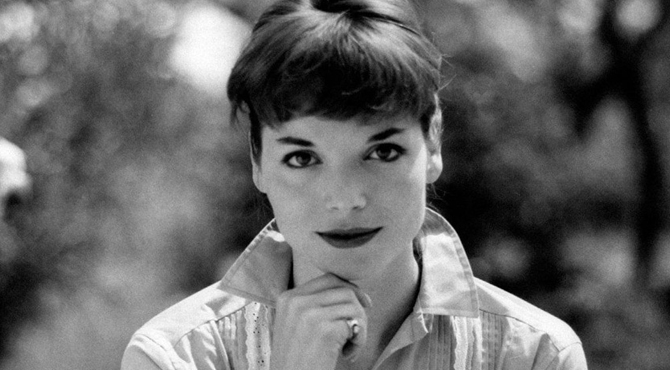
Elsa Martinelli (11 January 1935 – 8 July 2017) was one of those rare European screen presences who crossed into Hollywood without losing the effortless elegance that first made her a star. Remembered for her striking beauty, quiet charisma, and understated sophistication, she built a career that moved fluidly between Italian cinema, French productions, and major international films—at a time when such crossover success was far less common than it is today.

Born Elsa Tia in Grosseto, Italy, Martinelli’s early life gave little hint of the global stardom ahead. She began working as a model in Rome, and her photogenic appeal quickly drew attention in fashion circles. That modeling work proved to be her gateway into cinema, and it wasn’t long before Hollywood came calling.
Her breakthrough came in the mid-1950s when she was discovered by filmmaker Kirk Douglas, who cast her in the adventure film The Indian Fighter (1955). The role immediately introduced her to American audiences, and she stood out not only for her beauty but for a natural screen presence that felt relaxed rather than manufactured. In an era often defined by heavily polished star personas, Martinelli’s subtlety made her distinctive.
She achieved international acclaim with the 1957 film Donatella, directed by Mario Monicelli, a performance that earned her the Silver Bear for Best Actress at the Berlin International Film Festival. The role showcased her ability to balance charm with emotional depth, proving she was far more than a glamorous supporting figure.
Hollywood continued to embrace her throughout the 1950s and 1960s. She appeared alongside major stars in films such as Hatari! (1962), directed by Howard Hawks and starring John Wayne. In this lively African-set adventure, Martinelli played Anna Maria “Dallas” D’Allesandro, a photographer who holds her own in a rugged, male-dominated environment. The role reinforced her image as an actress who could bring intelligence and wit to glamorous parts without being overshadowed by her famous co-stars.
Beyond Hollywood, she worked steadily in European cinema, collaborating with respected directors and appearing in both dramatic and comedic roles. Her versatility was one of her defining traits—she was equally comfortable in light romantic fare as she was in more serious, character-driven films.
In the 1960s and 1970s, Martinelli continued to appear in international productions, including The V.I.P.s (1963), where she acted alongside Elizabeth Taylor and Richard Burton, further cementing her place among a global elite of screen talent. Later in her career, she transitioned into television and occasional stage work, maintaining a presence in the entertainment world without chasing the fading spotlight of youth-oriented fame.
What made Elsa Martinelli especially memorable was not just her filmography, but the quality of her screen aura. She embodied a particular mid-century ideal of European sophistication—cool, poised, and intelligent—yet she never felt distant or inaccessible. Directors often praised her professionalism and ease on set, while audiences were drawn to her blend of elegance and warmth.
As Hollywood evolved, she gracefully stepped back from major roles, choosing a quieter life while still occasionally appearing in productions. Her legacy, however, remained intact: a bridge between European cinema’s artistry and Hollywood’s golden-age glamour.
Elsa Martinelli passed away in Rome in 2017 at the age of 82. She left behind a body of work that reflects not only her talent but also a fascinating period in film history when international stars began to move freely between continents, reshaping global cinema in the process.
Today, she is remembered as more than just a screen beauty of her era. She stands as a symbol of elegance, adaptability, and quiet strength in performance—an actress who never needed excess to make an impression.
Her films continue to be revisited by classic cinema enthusiasts, and her performances—especially in Donatella and Hatari!—remain enduring reminders of a career built on grace, intelligence, and timeless screen presence.
