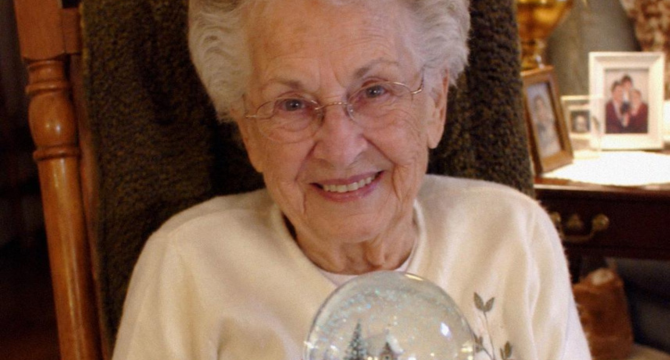
By the time winter settled over Willow Park, I had learned not to trust mornings.
Some days, I woke up knowing my name was Margaret. Other days, I stared at the card taped beside my bed until the letters stopped swimming.
Margaret. Cottage 12. Willow Park Retirement Community. Son: David.
The last line always bothered me most.
Not because I didn’t know David. I did. At least, I knew the shape of him. His pressed shirts. His careful smile. The way he spoke to me like I was something fragile he had once dropped and never quite trusted himself to hold again.
Ruth, my night nurse, always knocked before entering.
“Good morning, Margaret,” she said one icy December morning. “Do you know where you are today?”
“My room,” I answered.
“That’s right. Your room at Willow Park.”
“Did I choose this place?”
“You did,” Ruth said gently. “Your son helped with the paperwork.”
“My son,” I repeated.
“David.”
She pointed to the framed photograph on my dresser. David stood beside me in a blue shirt, smiling like a man posing for proof.
“He looks tired,” I said.
“He worries about you.”
“Does he bring flowers?”
Ruth hesitated.
“No. But he brings your vitamins.”
I laughed because she did.
Willow Park was full of waiting people. Waiting for daughters who called on holidays. Waiting for grandchildren who promised to visit after soccer season, then after exams, then after life became less busy.
Mrs. Alvarez, who was next door, called visitors “February sunshine.”
“Rare,” she told me from her porch, “brief, and talked about afterward for days.”
I looked at my own empty steps.
“Maybe my people are busy.”
Ruth squeezed my shoulder.
“Busy people can still love you.”
“Then why does quiet feel so personal?”
She didn’t answer.
But on the 17th of every month, quiet turned red.
A small gift box would appear on my porch, wrapped in bright red paper and tied with white ribbon. Always in the exact center of the welcome mat.
The first time, I called Ruth.
“Did you leave this?”
“No, sweetheart.”
“Is it my birthday?”
“Not today.”
“Then who knows I’m here?”
Ruth picked up the box carefully.
“Let’s find out.”
Inside was a snow globe.
Tiny houses leaned under painted snow. A church stood beside a frozen pond. When Ruth shook it, silver flakes drifted through the glass.
Something in my chest opened and ached.
“Oh,” I whispered.
“You like it?”
“My heart hurts.”
Ruth’s smile faded.
“Should I call the doctor?”
“No.” I pressed my hand over my chest. “Not that kind of hurt.”
After that, the boxes kept coming.
Every month, wrapped in the same paper and the same ribbon.
By the second year, I had 24 snow globes lined across the shelf beside my bed.
David noticed them every Sunday.
“Another one?” he asked one afternoon, setting a grocery bag on the table.
“Yes. Aren’t they pretty?”
“They’re starting to pile up.”
“They’re mine.”
His smile tightened.
“I know, Mom. I just don’t want you getting attached to things that confuse you.”
“Who sends them?”
“Probably one of those volunteer groups.”
“Volunteer groups know my porch?”
David sighed.
“Mom, does it matter?”
“Yes.”
He glanced toward Ruth, who was watering my little plant near the window.
“I screen her deliveries,” he said. “After that medication mix-up last year, the office agreed to call me about anything unusual.”
I frowned.
“Did I agree to that?”
“You were having a bad month.”
That was how people spoke about missing parts of my life. A bad month. A difficult week. As if memory were weather.
That evening, while dusting the shelf, I noticed something strange.
Each snow globe had a narrow slot underneath the base.
Empty.
“Ruth,” I said. “Something belongs here.”
She turned one over.
“A card, maybe.”
The next Sunday, I asked David.
“Were there notes with the globes?”
His answer came too quickly.
“No.”
“But there’s a place for one.”
“Mom, you’re overthinking this.”
“People keep telling me what I know,” I snapped. “Maybe I’d like to decide something myself.”
The sharpness in my own voice startled me.
David looked startled, too. Then tired.
“From what?”
He looked away.
“Old wounds.”
That night, I dreamed of cinnamon on the stove and fake snow scattered across a kitchen table. A little girl laughed while I glued tiny windows onto cardboard houses.
When I woke up, I couldn’t remember her face.
I only remembered the sound of her laughter.
At four in the morning on the 17th of December, footsteps woke me.
Not Ruth’s.
Not the heater.
Someone was outside my cottage.
I wrapped myself in my robe and shuffled toward the front door.
When I opened it, a boy stood on my porch holding a red box.
He looked about 14, thin and pale, snow melting in his dark hair.
For a moment, he stared at me as if I had stepped out of a dream.
“Who are you?” I whispered.
“I’m sorry,” he said quickly. “I didn’t mean to wake you.”
“That box,” I said. “Is it mine?”
“Yes.”
“Why?”
He looked toward the parking lot.
“I was supposed to leave it and go.”
“Supposed by who?”
“My mom.”
Something inside me shifted.
“Your mother knows me?”
His eyes filled.
“She said you used to know her better than anybody.”
I gripped the doorframe.
“What’s her name?”
Before he could answer, a flashlight swept across the porch.
Ruth hurried up the walkway in her blue sweater.
“Margaret? Honey, are you all right?”
I pointed at the boy.
“He brought the globe.”
Ruth stopped beside me.
“What’s your name, sweetheart?”
“Noah.”
“You’re very young to be wandering around at four in the morning.”
“I’m not stealing,” he blurted. “I promise.”
“I believe you,” Ruth said. “But why are you leaving gifts for Margaret?”
His voice trembled.
“Because my mom can’t come.”
“Why not?”
“Because Mr. David took her off the visitor list.”
Cold rushed through me. “What?”
Ruth’s expression sharpened. “What’s your mother’s name?”
The boy swallowed. “Anna.”
The name passed through me like warm water under ice.
“Anna,” I repeated.
Noah stepped closer. “You remember?”
“I don’t know.” Shame burned my throat. “But my heart does something when you say it.”
Tires crunched on gravel, and a gray car rolled to the curb.
David stepped out wearing a coat over pajama pants.
“Mother,” he called sharply. “Get inside.”
“David? Why are you here?”
“Security called me.”
Ruth frowned. “I didn’t call security.”
“I asked the front desk to notify me if anything unusual happened around her cottage.”
Noah hugged the box tighter. “I wasn’t bothering her.”
“You were trespassing,” David snapped.
“She opened the door.”
“She doesn’t understand what’s happening.”
I flinched. “I understand a boy is giving me something.”
David climbed the porch steps. “Mom, let me handle this.”
“No.”
The word surprised all of us. I held out my hands.
“I want the box.”
“It will only upset you.”
“Then let me be upset.”
Noah placed the box in my hands.
David reached for it, but Ruth stepped between us.
“David,” she said firmly. “Stop.”
He looked at her like she had betrayed him. “I am protecting my mother.”
“No,” Noah burst out. “You’re hiding us.”
“He said she didn’t want us,” Noah whispered.
The words landed like stones. “I said that?”
“No,” Noah said softly. “He did.”
David grabbed the edge of the box.
Noah held on.
And then… the lid slipped.
A snow globe rolled into Ruth’s hands.
Underneath was the little empty slot.
Ruth turned it over slowly.
“David,” she said quietly. “Where are the notes?”
Nobody spoke.
Inside my cottage, the silence felt enormous.
I sat on the edge of my bed, clutching the globe while David paced the kitchen.
“There were never notes,” he said.
“There’s a place for them,” Ruth replied.
“That doesn’t prove anything.”
“It proves something was removed.”
David stopped pacing.
“You don’t understand what you’re asking.”
“Then explain it,” Ruth said.
He looked at me then. For the first time in years, he didn’t look careful.
He looked angry. And afraid.
“You don’t remember what happened when Anna left,” he said.
“No.”
“You cried for weeks.”
“That means I loved her.”
His jaw tightened. “You loved her too much.”
A knock sounded at the back service door.
Ruth opened it.
A woman stood outside in a gray coat, snow dusting her dark hair.
The moment I saw her, my chest hurt.
“Mom,” she whispered.
I could not place her face, but I knew her voice.
“Anna,” I said.
David went rigid. “You shouldn’t be here.”
Anna looked at him. “I stayed away for two years because you said visits confused her. I wrote because you promised letters were safer. I sent the globes because you said she received them.”
“She did receive them.”
“Without my words,” Anna replied.
David looked away.
Anna’s face crumpled. “I thought she forgot me.”
I stared at the globe in my lap.
“Maybe I did,” I whispered. “But not completely.”
Noah moved quietly to Anna’s side.
David sat heavily in the chair near the window.
“I thought I was helping,” he said.
Anna laughed bitterly. “You always think that after you’ve made sure nobody else gets a choice.”
“You left.”
“I was 19!” she shot back. “Dad had just died. Mom and I fought. I was angry.”
“You disappeared.”
“I called months later. You answered the phone and told me she didn’t want me anymore.”
I stared at David. “You said that?”
His shoulders sagged. “She was finally healing.”
“Healing?” Anna cried. “Or forgetting?”
Something flickered inside my mind. A slammed door. A teenage girl crying. Me shouting words I regretted the moment they left my mouth. “Don’t come back until you learn gratitude.”
My breath caught.
“I told you to leave,” I whispered.
Anna covered her mouth. “Yes.”
“And you came back anyway?”
Tears spilled down her face. “Of course I did. You were my mother.”
David rubbed both hands over his face. “I was angry she got forgiveness so easily.”
Anna stared at him. “You think this was easy?”
At that point, Noah reached into his coat pocket and pulled out an envelope.
“Mom said if Mr. David stopped me again, I should give this to Nurse Ruth.”
Ruth unfolded the paper carefully.
“Do you want me to read it, Margaret?”
I nodded.
“Mom,” Ruth read softly, “if this reaches you, it means I finally found a way past the walls around you. I send the snow globes because you and I built Christmas villages every December, even during the years we barely spoke. You always said tiny houses made winter feel less lonely. If you don’t remember me, that’s all right. I remember enough for both of us.”
My breath broke.
Anna reached for my hand, stopping halfway.
I placed my fingers in hers. It felt warm and familiar.
“I don’t remember everything,” I said.
“I know.”
“But I remember missing something.”
David bowed his head. “I thought if she came back, you’d break all over again.”
I looked at him. “And did keeping me empty save me?”
He didn’t answer.
By sunrise, Mr. Patel sat across from us in his office while snow drifted past the windows.
The 25th globe rested in the middle of the table.
“Margaret,” he said carefully, “do you want Anna and Noah added back to your approved visitor list?”
David stepped forward. “She has dementia. She may not understand the consequences.”
I looked at him until he stopped talking.
“I understand a door,” I said. “I understand a child standing in the cold because grown people were afraid.”
Noah stared at his shoes. “I wasn’t trying to hurt anybody.”
“I know,” I said. “You were bringing me home.”
Anna began crying quietly.
Mr. Patel slid a form toward me, and Ruth placed a pen in my hand.
I signed the form as my hand shook uncontrollably.
Weeks later, Anna sat beside my bed while Noah turned one snow globe upside down after another.
Silver flakes drifted over tiny roofs.
“Tell me again,” I said.
Anna smiled through tears. “You built us a Christmas village every December.”
“Was I good at it?”
“No,” Noah said immediately.
Anna laughed.
“You used way too much fake snow,” Noah added.
For once, I laughed because I understood the joke.
Anna reached into her bag and placed a stack of folded cards beside my pillow.
“Ruth found them,” she said quietly. “David kept every note.”
I touched the top envelope.
“Will they make me sad?”
“Probably.”
“Then read one.”
Anna unfolded the first letter.
“Dear Mom,” she began, “today I saw a snow globe in a shop window, and for a second I was eight years old again…”
As she read, I watched the snow fall inside the glass.
I did not remember everything, but I remembered enough.
And when I forgot again, as I knew I would, Noah tapped the card beside my pillow and grinned.
“Don’t worry,” he said. “We’ll tell you again.”

 admin
admin