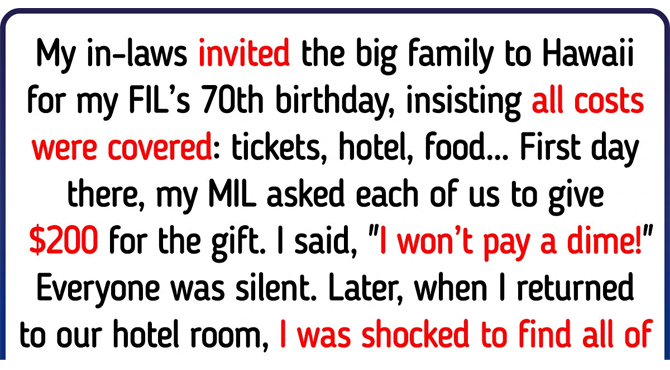
Money can often be a source of tension and conflict in families, as Dan discovered during what was supposed to be a warm and celebratory family vacation. Initially promised an all-expenses-paid trip, he was later asked to contribute to a birthday gift. This unexpected request turned the vacation sour, prompting Dan to seek advice from us.
Here is Dan’s letter:
My in-laws invited the extended family to Hawaii for my father-in-law’s 70th birthday. They insisted all costs were covered: tickets, hotel, food, etc.
On the first day there, my mother-in-law asked each of us to contribute $200 for the birthday gift. I said, “I won’t pay a dime!” Everyone was silent, including my wife.
After eating the cake, my mother-in-law suddenly got up. With a laugh, she declared to her husband, “We all got you a special gift to celebrate your 70th birthday.” Mid-speech, she stopped and said, “Well, almost everyone. Dan felt that $200 is too much money to spend for his father-in-law’s birthday!”
Later that night, when I returned to our hotel room, I was shocked to find all of my wife’s belongings gone; she had packed her suitcase and left the vacation. She left me a note saying, “You humiliated me in front of my entire family.”
I don’t think I am in the wrong here. We should have been told in advance that we had to pay; I felt lied to. Was I wrong to act this way?
Dan
Thanks for your letter, Dan! We’ve prepared a few tips that we hope will help you navigate this situation.
Open and honest conversation.
Sit down with your wife and have an open and honest conversation about what happened and how it made both of you feel. Acknowledge her feelings of humiliation and explain your perspective, emphasizing that you felt blindsided by the unexpected request for money.
Discuss ways to improve communication and manage similar situations in the future. Apologize sincerely for any hurt caused, even if you believe you were justified, to show you value her feelings and your relationship.
Reconciliation gesture.
Consider making a grand gesture to show your commitment to making amends. This could involve writing a heartfelt letter to your wife and in-laws, explaining your perspective and expressing your regret for how the situation was handled.
You could also suggest a smaller, personal celebration with your father-in-law to demonstrate that you do care about him and the family, despite the financial dispute.
Compromise and future planning.
Propose a compromise for future family gatherings and expenses. Suggest setting clear expectations about costs and contributions in advance to avoid misunderstandings.
Offer to contribute to a family fund for such events in the future, so everyone is prepared, and no one feels ambushed. This proactive approach can help prevent similar conflicts and show your willingness to find solutions that work for everyone.
Professional mediation.
If the tension between you and your wife, or with the in-laws, remains high, consider seeking the help of a professional mediator or therapist. A neutral third party can facilitate productive discussions, help each side understand the other’s perspective, and work towards a resolution that repairs relationships and sets a healthier dynamic for the future.
This step shows a serious commitment to resolving the conflict and maintaining family harmony.

 Editor1