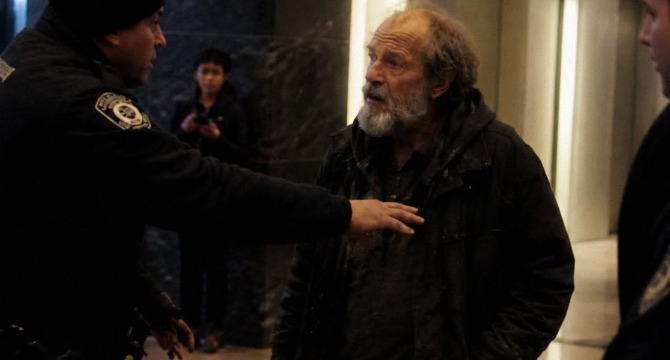
Security was seconds from escorting a homeless stranger outside when our CEO froze. One look at the man was enough to unravel a 17-year mystery.
“This can’t be,” Mr. Harrington said, gripping the man’s shoulders. “Is it really you? We’ve been waiting for you for 17 years!”
Nobody in the lobby moved.
I was still behind the front desk with one hand hovering over the security phone.
The two guards stepped back.
The man looked at Mr. Harrington for a long time.
Then he smiled.
Barely.
“You got old, Richard.”
Mr. Harrington made a sound somewhere between a laugh and a sob.
“So did you.”
The man’s clothes were torn at the cuffs. His gray beard reached halfway down his chest, and one shoe had been repaired with silver tape.
But Mr. Harrington looked at him as if a king had walked through our doors.
“Where have you been?”
The man’s smile disappeared.
“Trying to remember.”
Mr. Harrington’s hands dropped.
“What?”
“I told them I’d come back.”
The man glanced around the lobby.
“I knew this place.”
He pointed toward the elevators.
“Fourth floor.”
My stomach tightened.
Mr. Harrington turned toward me.
“Priya, cancel my meeting.”
I blinked.
“Your meeting with the Sanderson group?”
“Cancel everything.”
Then he looked at security.
“And nobody touches Mr. Green.”
One of the guards swallowed.
“Of course, sir.”
Mr. Green looked toward me.
“You called them?”
I felt my face burn.
“I’m sorry. I didn’t know who you were.”
“You did your job.”
His voice was gentle.
That somehow made me feel worse.
Mr. Harrington picked up his briefcase.
Then he held out one hand.
“Come upstairs.”
Mr. Green stared at it.
“You kept it?”
Mr. Harrington knew exactly what he meant.
“Every day.”
I had worked at Harrington & Cole for six years.
Everyone knew about the locked office on the fourth floor.
Nobody knew the whole story.
The brass nameplate still said:
MR. GREEN FOUNDING PARTNER
Cleaning staff was not allowed inside.
IT was not allowed inside.
When we renovated the floor three years ago, contractors were ordered to build around it.
Once, a new facilities manager suggested converting it into a meeting room.
Mr. Harrington became so angry that the man apologized twice.
The office had remained untouched for 17 years.
Now I understood why.
Mr. Harrington led Mr. Green toward the elevator.
Then he stopped.
“Priya.”
“Yes?”
“Come with us.”
I stared at him.
“Me?”
“You were here when he came back.”
Mr. Green looked at me and nodded.
Apparently, that settled it.
I grabbed my phone and followed.
The elevator ride was painfully quiet.
Mr. Green watched the numbers above the door.
Two.
Three.
Four.
When the doors opened, he stopped breathing.
Our fourth floor looked nothing like it had 17 years earlier.
Glass conference rooms had replaced most of the old walls. The carpets were charcoal gray. Everything had been modernized.
Everything except one office at the far end.
Dark wooden door.
Brass nameplate.
Old-fashioned frosted glass.
Mr. Green walked toward it slowly.
Employees emerged from cubicles.
Nobody spoke.
Mr. Harrington took a key from his wallet.
I had seen that key before.
He carried it everywhere.
His hand shook as he put it into the lock.
“Ready?”
Mr. Green looked at him.
“No.”
Mr. Harrington nodded.
“Neither am I.”
He opened the door.
The smell hit me first.
Old paper.
Dust.
Wood polish.
Time.
It was like stepping into an office preserved under glass.
A green desk lamp sat near a stack of legal pads.
A calendar still showed September 2009.
There was a coffee mug beside the telephone.
A navy jacket hung behind the door.
On one wall was a photograph of two much younger men standing under a cheap sign that read:
HARRINGTON & GREEN CONSULTING
Mr. Harrington was one.
Mr. Green was the other.
Mr. Green stepped inside.
His knees buckled.
Mr. Harrington caught him.
“Easy.”
“You left my mug.”
Mr. Harrington laughed through tears.
“You threatened to quit if anybody touched that mug.”
“It was a good mug.”
“It said World’s Okayest Accountant.”
Mr. Green smiled.
“I stand by it.”
Then he saw the desk.
His face changed.
He walked toward it and placed both hands on the edge.
“I remember this.”
Mr. Harrington said nothing.
“I remember sitting here.”
“Yes.”
“There was rain.”
Mr. Harrington went pale.
Mr. Green pressed his fingers against his temple.
“Heavy rain.”
I suddenly felt like I should leave.
This was too personal.
But then Mr. Green looked at me.
“What’s your name?”
“Priya.”
“Priya, what happened to me?”
I froze.
Mr. Harrington answered.
“We don’t know.”
Mr. Green looked at him.
“You must know something.”
Mr. Harrington pulled out the desk chair.
“Sit down.”
Mr. Green did.
Then Mr. Harrington told us the story everyone at the company had only heard in pieces.
Seventeen years earlier, Harrington & Green was not the huge corporate consulting firm it is today.
It had 43 employees.
Mr. Harrington handled clients and strategy.
Mr. Green handled finances.
They had started the company together in a rented room above a pharmacy.
They were not merely partners.
They had been friends since college.
“More like brothers,” Mr. Harrington said.
Mr. Green stared at the old photograph.
“What happened?”
“There was a problem with one of our clients.”
The client was Northbridge Development, a construction company with government contracts worth millions.
Mr. Green had been reviewing their accounts when he found payments that did not make sense.
Shell companies.
Fake invoices.
Money routed through overseas accounts.
At first, he thought it was tax fraud.
Then he found names.
Public officials.
Inspectors.
People being paid to approve unsafe projects.
Mr. Green had brought the files to Harrington.
“We agreed to report it,” Harrington said.
Mr. Green frowned.
“Then why didn’t we?”
“We did.”
The night before they were supposed to meet federal investigators, Mr. Green disappeared.
His car was found near a river 40 miles away.
The driver’s door was open.
His wallet was inside.
There was blood on the steering wheel.
“But no body,” I whispered.
Mr. Harrington nodded.
Police searched for weeks.
The river was dragged.
Hospitals were checked.
Mr. Green’s photograph appeared on television.
Nothing.
Then Northbridge collapsed six months later after another investigation uncovered fraud.
Several executives went to prison.
But Mr. Green was never found.
Mr. Green rubbed both hands over his face.
“I don’t remember a river.”
Mr. Harrington leaned forward.
“What do you remember?”
“Running.”
“From who?”
“I don’t know.”
“Green, try.”
Mr. Green closed his eyes.
“Rain.”
His breathing became faster.
“A parking garage.”
Mr. Harrington’s face tightened.
“What else?”
“A man.”
“What man?”
“I can’t see him.”
Mr. Green opened his eyes suddenly.
“But he hit me.”
Silence.
He touched the back of his skull.
“I fell.”
Mr. Harrington crouched beside him.
“Green?”
“I woke up somewhere.”
“Where?”
“I don’t know.”
The memories came in pieces.
Mr. Green remembered waking beside railroad tracks with blood in his hair and no idea who he was.
A freight worker found him.
He spent two weeks in a small hospital under the name John.
He had a severe head injury.
No identification.
No clear memory.
Then he left.
“Why?” I asked.
He looked embarrassed.
“I was frightened.”
After the hospital, he drifted.
Shelters.
Temporary jobs.
Church basements.
For years, he had only fragments of his old life.
A green lamp.
A building lobby.
The name Richard.
The number four.
And one sentence.
“I told them I’d be back.”
He did not know who “them” meant.
Mr. Harrington sat down on the floor.
“You were alive.”
Mr. Green looked at him.
“I didn’t know where to come back to.”
Mr. Harrington covered his face.
I had never seen our CEO cry before.
Not once.
Now he was openly sobbing in the office he had kept locked for 17 years.
Mr. Green put one hand on his shoulder.
“I’m sorry.”
Mr. Harrington looked up sharply.
“Don’t you dare apologize.”
“I disappeared.”
“You were attacked.”
“I left you alone.”
“You didn’t choose to.”
Mr. Green stared at him.
Then he looked around the office.
“Why did you keep this?”
Mr. Harrington wiped his eyes.
“Because they wanted me to declare you dead.”
Mr. Green said nothing.
“Your sister eventually had to. Legally. Insurance, estate, all of it.”
His voice cracked.
“But I couldn’t.”
“So you kept my office?”
“I kept thinking you’d walk through the lobby complaining that somebody moved your files.”
Mr. Green gave a sad laugh.
“Seventeen years is a long time to wait.”
“I know.”
“That’s foolish.”
“I know.”
“Sentimental.”
“I know.”
Mr. Green looked at him.
“Thank you.”
Mr. Harrington stood.
“There’s something else.”
He walked to a filing cabinet.
The bottom drawer was locked.
He opened it with the same key.
Inside was a red folder.
Mr. Green’s expression changed the moment he saw it.
“What is that?”
Mr. Harrington handed it to him.
“You gave me this the afternoon before you disappeared.”
Mr. Green opened it.
His hands started shaking.
Inside were copies of Northbridge’s financial records.
Names.
Payments.
Dates.
And a handwritten note.
Richard,
“If something happens to me, don’t let them bury this.”
G.
Mr. Green stared at his own handwriting.
Then he whispered, “I knew.”
Mr. Harrington nodded.
“You knew someone was watching you.”
“Why didn’t I go to the police immediately?”
“We were supposed to the next morning.”
Mr. Green turned the final page.
A photograph slid out.
He froze.
It showed a man leaving the Northbridge headquarters.
Mr. Green stared at the face.
Then he dropped the folder.
“That’s him.”
Mr. Harrington leaned forward.
“Who?”
“The man in the garage.”
I felt cold.
Mr. Harrington picked up the photograph.
The man had been one of Northbridge’s senior security contractors.
According to Harrington, he died seven years earlier.
But back in 2009, police had interviewed him.
He denied knowing Mr.Green.
No evidence tied him to the disappearance.
Now Mr. Green remembered his face.
Mr. Harrington immediately called his attorney.
Then federal investigators.
The office became chaos.
I expected Mr. Green to leave.
Instead, he sat at his old desk.
He turned the lamp on.
It still worked.
For some reason, that nearly broke me.
Within hours, investigators arrived.
Mr. Green was taken to a hospital first.
Doctors confirmed evidence of an old skull fracture.
His fingerprints proved his identity.
By the next morning, there was no doubt.
Mr. Green had come home.
His family arrived that afternoon.
That was the hardest part to watch.
Mr. Green’s younger sister, Helen, was 70.
She entered the conference room, saw him, and slapped him.
Hard.
Then she hugged him so tightly that both of them nearly fell.
“You idiot,” she sobbed.
“I know.”
“I buried you!”
He stared at her.
“What?”
“We had a funeral.”
Mr. Green began crying.
Helen touched his face.
“I picked a coffin with nothing in it.”
“I’m sorry.”
She hit his shoulder again.
“Stop apologizing for getting your head smashed in.”
Apparently, directness ran in the Green family.
Mr. Green also had a daughter.
Claire.
She was 42 now.
She had been 25 when he disappeared.
She stood in the doorway for almost a full minute.
Mr. Green whispered her name.
“Claire.”
She shook her head.
“No.”
His face fell.
“I can’t.”
Nobody moved.
She stared at him.
“You were alive.”
“I didn’t know who I was.”
“You were alive.”
“I know.”
“I had a baby.”
His eyes widened.
“You have a child?”
“A son. He’s 16.”
Mr. Green covered his mouth.
Claire’s anger collapsed.
“You missed all of it.”
He started crying.
“I know.”
She crossed the room and held him.
I walked away after that.
Some reunions do not belong to witnesses.
The investigation into Mr. Green’s disappearance reopened.
There was not enough evidence to charge a dead man, obviously, but investigators reconstructed much of what likely happened.
The security contractor had followed Mr. Green from the office.
There was evidence he had access to the parking garage where Mr. Green remembered being attacked.
Police believe he struck Mr. Green, placed him in his own car, and drove him toward the river to stage a suicide or accidental death.
Something went wrong.
Mr. Green either woke up or escaped.
He ended up near railway property several miles away.
His attacker abandoned the plan, assuming an injured and confused man would not survive long.
He was wrong.
Mr. Green survived.
He just lost the road home.
The Northbridge files did not create a brand-new scandal. Most of the corruption had been uncovered years earlier.
But they answered the question that had haunted Mr. Harrington.
Mr. Green had not run.
He had not stolen money.
He had not abandoned the company.
He had been trying to expose people who knew exactly how dangerous the truth was.
A week later, Mr. Harrington called an all-staff meeting.
More than 400 employees packed into the auditorium or watched remotely.
Mr. Green sat in the front row wearing a new suit.
He had shaved his beard.
He still looked fragile.
But he no longer looked invisible.
Mr. Harrington walked onto the stage.
“I owe someone an apology.”
Mr. Green frowned.
Mr. Harrington looked toward the back.
At me.
“Priya.”
My stomach dropped.
Hundreds of people turned.
I wanted to disappear under my chair.
“Stand up.”
I did.
Mr. Harrington smiled.
“Last Tuesday, Priya followed company security policy exactly as she was trained.”
I exhaled.
“She saw someone she did not recognize enter our lobby, and she acted responsibly.”
Then he looked at Mr. Green.
“But last Tuesday also reminded me how quickly we decide who belongs in a place based on how they look.”
The room became quiet.
Mr. Green nodded.
Mr. Harrington continued.
“Mr. Green walked into the company he helped build, and nobody recognized him.”
He paused.
“That includes me until I saw his face.”
After the meeting, Mr. Green found me.
“I hope you know I wasn’t angry.”
“I still feel terrible.”
“Why?”
“I had you removed from your own company.”
He smiled.
“You stopped an unidentified man from wandering into a corporate building.”
“Still.”
“Priya.”
I looked at him.
“Seventeen years ago, I wore expensive suits.”
He glanced down at his new jacket.
“Apparently, I do again.”
I smiled.
“But for a long time, people looked through me. Not because they were cruel. Because once you look homeless, people stop expecting your story to surprise them.”
I did not know what to say.
He rescued me.
“Just keep asking questions before you decide you know the answer.”
Mr. Green did not return as a partner.
He said he had no interest in quarterly reports.
Mr. Harrington offered him an office anyway.
Mr. Green refused.
“What about your old one?” I asked.
He looked down the hallway.
For 17 years, that room had been a shrine to a missing man.
Mr. Green stood in the doorway for a while.
Then he said, “Open it.”
Mr. Harrington stared at him.
“What?”
“Use it.”
“For what?”
Mr. Green thought about that.
“A place for people trying to come back.”
Six months later, the Green Center opened on the fourth floor.
The company partnered with local shelters to provide job placement support, identification recovery, interview attire, transportation, and basic financial counseling for people experiencing homelessness.
Mr. Green insisted his old office become the intake room.
The green lamp stayed.
So did the World’s Okayest Accountant mug.
Everything else changed.
He visits every Wednesday.
Sometimes he sits beside me in the lobby and complains that our coffee tastes like wet cardboard.
I tell him founders are welcome to buy better coffee.
He says I am disrespectful.
I tell him security is one phone call away.
He laughs every time.
Last Tuesday marked one year since he walked back through our doors.
At exactly four in the afternoon, Mr. Green entered the lobby.
This time he wore a gray suit and carried a box of pastries.
The guards waved.
Employees called his name.
Mr. Harrington came down personally.
Mr. Green stopped beside my desk.
“You know what’s funny?”
“What?”
“I spent years repeating one sentence.”
I knew which one.
“I told them I’d be back.”
He nodded.
“For most of that time, I didn’t even know where ‘back’ was.”
He looked toward the elevators.
“Turns out somebody kept the door locked for me.”
I glanced toward Mr. Harrington.
He was pretending not to cry.
Badly.
Seventeen years ago, Daniel Green left his office believing he would return the next morning.
Instead, he lost his name.
His family.
His company.
Almost his entire life.
But one person refused to turn his disappearance into an ending.
Mr. Harrington kept the office.
Mr. Green kept walking.
And somehow, 17 years later, those two stubborn decisions met in our lobby.
I still follow security policy.
I still call the guards when I need to.
But sometimes, when someone unfamiliar walks through those glass doors, I remember the man in torn clothes repeating that he’d come back.
And I remind myself that you can know every rule about who is allowed inside a building and still know absolutely nothing about the person standing in front of you.

 admin
admin