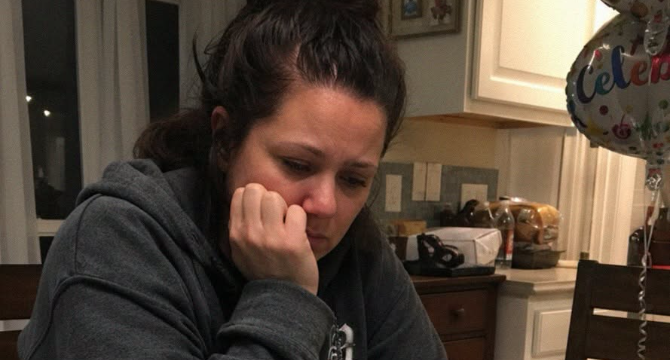
My family did not forget only my birthday. They had spent years forgetting that I was a person with plans, talent, and a life outside their needs. That night, I bought something that forced all four of them to remember.
By six o’clock, I could no longer pretend my husband and three sons had remembered my birthday.
At breakfast, I told myself they were distracted.
My husband, Brad, had an early meeting. Our firstborn son, Pete, was rushing to work.
Mike, the middle son, was looking for his missing gym bag, which was hanging on the chair where I had told him it was.
Justin, our lastborn son, was complaining that we were out of his favorite cereal.
None of them said happy birthday.
By lunch, I had received two emails from stores, one message from my dentist, and nothing from my family.
Still, I made excuses.
Maybe they were planning something.
Maybe Brad had told the boys to act normal.
Maybe that was why he had not even kissed me before leaving.
I spent the afternoon preparing dinner.
I made fresh pasta because it was my favorite.
I started a sauce with roasted tomatoes, garlic, basil, and cream.
I ordered balloons myself because I had learned years earlier that if I wanted the house decorated, I had to decorate it.
At 6:00, Brad texted me.
“Hey, hon, gonna stop at that Renaissance show the boys have been meaning to go to for the past two weeks. Probably gonna be home late. Will bring you something. Just make dinner for yourself.”
I stared at the message.
Then I typed, “Are you serious?”
His reply came almost immediately.
“Well, I don’t take care of the boys, you’re upset. I finally take them out somewhere so you can have an evening of rest, and you’re upset. It’s like I can’t please you no matter what. Just take the chance and go watch Love Island. Love you.”
I locked my phone.
The water on the stove had started boiling.
Four place settings waited on the table.
The balloons floated above the chairs, bright and stupid.
I turned off the stove.
Then I took the balloons down one by one, pressed them against my chest, and let the air out.
The room filled with weak, ugly squeals.
That felt appropriate.
I threw them away and placed one candle in a cupcake I had bought for myself.
I sat at the table alone.
For 19 years, I had cooked every birthday dinner in that house except my own.
Brad’s favorite meal was beef Wellington. Pete always wanted fried chicken.
Mike requested homemade pizza.
Justin liked a ridiculous three-layer chocolate cake that took half a day to make.
I remembered their birthdays without reminders.
I bought gifts.
I organized parties.
I texted relatives.
I made sure everyone felt loved.
On my birthday, they went to watch men in costumes hit each other with wooden swords.
I lit the candle.
“Happy birthday, Sophie,” I whispered.
Then I blew it out.
I felt ashamed for being angry.
That was the worst part.
I told myself love should not be a transaction. I should not care for my family only because I expected something in return.
But I was not asking for equal payment.
I was asking to be seen.
Before I married Brad, I trained as a chef.
I worked under a woman named Evelyn, who could taste a sauce once and tell which herb had been added three minutes too early.
She was demanding, brilliant, and convinced I had real talent.
“You have instinct,” she once told me. “Technique can be taught. Instinct cannot.”
I wanted my own restaurant.
Then I became pregnant with Pete.
Brad and I agreed that I would stay home for a few years.
A few years became 19.
Whenever I mentioned returning to work, Brad had a reason to explain that it was the wrong time.
The boys were too young.
Then they were too busy.
Then the family needed stability.
When I suggested working in a restaurant, Brad laughed.
“You want to stand in a hot kitchen for 12 hours at your age?”
When I mentioned a food truck, Pete said, “Who would even buy food from a truck that just pops up one day?”
Mike asked who would make dinner.
Justin said, “You already cook all day. Why would you want to do more of it?”
They enjoyed everything I made.
They just did not believe anyone else would.
Or maybe they did not want to believe it, because then my cooking would not simply be domestic but professional, too.
That night, sitting alone in front of my birthday cupcake, I opened the family banking app.
Our savings account held more than enough to buy a food truck.
Some of that money had come from the years I stretched grocery budgets, repaired clothes instead of replacing them, skipped vacations, and turned leftovers into meals no one complained about.
Brad had used the account to upgrade his car.
Pete had borrowed from it for a motorcycle he barely rode.
Mike’s sports fees came from it.
Justin’s gaming computer came from it.
Every expense had been called an investment in the family.
I decided I counted as family, too.
For months, I had been looking at food truck prices online.
I had saved some of the favorite listings in a private folder.
That evening, I decided I was ready to make a purchase.
I was tired of negotiating with myself.
I was finally ready to put my needs first, no matter how old I was or how long it had taken me.
I completed the deposit online.
I then picked up my cake to eat and celebrate the move I had finally made.
I knew my husband and sons would complain, but I was done being dismissed by them,
The purchase alert reached Brad before I even finished eating the cupcake.
My phone rang.
I answered.
“What did you just do?” he shouted.
In the background, I heard music, crowds, and one of the boys laughing.
“I bought myself a birthday present.”
“What birthday present costs thousands of dollars?”
“A food truck.”
Brad said, “You did what?”
“I bought the food truck I have been talking to you about for months now.”
“You showed me pictures. You didn’t say you were actually going to buy it.”
“I did. You called it a stupid idea.”
“Because it is a stupid idea.”
Something inside me became very calm.
“Come home safely.”
“Sophie, cancel it.”
“No.”
“You cannot spend our savings without discussing it.”
“You bought your car without discussing it.”
“That was different.”
“Pete’s motorcycle?”
“He needed it for transportation.”
“He works six blocks away.”
Brad lowered his voice.
“We will talk when I get home.”
“No. You will talk. I have been talking for years.”
They returned shortly after nine.
Brad entered first, still wearing a paper crown from the fair.
Pete carried his favorite drink. Mike had a cookie in hand. Justin held a bag of sugared nuts.
No one carried a birthday present.
Brad placed both hands on the kitchen counter.
“Tell me you canceled the purchase.”
“I did not.”
Pete frowned.
“You seriously bought a food truck?”
“Yes.”
Mike laughed.
“Mom, nobody is going to eat there.”
Justin looked at the empty table.
“Is there dinner?”
I stared at him.
“What?”
“We didn’t really eat.”
“There is bread in the pantry.”
Brad’s face reddened.
“Stop being dramatic.”
I opened the trash and pulled out one of the deflated balloons.
“Do you know what today is?”
They all looked at it.
Pete understood first.
“Oh.”
Mike’s mouth fell open.
Justin whispered, “Your birthday.”
Brad removed the paper crown.
“Sophie, I wasn’t ignoring it. I thought it was next week.”
“You’ve been married to me for 19 years.”
“I made a mistake.”
“All four of you did.”
“We can celebrate tomorrow.”
“No.”
Brad sighed.
“What do you want me to say?”
“Nothing.”
I walked to the refrigerator and taped up a sheet of paper.
It was a new household schedule I had just worked on.
It included laundry, cooking, dishes, shopping, and cleaning.
Every task had a name beside it.
Brad stared at the list.
“What is this?”
“I start preparation for running my food truck on Monday. I will be dealing with permits and other logistics. I am no longer available to run this house by myself.”
Mike pointed at the paper.
“You put me down for dinner twice a week.”
“Yes.”
“I can’t cook.”
“Then learn.”
Pete said, “I have work.”
“So do I.”
“You haven’t even opened.”
“As I said, I am beginning tomorrow.”
Brad folded his arms.
“You can’t do this.”
“I will, and I am. If you don’t follow the table, then you will wear dirty clothes and eat cereal.”
The next morning, I went to pick up my truck.
I was excited when I was handed the key. I was also terrified when I realized it was finally mine.
I loved it.
As the business manager handed me the keys, he asked, “What are you calling her?”
I had not thought that far.
Then I remembered Evelyn telling me I had instinct.
“Second Serving,” I said.
For the next six weeks, I worked harder than I had in years.
I took food safety classes, applied for permits, met with inspectors, arranged insurance, and designed a menu.
I chose food I could prepare well and serve quickly: chicken sandwiches with roasted pepper sauce, crisp potato cakes, herb rice bowls, tomato soup, and small fruit hand pies.
My best decision was the location.
There was a stadium complex across town where college athletes, youth teams, and trainers gathered throughout the week.
Most food trucks didn’t like the location as it involved driving all the way there when they could sell somewhere nearby.
However, I saw its potential and went for it.
I contacted the facility manager.
He gave me a trial permit for three days a week.
Brad continued telling me I would fail.
“People don’t want your homemade soup after practice.”
“They might.”
“You are spending more money.”
“I am buying supplies.”
“Same thing.”
The boys complained about the chore schedule.
Mike burned pasta.
Justin shrank three of Brad’s shirts.
Pete forgot to buy groceries and became angry when there was nothing for breakfast.
Each time they looked at me as if I should rescue them.
I did not.
On my first day open, I sold 12 meals.
By closing time, I had made less money than I used to spend on groceries in a week.
I sat alone inside the truck and cried.
Maybe Brad had been right.
Then someone knocked on the service window.
A young woman in a track uniform stood outside.
“Are you still open?”
“Technically, no.”
She smiled.
“Please? My coach kept us late.”
I reheated a chicken sandwich and gave it to her.
The next afternoon, she returned with six teammates.
Two days later, their coach came.
Then a soccer team.
Then the stadium employees.
The athletes liked that my food tasted fresh but did not leave them feeling heavy.
Parents liked the hand pies. Coaches began texting orders before practice ended.
I added breakfast wraps for early training sessions.
Within three months, I needed help.
I hired a culinary student named Dana for the afternoons.
She was fast, funny, and nearly cried the first time I asked her opinion about the menu.
“My last boss told me thinking wasn’t part of my job description,” she said.
“In this truck, it is.”
At home, things changed more slowly.
Brad resented every late afternoon I spent away.
One evening, I returned to find him eating burned eggs while Mike scraped a black pan.
“This house is falling apart,” Brad said.
“No. This house is learning what they should have learned a long time ago.”
He looked at me as if he had never seen me before.
Maybe he had not.
The turning point came during a weekend tournament.
The stadium manager had asked me to serve both days.
I expected a lot more people, but not the line that formed before noon.
Dana and I could barely keep up.
Then I saw Pete, Mike, and Justin standing near the back.
Brad was with them.
I assumed they had come to complain.
Instead, Justin stepped forward.
“Do you need help?”
I almost laughed.
“Can you take orders?”
He nodded.
Pete began handing out drinks.
Mike carried supplies from my car.
Brad stood there awkwardly.
Finally, he said, “What can I do?”
“Dishes.”
His face changed.
Then he rolled up his sleeves.
For four hours, they worked inside the life they had mocked.
They heard customers praise the food.
They watched athletes return for seconds.
They saw a coach reserve me for a regional event.
At closing, Justin sat on an overturned crate.
“Mom, you’re actually famous here.”
“I am not famous.”
“That goalkeeper asked for a picture with you.”
“She asked for a picture with her sandwich.”
Pete looked around the truck.
“I thought this was just something you wanted because you were bored.”
“I was never bored.”
He lowered his head.
“I guess we never asked.”
Brad was quiet on the drive home.
That night, he found me in the kitchen checking invoices.
“I owe you an apology,” he said.
“More than one.”
“I know.”
I waited.
He sat across from me.
“I was afraid.”
“Of a food truck?”
“Of what it would change.”
“What did you think would happen?”
“You would not need us.”
The answer stunned me.
“I wanted you to value me, Brad; not need me because you can’t wash a shirt.”
He looked ashamed.
“I liked our life.”
“Because it worked for you.”
He nodded slowly.
“I taught the boys to expect what I expected.”
“Yes, you did.”
“I am sorry.”
I did not forgive him that night.
An apology is not a reset button.
But he began changing.
He took over grocery shopping.
He cooked on Tuesdays, badly at first.
He stopped calling my work a hobby.
The boys changed too.
Pete learned to make chili.
Mike became responsible for laundry and discovered that clothes did not fold themselves.
Justin started helping me at the truck on Saturdays and became surprisingly good with customers.
Six months after my birthday, Brad brought home a cake.
It was not my birthday.
“What is this for?” I asked.
He placed it on the table.
“The first day you sold out.”
They had remembered the date.
All three boys were there.
Pete raised a glass.
“To Mom.”
Justin added.
“To the entrepreneur, she is.”
That mattered more than he knew.
My family did not become perfect.
They still forgot chores. Brad still slipped into old habits.
I still had to remind myself not to solve every problem before anyone else felt it.
But they stopped treating my time as endless and my dreams as foolish.
Second Serving became profitable.
A year later, I added another employee and began catering small events.
On my next birthday, I did not cook dinner.
Brad and the boys did.
The pasta was too soft, the sauce needed salt, and the cake leaned slightly to one side.
It was perfect.
Before I blew out the candles, Brad asked, “What do you want this year?”
I looked at my family, then at the food-truck keys beside my plate.
“I already have what I want.”
They had feared the truck because they thought it would take me away from them.
Instead, it gave me back to myself.

 admin
admin