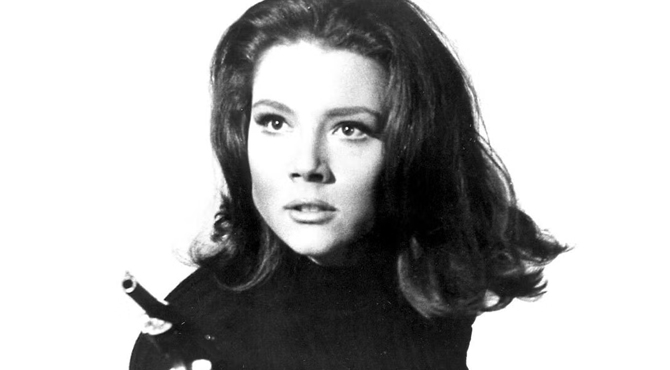
Diana Rigg was one of those rare performers whose presence seemed to belong to more than one era at once. Elegant, intelligent, sharp-witted, and endlessly versatile, she built a career that stretched across stage, television, and film with a level of authority that few actors ever achieve. Her work remains a benchmark for excellence, and her influence continues to shape generations of performers.

Born on July 20, 1938, in Doncaster, England, Diana Rigg grew up between cultures and countries, spending part of her early childhood in India before returning to England. This early exposure to different worlds perhaps contributed to the depth and adaptability she later brought to her acting. She trained at the Royal Academy of Dramatic Art (RADA), where her natural talent was quickly recognized. From the beginning, it was clear she was not just another aspiring actress—she was someone destined to redefine expectations.
The Breakthrough: Emma Peel and Cultural Impact
Diana Rigg’s breakthrough came in the 1960s when she played the iconic role of Emma Peel in the British television series The Avengers. At a time when female characters were often written as secondary or decorative figures, Emma Peel stood out as something entirely different—independent, intelligent, physically capable, and emotionally composed.
Rigg’s portrayal was revolutionary. She brought sophistication and strength to the role, performing action sequences with confidence while also delivering sharp, witty dialogue with effortless charm. Emma Peel became a cultural symbol of modern femininity—someone who could match men intellectually and physically without losing her individuality or grace.
For many viewers around the world, Diana Rigg didn’t just play Emma Peel—she defined her.
A Master of the Stage
While television brought her global fame, the stage was where Diana Rigg’s artistry truly flourished. She was a classically trained actress with a deep respect for theatre, and her performances in Shakespearean roles were especially celebrated.
She earned acclaim for roles such as Lady Macbeth, Cleopatra, and Regan in King Lear, demonstrating an extraordinary command of language, emotion, and psychological depth. Her stage presence was known for being both commanding and intimate—she could fill a theatre with power while still making each audience member feel directly addressed.
In 1994, she received a Tony Award for Best Actress for her performance in Medea, a role that demanded emotional intensity and technical precision. It was a performance that reminded audiences that she was not just a screen icon, but one of the finest stage actors of her generation.
Hollywood and Later Screen Success
Diana Rigg’s career continued to evolve as she moved between theatre, film, and television with remarkable ease. She appeared in notable films such as On Her Majesty’s Secret Service (1969), where she played Tracy Bond—one of the most memorable and emotionally significant Bond girls in the franchise’s history.
Unlike many roles in the James Bond series, Tracy was given emotional depth and narrative importance, and Rigg’s performance ensured the character left a lasting impact on audiences.
In later years, she reached a new generation of fans through her role as Olenna Tyrell in Game of Thrones. As the sharp-tongued and politically astute matriarch, she delivered some of the show’s most memorable lines with biting intelligence and subtle humor. Her performance was widely praised and earned her renewed global recognition.
A Career Defined by Intelligence and Integrity
What set Diana Rigg apart was not only her talent, but her refusal to be confined by expectations. She was outspoken, thoughtful, and unafraid to speak her mind about the industry and its treatment of women. She chose roles carefully, valuing quality over visibility, and consistently sought characters with substance.
Her career reflected a rare balance: classical theatre training combined with mainstream popularity, intellectual depth combined with screen charisma. Few actors have managed to maintain such a balance across multiple decades.
Legacy and Influence
Diana Rigg passed away on September 10, 2020, at the age of 82, but her legacy continues to grow. She remains a touchstone for actors who seek to combine strength with sophistication, intelligence with emotional truth.
Her influence can be seen in the evolution of strong female characters on television and film. Emma Peel helped reshape how women were portrayed in the 1960s, while Olenna Tyrell reminded modern audiences that age does not diminish power, wit, or relevance.
Above all, Diana Rigg’s career is a reminder that true artistry is timeless. Trends change, genres evolve, but performances rooted in intelligence and authenticity endure.
Final Reflection
Diana Rigg was more than an actress—she was a force of nature within the performing arts. Whether on stage in Shakespearean tragedy, on television as a cultural icon, or on screen as a commanding presence in modern fantasy, she consistently delivered work that demanded attention and respect.
Her legacy is not only preserved in her films and performances but in the standard she set: that an actor can be both popular and profound, both elegant and powerful, both timeless and unforgettable.

 Editor1