The kitchen clock ticked past nine, and the casserole I had warmed twice now sat cooling on the counter.
Our little house on KLM Street felt too quiet on Thursday nights. I wiped the same spot on the table for the third time, listening for tires in the driveway.
I had been a nurse for 19 years.
And a single mother for 12, and I had learned to read silences the way other people read books.
Hannah’s report card was still pinned to the fridge under a magnet shaped like a sunflower. She’d gotten straight A’s and a handwritten note from her English teacher calling her “the kindest student in the room.”
She was 17, and she was my whole world.
“You worrying again?”
My sister Lori’s voice came through the phone that was tucked between my ear and shoulder. I hadn’t even realized I’d called her.
“It’s Thursday, Lori.”
“Margaret, honey. She’s a teenager. They get weird.”
“She’s not weird,” I said. “She’s lying. There’s a difference.”
Lori sighed the way she always did when I mentioned the past. “Have you, you know. Told her anything? About Daniel?”
The last conversation Daniel and I ever had still lived inside me like a splinter. We’d spent two years fighting about money, jobs, and a future neither of us seemed able to agree on.
“There’s nothing to tell,” I said too quickly. “He walked away. End of story.”
“Mar—”
“I said end of story.”
I hung up before she could press.
The attic above me seemed to creak in answer, where a locked wooden box had sat untouched for over a decade. I did not let myself look at the ceiling.
Headlights swept across the kitchen window at 9:47 p.m.
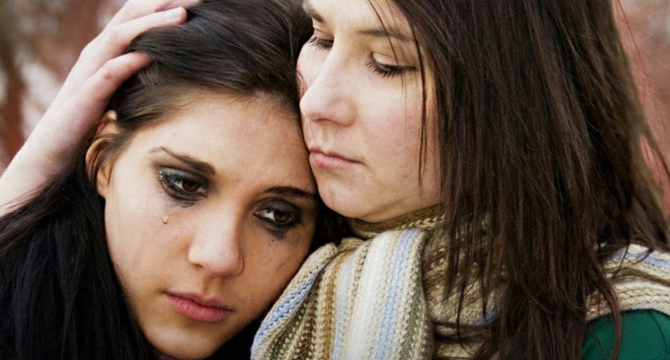
I heard her key in the lock, the slow scrape of her sneakers on the mat, and the long breath she always took before she opened the door. My daughter walked in with her hair pulled back and her eyes pink and swollen.
“Hey, Mom,” she said.
“Hey, baby. You hungry?” I asked.
“I ate already.”
I forced a smile. “Good night with the girls?”
She did not meet my eyes. She set her backpack down very carefully, the way she handled fragile things at the hospital gift shop where she volunteered on Saturdays.
“Yeah,” she said. “Just hanging out with friends.”
The lie came out smoother than ever, polished by three months of practice. She offered me a quick, tight hug and brushed past me toward the stairs.
“Hannah,” I said.
She paused, one hand on the banister.
“Sweetheart, you’d tell me if something was wrong, right?” I asked.
For a second, I thought she might. Her shoulders trembled. Then she swallowed it back down. “Nothing’s wrong, Mom. I promise.”
And I stood there in my quiet kitchen, knowing with absolute certainty that something was.
The next morning, I made pancakes, her favorite, and watched her push them around her plate.
“You came in late again last night,” I said, keeping my voice soft.
“I told you. Just friends.”
“Which friends, sweetheart?”
She lifted her eyes for half a second.
“Mom, please. Don’t make this a thing.”
She grabbed her backpack and was out the door before I could pour her juice. I called Lori the moment Hannah’s car turned the corner.
“She’s lying to me, Lori,” I told her. “Every Thursday. Red eyes, fake smile, the same stupid line about friends.”
My sister sighed on the other end.
“Margaret, she’s 17. It’s probably a boy.”
“Hannah doesn’t have a boyfriend.”
“That you know of.”
I pressed the phone harder to my ear.
“What if it’s worse? What if someone’s hurting her? What if she’s into something?”
“Honey, stop. Have you actually asked her?” she said. “Like really asked?”
“I’ve asked a hundred times,” I sighed.
There was a long pause before Lori spoke again.
“Margaret. Are you sure there’s nothing you haven’t told her? Anything from before?”
The question stopped me cold.
“What’s that supposed to mean?”
“Nothing. I just. Kids find things out, Mar. They always do.”
I hung up before I could say something I’d regret.
That night, when Hannah went to shower, I did something I had never done in 17 years.
I picked up her phone.
My hands shook as I scrolled.
There were no boys or strange numbers. All I found was an address saved under a single word. “Thursday.”
And one text, from a contact with no name.
It read, “Same time this week?”
I stared at the screen until the bathroom door clicked.
I put the phone back exactly where she’d left it and sat down on the edge of her bed, my heart somewhere up in my throat.
Who was she meeting? What kind of person saved themselves in a girl’s phone with no name?
Every horror story I’d ever read about teenage girls played in my head at once.
Instead of sleeping that night, I sat in my dark bedroom and opened my laptop. I typed the address into the search bar, then into the map, and then into every public records site I could think of.
It led me to a weathered gray house on a quiet street, 40 minutes from ours. No name attached. No way to know who lived there.
By Wednesday, I had convinced myself she was being manipulated by someone older, someone dangerous.
On Wednesday evening, I tried again.
I knocked on her door and sat at the foot of her bed.
“Hannah. Whatever it is, you can tell me. I won’t be angry.”
She looked up from her notebook, and for the briefest moment, I saw fear in her eyes. Then she looked away.
“Mom,” she whispered. “There’s nothing to tell.”
“You’ve been crying every Thursday for three months.”
“Allergies,” Hannah said.
“Hannah I—”
“Mom, I love you,” she interrupted. “Please trust me.”
I wanted to scream that trust had to work both ways. Instead, I kissed her forehead and walked out before my voice cracked.
Back in my room, I sat at the window and watched the streetlamp flicker.
Tomorrow was Thursday.
I slipped my car keys off the dresser and into the pocket of my coat by the door.
If she wouldn’t tell me where she was going, and the address wouldn’t tell me either, I would see for myself.
Whatever waited behind that door, I had to know before it took my daughter from me completely.
Thursday came slower than any day I could remember. I sat in my car two houses down from ours, engine off, waiting for Hannah to pull out of the driveway.
When her little blue sedan finally rolled past, I gave her a block, then followed.
My hands shook on the wheel. I kept rehearsing what I’d do if I caught her with some older man, some stranger who’d been feeding her lies.
She drove farther than I expected.
We drove past the high school, past the diner, toward the edge of the town, where the houses got smaller, and the porch lights got dimmer.
She parked in front of a weathered gray house with a sagging fence. I pulled over at the end of the street and killed my headlights.
Hannah stepped out carrying a thick manila folder pressed against her chest.
“Please don’t be what I think this is,” I whispered.
She walked to the door like she’d walked there a hundred times before. She didn’t knock. She just waited.
The porch light flickered on, and the door creaked open.
A man stood in the doorway, one hand gripping the frame for balance. His eyes searched the air above Hannah’s head, unfocused, milky in the yellow light.
I gasped.
I knew that face.
I knew the slope of those shoulders. I knew the way his mouth tried to smile even when the rest of him looked tired.
It was Daniel — my ex-husband.
It was the man I told Hannah had walked out and never looked back — the man whose name I hadn’t said out loud in 11 years.
I sat frozen, gripping the steering wheel like it might keep me from sliding off the planet.
“Sweetheart,” he said. His voice carried across the still air. “You came.”
“I told you I would, Dad.”
Dad. The word hit me like a slap.
I got out of the car before I knew I’d decided to. I moved along the side of the house, keeping low, until I reached the lit window of what looked like a small living room.
I pressed myself against the siding and looked in.
Hannah sat on a faded couch beside him. She opened the folder and pulled out an envelope yellowed at the edges.
“Which one tonight?” she asked softly.
“You pick.”
She slid a letter free and unfolded it with both hands. Her voice was small but steady.
“My dear Hannah, today you turned six. I wasn’t there, but I wrote this hoping one day you’d read it and know I thought about you when you blew out every single candle.”
Daniel’s face crumpled. He didn’t make a sound.
He just let the tears slide down without wiping them.
“I wrote them for you,” he said quietly. “Every single one of them. I didn’t know if you’d ever see them, but I kept writing like you might. I needed somewhere to put it all.”
Hannah nodded and kept reading.
“I bought you a bicycle that year,” Hannah read. “It’s still in my garage. Your mom asked me not to come around, and I didn’t have the courage to argue.”
I covered my mouth with both hands.
“Keep going, sweetheart,” he whispered. “Please.”
She kept going. Letter after letter. Birthdays. First days of school. Christmas mornings that he’d watched alone. A graduation he’d written about a year before it would happen.
Every word in his own handwriting. Every word he’d never been allowed to send.
Because I had sent them back.
I had stood at my mailbox month after month for the first two years and shoved his envelopes back inside, marked return to sender. Then I’d hidden the ones that slipped through in a locked box in the attic.
Then I’d told my daughter her father didn’t want her.
“Why didn’t Mom ever tell me about you?” Hannah asked.
Daniel was silent for a long moment.
“Your mom was hurt,” he said. “People do hard things when they’re hurt. I think she believed she was protecting you.”
“She wasn’t.”
“Be gentle with her, Hannah. Please. She raised you. That matters more than anything I ever wrote.”
I stepped back from the window, my legs barely holding me.
I made it to my car somehow.
I sat there in the dark, stared at my own hands on the wheel, and for the first time in 11 years, I understood who the villain of this story really was.
It had been me. All along.
I drove home in silence, my hands shaking against the wheel. I sat in the dark living room and waited.
When the front door opened, Hannah froze in the entryway. Her eyes were red again, like every Thursday before.
“Mom? Why are you sitting in the dark?”
“I followed you tonight.”
The folder slipped from her arms. She lowered herself onto the couch across from me, bracing for a storm that never came.
Instead, I cried.
“How long have you known?” I whispered.
“Six months.” Hannah stared at her hands. “I was looking for my baby photos for a school project last spring. The box was on the top shelf — the lock had rusted through. I only meant to peek. I found one of his letters inside. One you’d intercepted before it ever reached me. It had his handwriting on the envelope, and my name.”
“Hannah…”
“I tracked him down, Mom. He’s almost blind now. Some degenerative thing. He kept every letter he ever wrote me, dozens of them, and he can’t read them anymore.”
I covered my face. “Why didn’t you tell me?”
“Because I was scared.” Her voice cracked. “Scared you’d forbid me. Scared you’d been lying to me my whole life. I didn’t want to know which one was true.”
“I told myself I was protecting you,” I said. “But I think I was just protecting myself.”
“When your father and I split up, I was angry enough to burn down every good memory we ever had,” I continued. “He wasn’t unfaithful. He wasn’t cruel. We were just two stubborn people who couldn’t stop hurting each other.”
I swallowed hard.
“The divorce got ugly. Every conversation became a fight. Every decision felt like a battle. When he moved away for work, I convinced myself it meant he was choosing his new life over you.”
Tears blurred my vision.
“The first letter arrived six months later. Then another. And another. Instead of seeing a father trying to reach his daughter, I saw the man who’d broken my heart. So, I sent them back.”
Hannah moved beside me and took my hand.
We sat there for a long time.
“Next Thursday,” I finally said, “I’m coming with you.”
“Mom, you don’t have to.”
“I do. And I’m bringing the rest of the letters. The ones I kept.”
Three days later, I called Daniel.
My finger hovered over the number for nearly ten minutes before I pressed it.
We talked for less than five minutes. Neither of us apologized. But when I told him I had the letters, he just said, “Bring them on Thursday.”
The following Thursday, I sat on Daniel’s couch, a yellowed envelope trembling between my fingers.
Hannah held his hand.
A small ceramic lamp with a chipped base threw soft yellow across the rug, and I watched a moth tap softly against the inside of the shade.
“Dear Hannah,” I read aloud, my voice catching. “Today you turned eight. I hope your mother is well.”
The paper crackled between my fingers, brittle at the folds where it had been opened and refolded a hundred times. I could almost smell the ghost of his aftershave, or maybe I was only remembering it, the same brand he’d worn the year I packed his things.
Daniel wept quietly. So, did I.
The radio hummed on. The moth settled. And the truth I had feared most became the door back to my daughter.
I knew, then, that I would choose this Thursday every week for the rest of my life.

 admin
admin