I was three years old the first time I walked into Higgins Bakery.
I don’t remember much about that day, but my mother told me later that I had pressed my nose flat against the glass display case and refused to move until Mrs. Higgins handed me a small piece of snickerdoodle. That was it. I was done for.
For the next 25 years, that bakery was my place.
Growing up, home wasn’t always a safe word for me. My parents fought constantly — loud, ugly arguments that rattled the windows and turned my stomach into knots. When it got bad, I would slip out the back door and walk the six blocks to Higgins Bakery with whatever change I could find in my coat pocket.
Mrs. Higgins never asked questions. She’d just set a day-old cinnamon roll on the counter, slide it toward me, and say, “You look like you could use something warm, sweetheart.”
She had a way of making you feel like everything was going to be okay, even when it wasn’t.
I’m 28 now, and I’d love to tell you that life got easier.
It didn’t, not really.
I work two jobs — a morning shift at a dry cleaner and evenings waitressing at a diner two towns over. I sleep on a mattress on the floor of a studio apartment that smells faintly of mildew, no matter how many candles I burn. But I’m not complaining. I put my head down, I work hard, and over the past two years, I managed to save exactly $5,000.
That was my emergency fund. It was the first time in my life that I had something underneath me in case I fell.
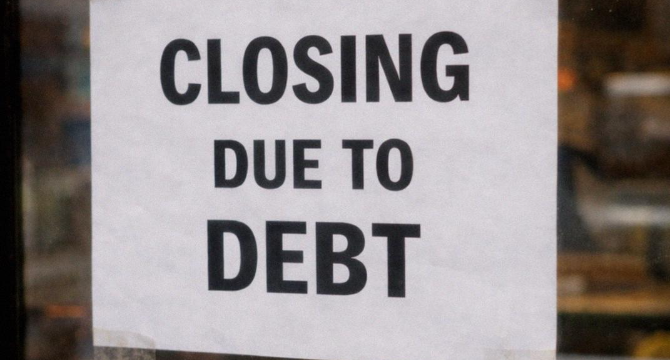
Then, three weeks ago, I drove past Higgins Bakery on my way to work and saw the sign in the window.
Foreclosure Notice.
I pulled over so fast I nearly clipped the curb.
I sat in my car and stared at that sign for a long time. Then I went inside.
Mrs. Higgins was behind the counter, and the moment I saw her face, I felt something drop in my chest. She looked smaller than I remembered. Her hands were wrapped around a mug of tea she wasn’t drinking, and her eyes were red and swollen.
“Betty, honey,” she said when she saw me, and her voice cracked right down the middle.
“Mrs. Higgins, what happened?”
She shook her head slowly. “The bank. I got behind on some things, and they’ve given me until Friday. There’s nothing to be done about it now.”
I drove home that night, sat on my mattress, and stared at the wall for a long time.
I thought about every cinnamon roll she’d ever slid across that counter. I thought about every afternoon I’d sat in that corner booth while the noise of my house still rang in my ears, and how the smell of warm sugar and vanilla had slowly, gently quieted it. I thought about what it meant that this woman had never once made me feel like a burden.
The next morning, I went to the bank.
My hands were shaking as the teller counted out the bills. I folded them carefully into a brown paper envelope, drove straight to the bakery, and walked through the front door.
Mrs. Higgins looked up from behind the counter.
“I have something for you,” I said, sliding the envelope across the glass toward her. “You saved me more times than you know when I was little. This is the least I can do.”
She looked down at the envelope. Then she looked back up at me.
And the strangest thing happened.
Her tears stopped.
She didn’t open the envelope. She didn’t even touch it.
Instead, she pushed it gently back across the counter toward me, reached beneath the register, and lifted out a large leather-bound document. It was thick and formal-looking, tied with a dark ribbon. My name was printed on the cover in clean gold letters.
“I’ve been waiting 25 years for someone to do that,” she said.
“Sit down, sweetheart,” she said softly.
“I have a few things to tell you.”
I sat down on the stool at the counter, and she settled into the chair across from me with the kind of slow, careful movement that told me she was in more pain than she let on.
“I’ve been watching people walk through that door for years,” she began. “Good people, difficult people, lonely people, generous people. And over the years, I’ve been looking for someone.” She paused. “Someone who would give without thinking about what they’d get back.”
I didn’t say anything. I just listened.
“That foreclosure sign wasn’t real, Betty.”
I blinked. “I’m sorry?”
“The bakery isn’t in debt,” she said simply. “It never has been. It’s been profitable for years. I staged it.” She folded her hands on the counter. “I needed to know, before I made my decision, that I had found the right person.”
The room felt very quiet all of a sudden.
“You’re the only one who came in with everything they had,” she said. “Not a loan, not a promise, not a phone call to ask what they could do. You brought every dollar you owned, and you told me I had saved you.” Her voice was steady, but her eyes were glistening. “That’s the person I’ve been waiting for.”
“I didn’t choose your name today, Betty,” she added softly. “I chose it a long time ago. The papers have been ready for months. You were the only one who ever felt right… but I needed to be sure your heart hadn’t changed.”
She untied the ribbon and opened the document in front of me.
Inside were the title deeds to the bakery, papers for a trust fund established in my name, and a formal letter from her attorney laying everything out in plain language. The bakery, the equipment, the lease on the building, and a financial trust to keep it running — all of it, transferring to me.
My mouth went dry. “Mrs. Higgins, I can’t —”
“You can,” she said firmly. “And you will.”
Then she told me the rest.
The doctors had found something a year ago, she explained, and the news hadn’t been good. She was terminally ill, and the timeline was not kind. She had no children, no siblings, no family left to speak of. But she had this bakery, and she had spent decades making sure it stood for something — warmth, community, a place where people felt less alone.
“I couldn’t just leave it to anyone,” she said quietly. “It had to be someone who understood what it actually was.”
I looked around the bakery — the worn wooden counter, the old chalkboard menu above the register, the corner booth where I had eaten so many cinnamon rolls as a frightened little girl — and I felt something rise in my throat that I couldn’t quite name.
“I don’t know how to run a bakery,” I finally said.
Mrs. Higgins smiled, and for a moment, she looked exactly like the woman I remembered from my childhood. “Good thing I’m still here to teach you, then.”
And she did.
For the next several months, Mrs. Higgins and I worked side by side in that kitchen every single morning. She taught me how to proof the dough properly, how to read the oven, how to order supplies without overspending, and how to talk to the regulars so they felt genuinely welcomed rather than just served.
She was a patient teacher, precise and warm in equal measure, and she never once made me feel like I was in over my head — even on the days when I clearly was.
The trust fund gave me room to breathe for the first time in years.
I paid off my overdue rent, bought myself an actual bed frame, and for the first time in a long time, I fell asleep without running numbers in my head.
But the thing that changed me most wasn’t the money. It was the mornings.
Some days, before the first customers arrived, Mrs. Higgins and I would sit together in the corner booth — my corner booth, the one that had always felt like the safest place on earth — and drink tea and talk.
She told me about opening the bakery in 1971, about her late husband, Gerald, who had built the display cases by hand, about the regulars who had come in every week for 30 years and whose children now came in too. She listened when I talked about my childhood, about my parents, about all the afternoons I had walked those six blocks just to feel the knot in my chest loosen a little.
“You were never just a customer to me,” she told me one morning, wrapping both hands around her mug.
“Not once, not even the very first day.”
As autumn came on and the weather turned cold, her health began to decline more quickly. She came in less often, and when she did, she tired easily. But one morning in late October, she called and asked if I could take her to the bakery. Just one more time.
I picked her up and helped her through the front door. She moved slowly, one hand on my arm, and she touched things as she walked — the counter, the edge of the display case, the doorframe of the kitchen. She didn’t say much. She didn’t need to.
Before I took her back home, she stopped near the door and looked around the room one last time.
“It’s in good hands,” she said quietly. “I can feel it.”
She passed away three weeks later.
The funeral was held at the church two blocks from the bakery, and I was not prepared for how many people came. The pews filled, and people lined the back wall and spilled out into the vestibule.
Neighbor after neighbor stood up to share a story — the widow she had given free bread to every Friday for a decade, the teenager she had quietly hired when nobody else would, the young couple she had let use the bakery kitchen to bake their own wedding cake because they couldn’t afford a caterer.
I sat in the front pew and listened to every single word.
A month later, I had a new sign made and hung it above the door myself.
Higgins Bakery — Since 1971.
Nothing else. It was just her name, and I put it where it always belonged.
Some mornings, when the bakery is quiet, the first loaves are in the oven, and the light comes through the front window at just the right angle, I think about that little girl who used to press her nose against the glass display case and feel, for a few hours, like everything was going to be okay.
Mrs. Higgins saw something in me long before I ever saw it in myself.
And I have to wonder — how many of us are walking past someone who already believes in us, without ever knowing it?

 admin
admin