I was 28 years old, a flight attendant, and life had never been easy for me.
To some people, that might sound dramatic. To me, it was just the truth. Growing up an orphan teaches you one lesson very early: no one is coming to save you.
Then, a few years ago, my husband died, and the little bit of safety I had built with him disappeared overnight.
What he left behind was not comfort or security.
It was grief, medical bills, and debts from both my parents and my late husband that I am still paying off today.
I also have a small son, Eli. He is the only reason I get out of bed on mornings when my body feels too tired to move. While I am away on flights, he stays with my husband’s mother, Marta.
We are different in many ways, but she loves Eli fiercely, and I will always be grateful for that. On my days off from flying, I work as a cashier at a gas station just to keep up with the bills.
Sometimes I would finish a shift in the air, sleep for a few hours, and stand behind a register the next morning, smiling at strangers who barely looked at me.
Still, I tried not to complain.
Complaining did not pay rent. Complaining did not buy cereal, or school shoes, or medicine when Eli caught a cold. So I pressed my uniform, tied my hair back neatly, and reminded myself that dignity did not come from how much money I had.
Most passengers are kind. Some are tired, some are rude in the careless way people get when they think service workers are invisible, but most are kind enough.
That day, one man made the entire flight feel unbearable.
He boarded with the kind of confidence that took up more space than his body. Expensive watch, sharp suit, polished shoes, the sour expression of someone offended by the existence of other people.
He looked to be in his 50s, wealthy, loud, and impatient. Even before takeoff, he was snapping his fingers for attention, as if the cabin were his private dining room.
I noticed the way my coworker Nina, who was 31, rolled her shoulders and gave me a tired look from the galley. We both knew the type. The men who believed a boarding pass was the same thing as ownership.
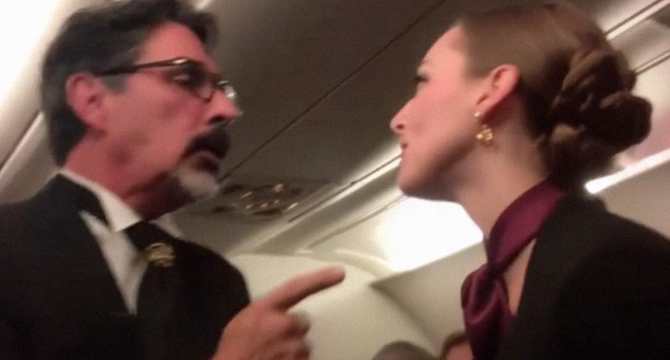
The moment the service started, he waved me over angrily.
“Why wasn’t I served first?” he snapped.
His voice was loud enough to make the nearest passengers glance up from their phones.
I kept my smile in place. “We serve passengers in order.”
He leaned back in his seat and looked me up and down with a smirk that made my skin crawl. “When I’m on a flight, you can forget the word ‘order.'”
A couple across the aisle exchanged an awkward glance. I felt heat creep into my face, but I stayed where I was, tray in hand, trying to keep my voice steady.
Then he started laughing at my appearance.
“Cheap shoes,” he said loudly enough for others to hear. “You people should at least try to look professional.”
For one awful second, I forgot where I was. My eyes dropped to my shoes. They were clean, polished, and comfortable enough to survive long hours in the air, but yes, they were cheap.
Bought on sale after I had spent the rest of my paycheck on daycare and debt. I heard a few uncomfortable rustles around us, but no one spoke.
I tried to stay calm, but he kept going.
“If you knew the kind of deal I’m flying to close today,” he continued, “you’d be afraid to even open your mouth. Numbers like that are something neither you nor your loser parents could ever imagine.”
That was the moment something inside me cracked.
Not because I had never been insulted before. I had. Not because I was weak. I was not. But there are days when you are carrying so much already that one cruel sentence becomes the thing that finally spills everything over.
My parents were gone. My husband was gone. I was fighting every day to give my son a stable life, and this man, who knew nothing about me, threw my pain back in my face like it was entertainment.
I couldn’t hold my tears back anymore.
I turned away before he could see the full damage he had done, but it was too late. Nina rushed over and took the service tray from my hands. She whispered, “Go to the galley. I’ve got this.”
I stood there blinking hard, trying to breathe, humiliated that I had cried at work, humiliated that he had made me feel small.
A few minutes later, the pilot eventually heard what had happened. Captain Everett was known for always standing up for his crew. He was calm, respected, and not the kind of man who wasted words.
When the plane landed, he stepped out of the cockpit and quietly approached another flight attendant.
“Who?” he asked.
She pointed at the rich man who was leaving the aircraft.
Captain Everett’s face did not change. He simply nodded once.
Then he grabbed his bag and followed him.
I saw it from the aircraft door as passengers filed out. Something in the captain’s expression made me forget my own tears for a moment. It was not anger alone. It was a purpose.
An hour later, outside the airport, he spotted the man getting into a car.
He quickly jumped into a taxi.
“Follow that car,” he told the driver.
I did not go home right away after the flight.
I should have. Marta was waiting with Eli, and I still had an evening shift at the gas station the next day. But I sat in the crew room with a paper cup of bad coffee growing cold in my hands, replaying the man’s words over and over until they sounded even uglier in my head.
Cheap shoes.
Loser parents.
As if pain could be measured by bank accounts.
Nina sat beside me for a while, rubbing my shoulder in silence. “You did nothing wrong,” she said at last.
I gave a weak laugh. “It still feels like I did. I stood there and cried in front of everyone.”
“You cried because he was cruel,” she replied softly. “That says something about him, not you.”
I wanted to believe her, but shame has a stubborn way of settling in your chest.
About 40 minutes later, Captain Everett walked into the room. He still looked composed, but there was something different in his eyes, as if the calm he carried had sharpened into certainty.
“Stella, do you have a moment?”
I stood at once. My stomach tightened. “Of course.”
Nina squeezed my hand before I followed him into the quiet hallway near the operations office. He leaned against the wall and looked at me carefully, not like a superior checking on a crew member, but like a decent man making sure another person was still standing.
“I followed him.”
I stared at him. “You actually did?”
He nodded once.
Despite everything, I almost smiled hearing my own memory of that moment completed in his voice.
Captain Everett folded his arms.
“I saw him going downtown to a glass office tower. I went in after him.”
My breath caught. “Why?”
“Because men like that count on nobody challenging them,” he answered. “And because I wanted to know what kind of person humiliates a woman who is working hard to support her family.”
There was no pride in the way he said it.
Just honesty.
He told me the man had walked straight into a conference room where several investors were already waiting. Before following him in, Captain Everett spoke to the receptionist, then quietly approached one of the senior partners.
Calm and composed, he laid out exactly what had happened on the flight, repeating every cruel word the man had thrown at me.
I covered my mouth with my hand. “You told them?”
“I did.”
“What did they say?”
His expression hardened. “At first, they thought there had to be some misunderstanding. Then one of them asked whether the passenger really said, ‘If you knew the kind of deal I’m flying to close today, you’d be afraid to even open your mouth. Numbers like that are something neither you nor your loser parents could ever imagine.'”
I felt my face burn all over again. “He said exactly that.”
Captain Everett gave a firm nod. “I told them so.”
He then said something that made me go completely still.
“One of the partners recognized your last name from the flight manifest when I mentioned you. He knew your parents.”
For a second, I forgot how to breathe. “My parents?”
“Yes. He said they were not losers. They had worked for a nonprofit years ago. He remembered them because they once helped his sister find housing when she had nowhere to go.”
My eyes filled instantly.
All my life, I had pieced together my parents from secondhand stories and fading fragments. I was orphaned so young that memory had always been overshadowed by absence.
And now, this businessman in a high-rise office, a man I had never met, knew something kind and real about the parents I had barely known.
Captain Everett’s voice gentled. “He was furious. Not just because of what that man said to you, but because he insulted people he never knew and a woman who had done nothing except her job.”
“What happened to the deal?” I whispered.
“It fell apart,” he replied. “The partner told him they would not do business with someone who treated people that way. He was asked to leave.”
I stared at him, stunned. “Just like that?”
“Not just like that,” he said quietly. “Consequences take time. But sometimes they begin in a single moment when someone finally says, ‘No more.'”
I sank onto the bench by the wall and let the tears come again, though these felt different. Lighter somehow.
Not humiliation this time, but release.
“I don’t know what to say.”
Captain Everett sat beside me, leaving a respectful space between us. “Say nothing. Just hear me. You are not what he called you. Your parents were not what he called them. And those cheap shoes carried you through a harder life than he could survive for one day.”
I laughed through tears, and he smiled at that.
When I got home that night, Eli ran into my arms so hard I nearly lost my balance.
Marta took one look at my face and asked, “Long day?”
“Yes,” I said, kissing the top of my son’s head. “But it ended better than it started.”
Later, after Eli fell asleep, I stood by his bed and looked at his small, peaceful face. For years, I had lived as if survival was the only victory available to people like me. Just make it through one more shift, one more bill, one more cruel person. But that day taught me something else.
Dignity matters. Kindness matters. And sometimes, when the world tries to make you feel invisible, someone sees you clearly and refuses to let cruelty have the last word.
I still flew. I still worked extra shifts. My debts did not disappear overnight.
But neither did my strength.
And from that day on, whenever I laced up those same cheap shoes, I did it with my head a little higher.

 admin
admin