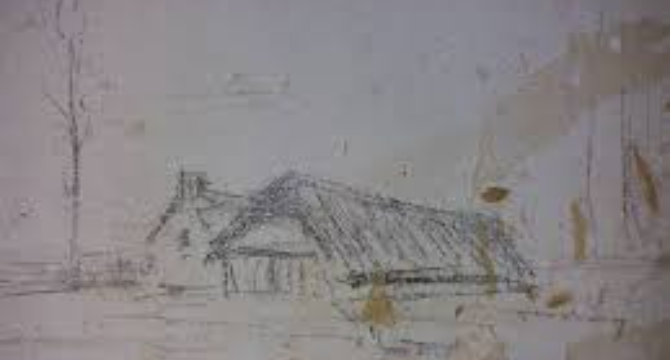
When I bought the house last year, everyone had an opinion.
My mother, who was 58 and deeply attached to modern kitchens and houses with “good bones,” stared at the listing photos and sighed. “Jane, are you sure? It looks like the kind of place where pipes burst in winter and doors lock on their own.”
My best friend, Mara, who was 31 and never missed a chance to be dramatic, leaned across my laptop and said, “Honestly, I love it. It looks haunted, but in a charming way.”
I laughed then, but the truth was more complicated.
I was 30, newly single, and tired of feeling like my life had been arranged by other people’s expectations. My breakup six months earlier had left me raw in ways I did not talk about.
My ex had loved polished apartments, luxury finishes, and things that looked expensive but had no story behind them. This house was the opposite. It was old, imperfect, stubborn, and standing.
I think that was what drew me in.
According to the documents, it had been built nearly 40 years before I was even born. The place sat on the edge of town behind a rusted iron fence, with an overgrown yard and an old wooden shed in the back that leaned slightly to one side as if age had finally started to weigh on it.
The floors creaked, the windows rattled on windy nights, and some of the wooden boards in the living room had softened with time. Even before I moved in, I knew I would eventually have to replace them.
Still, I loved that house almost immediately.
I loved the quiet in the mornings. I loved the way the late afternoon sun poured across the living room floor in long golden stripes.
I loved the apple tree near the fence, even though it had not produced a single decent apple since I moved in. It felt like I had chosen something difficult on purpose, and for once, I did not mind.
That afternoon, I was alone in the living room, kneeling on the floor in old jeans and a faded gray T-shirt.
I was trying to pry up one of the loosest planks.
Dust clung to my hands, and the muscles in my shoulders burned from the awkward angle.
The radio in the kitchen played softly, some talk show I was not really listening to, while the house answered with its usual groans and settling sounds.
“Come on,” I muttered, wedging the crowbar deeper under the board.
The plank finally gave in with a sharp crack, and I nearly fell backward. I laughed at myself, brushing hair out of my face, then leaned forward to inspect the space underneath.
At first, I thought it was just dust and old insulation underneath.
Gray clumps, brittle with age, had gathered between the beams like forgotten nests. I wrinkled my nose and reached for a trash bag.
Then I noticed something that did not belong there.
A folded piece of paper was wedged between the beams.
I froze for a second, then carefully pinched it between my fingers and pulled it free. The paper was yellowed and fragile, its edges softened with time. When I unfolded it, I almost smiled.
It looked like a child’s drawing.
Simple lines, stick trees, a square that looked like a house, and a path leading somewhere across the yard. In the corner, drawn with a shaky crayon line, was a large red X.
I almost threw it away.
It would have made sense. Old houses collect junk the way people collect memories. A receipt from another decade, a button, a grocery list, a note nobody meant to save.
I had already found a rusted bobby pin and what looked like part of a broken toy car in the floorboards upstairs. This could have been one more scrap left behind by people who had lived and grown and disappeared long before I got here.
But something made me pause.
I sat back on my heels and looked at the page again, this time more carefully. There was nothing artistic about it. The lines were uneven, the proportions childish, but there was intention in it.
The stick trees were not random. The square house sat at a certain angle. The path curved in a way that felt strangely familiar.
The more I looked at it, the more the shapes settled into recognition.
The drawing wasn’t random — it was a map.
My house.
The yard.
The trees behind the fence.
A cold wave moved through me so suddenly that I stopped breathing for a second. I turned the paper, studying each mark, feeling foolish and unnerved all at once.
It had to be a coincidence.
I told myself that immediately. Old house, old yard, old shed. A child could have drawn any property that looked vaguely like this one.
But my heart started beating faster as I stepped outside with the paper in my hand.
The afternoon air was cool, with the faint smell of damp soil and leaves. I walked slowly through the yard, comparing the drawing to what I saw around me.
The tree near the fence. The crooked path of flattened grass. The shape of the house behind me. I kept glancing from the paper to the yard, and with every step, the uneasy pressure in my chest grew heavier.
Every detail matched.
I stopped near the back of the property, close enough now to hear the dry creak of the old wooden shed when the wind touched it. The path on the drawing led toward the back of the property — toward the old wooden shed that had been there long before I moved in.
And right beside the shed…
That was where the X was.
For a moment, I just stood there, the paper trembling slightly in my hand. My practical mind tried to take over. Maybe a child had buried a toy. Maybe a time capsule.
Maybe nothing at all.
Yet something about the age of the paper and the deliberate way it had been hidden under the floor made my skin prickle.
I should have called someone. Mara, at least. She would have answered on the first ring and turned the whole thing into an adventure before I could lose my nerve.
Instead, I marched back to the garage, grabbed a shovel, and returned to the spot marked on the drawing.
The ground was harder than I expected.
The soil was packed tight, as if it had not been disturbed for decades. I drove the shovel down again and again, my hands stinging, my breath shortening with effort.
Dirt piled around my shoes. A strand of hair stuck to my cheek, damp with sweat, but I kept going.
I do not know what I thought I would find. I only knew I could not stop.
Then suddenly—
CLANG.
The sound rang through the quiet yard, sharp and metallic, and I jerked backward so fast I almost dropped the shovel.
The blade had hit something.
Something metal was buried deep in the ground.
I stared at the spot, my pulse pounding in my ears.
For one terrified second, I thought of every awful possibility at once. My mind leaped somewhere dark and unreasonable, and I had to force myself to breathe before it carried me any further.
“It is probably a box,” I whispered to myself. “A pipe. Scrap metal. Anything.”
My voice sounded thin in the empty yard.
I knelt beside the hole and used the shovel more carefully this time, scraping dirt away in smaller strokes. The metal surface widened inch by inch until I could see a rusted edge, then a corner.
It was not a pipe. It was too flat, too square. I dropped the shovel and used my gloved hands, clawing away the packed soil until my fingers hit cold metal on all sides.
It was a small lockbox.
Old. Rusted. Heavy.
The sight of it made my stomach tighten.
Somebody had buried it on purpose, and somebody else had drawn a map and hidden it under the floorboards.
For the first time since I found the paper, I felt the full weight of what I was doing. I was no longer just renovating an old house. I was stepping into someone else’s secret.
I dragged the box out of the hole and set it on the grass. Dirt crumbled from the lid. The lock had almost fused shut with rust, but the metal around it was weak with age.
I ran back to the garage, found a hammer and a flathead screwdriver, and returned with shaking hands.
“Please just be something normal,” I muttered.
It took several tries. The screwdriver slipped twice, scraping my knuckles, and I hissed through my teeth. Then the lock snapped with a brittle crack.
I froze.
The yard was silent except for the wind moving through the trees behind the fence. My hands suddenly felt too clumsy, too human, and too present. Then I lifted the lid.
Inside was no money, no jewelry, no dramatic treasure from a storybook fantasy.
There were children’s things.
A tiny knitted rabbit with one button eye missing. A handful of polished stones. A bracelet made of plastic beads. A photograph, curled at the corners. And on top of everything sat a small folded note in the same yellowed paper as the drawing.
I stared at it for a long moment before opening it.
The handwriting was careful but uneven, as if written by an adult trying to shape words a child had spoken.
“If you found this, then you found Rosie’s secret place. She wanted her treasure kept safe under the house, where nobody would take it. She said the map was important in case she forgot.”
My throat tightened so quickly it hurt.
I read the note again, then picked up the photograph with trembling fingers. It showed a little girl, maybe seven or eight years old, standing in the backyard beside the shed.
She had dark curls, a serious expression, and one hand lifted as if she had been caught in the middle of speaking. Behind her, younger but unmistakable, was my house.
I sat back in the grass and cried before I even understood why.
Not because it was tragic, exactly.
Not because the box held anything terrible. It was because the whole thing felt unbearably tender.
A child had loved these little objects enough to make a map for them. Someone had cared enough to preserve her note. And somehow, all these years later, I had been the one to find them.
I took the box inside and cleaned each item gently on the kitchen table. That evening, after I had washed the dirt from my arms and changed clothes, I called the number of the woman who had sold me the house.
Her name was Lydia, and she was in her late 60s.
When I explained what I had found, there was a long silence on the line.
Then she said softly, “Rosie.”
“You know who she is?” I asked.
“I knew who she was,” Lydia replied. “She was the daughter of the family who lived there before my parents bought the place. She died young. An illness, I think. I was just a girl when I heard the story.”
I closed my eyes.
“And the box?”
“Her mother used to say Rosie buried her favorite treasures all over the yard because she was afraid other children would take them. After Rosie passed away, her father found one of the boxes and could not bear to dig up the others. Maybe this was one he never found.”
Lydia paused. “The note sounds like something her mother would have written.”
I looked down at the little rabbit on my table. “She hid the map under the floor.”
Lydia gave a sad little laugh.
“Then she must have truly wanted it to be found one day.”
After the call, I sat in the quiet house for a long time, the kind of quiet that no longer felt empty. The mystery that had gripped me all afternoon settled into something gentler.
It was not a haunting. It was not a crime. It was love, preserved in paper and dirt and a rusted metal box.
The next morning, I bought a small wooden shadow box from a craft store in town.
I placed the drawing inside it beside the photograph and the note.
The bracelet and polished stones went into a glass jar on the mantel. The rabbit, missing button eye and all, found a place on the living room shelf.
Mara came over that weekend, and after I told her everything, she pressed a hand to her chest and said, “Jane, that is the saddest and sweetest thing I have ever heard.”
“I know,” I sighed, smiling through the sting in my eyes. “I thought I was uncovering something sinister.”
“And instead,” she chimed in, glancing around the room, “you found proof that this house was loved long before you.”
That stayed with me.
When I bought the place, I thought I was choosing a project, a shelter, a stubborn old structure I could slowly make my own. I did not realize I was inheriting a story.
Now, every time the floor creaks beneath my feet or the shed groans in the wind, I do not feel unsettled. I feel connected.
The house was built 40 years before I was born, but for the first time, that does not make me feel like an outsider here.
It makes me feel like I belong to something that started long before me, and that, in some small way, will keep going after me too.
But here is the question that lingers: when a house guards a child’s secret for decades, what do you do when you are the one chosen to uncover it?
Do you treat it as nothing more than an old mystery finally solved, or do you honor the love and grief buried with it and let it change the way you see home forever?

 admin
admin