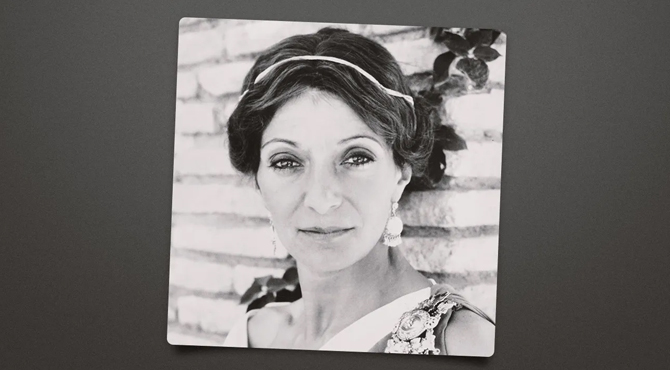
Acclaimed British stage actress Jane Lapotaire has died at the age of 81, leaving behind a celebrated career in theatre, television and film.
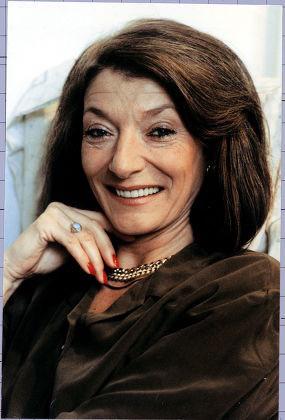
Lapotaire gained widespread recognition for her portrayal of scientist Marie Curie in the BBC’s 1977 mini-series Marie Curie. The performance brought her major attention and established her as a powerful dramatic actress.
A year later, she took on the demanding title role of French singer Édith Piaf in the Royal Shakespeare Company’s production of Piaf, staged in Stratford-upon-Avon and later in London. To prepare for the role, Lapotaire spent six months learning to sing. After a successful run in London’s West End, she won the Laurence Olivier Award for Actress of the Year in 1979.
The production later transferred to Broadway in 1981, where Lapotaire won the Tony Award for Best Actress in a Play, further cementing her international reputation.
Her stage career began in 1965 with When We Are Married. She went on to appear in notable theatre productions including War and Peace, The Merchant of Venice and Shadowlands. Her final stage appearance came in a production of A Master Class Maria Callas.
On television, Lapotaire first appeared in an episode of Sherlock Holmes in 1968. She later featured in popular series such as Casualty, Midsomer Murders and Lucan.
In 2014, she appeared as Princess Kuragin in the hit drama Downton Abbey, and in 2019 she portrayed Princess Alice of Battenberg in The Crown. Her final screen role came in the 2023 series The Burning Girls.
Following news of her death published in obituaries by The Guardian and The Daily Telegraph, the Royal Shakespeare Company paid tribute, calling her “a truly brilliant actress.” The organisation highlighted her award-winning role in Piaf and her portrayal of Gertrude opposite Kenneth Branagh in Adrian Noble’s production of Hamlet.
Lapotaire was born in 1944 in Ipswich, Suffolk, to an orphaned French teenager, Louise Elise Burgess, who had been sent to England to be fostered. After becoming pregnant by a boyfriend — whom Lapotaire believed may have been an American GI — Burgess gave the baby to her own foster mother, Grace Chisnall, a widowed pensioner who raised Lapotaire.
Lapotaire first met her birth mother at the age of four and later learned the truth about her origins during her teenage years. She eventually adopted the surname Lapotaire from Yves Lapotaire, a French Canadian who lived in Paris with her mother and worked in the Libyan oil industry.
She was educated at Northgate Grammar School before training at the Bristol Old Vic Theatre School. In 1967, she joined Laurence Olivier’s National Theatre.
Lapotaire discovered her passion for acting at the age of 17 while taking part in school plays. “I knew then that I wanted to act,” she once said. “I wanted it more than walking or breathing.”
During her time with the National Theatre, she worked closely with Olivier, playing his daughter twice before later portraying his wife on stage. She later moved to the Old Vic and joined the Royal Shakespeare Company in 1974, making her debut as Viola in Twelfth Night.
In 2000, while teaching a Shakespeare masterclass in Paris, Lapotaire collapsed after suffering a cerebral haemorrhage. She spent four weeks in intensive care and underwent two major operations.
During her long recovery, she turned to writing and published her memoir Time Out of Mind in 2003. She later reissued her earlier autobiography Everybody’s Daughter, Nobody’s Child, first published in 1989, in 2007.
Lapotaire was married to Oliver Wood from 1965 to 1967. She later married film director Roland Joffé from 1974 to 1980. The couple shared a son, Rowan, who went on to become a screenwriter and director.
Just last month, Lapotaire was appointed a Commander of the Order of the British Empire (CBE) and attended the investiture ceremony at Windsor Castle.
