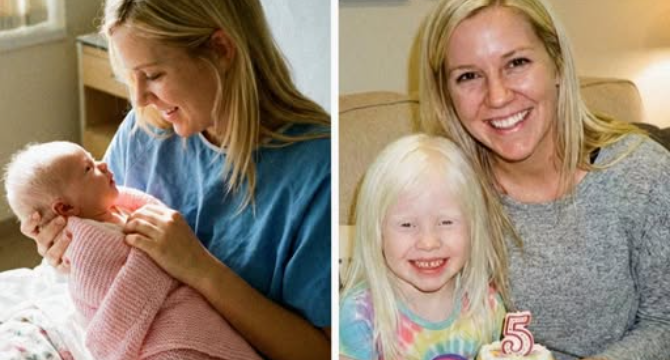
I was sitting in a hospital bathroom stall trying not to throw up.
I kept staring at my phone because typing felt easier than breathing.
If I said any of it out loud, it would become real.
My husband, Rhett, was downstairs in the gift shop buying our five-year-old daughter a stuffed fox. He’d promised Willa “bravery loot” if she was good about getting her tonsils out the following week.
This appointment was supposed to be a routine pre-op checkup.
Instead, our entire life had just detonated.
This appointment was supposed to be a routine pre-op checkup.
Fifteen minutes ago, our doctor had told me something that made absolutely no sense.
He told me my daughter wasn’t biologically mine.
And the problem with that was that I gave birth to her.
Dr. Harlan was the kind of pediatrician who kneeled to talk to kids. We’d known him since the night Willa was born.
The hospital was chaotic that night. A winter storm had shut half the city down, and the pediatrician on call couldn’t make it through the roads.
He told me my daughter wasn’t biologically mine.
Dr. Harlan had been the only pediatric specialist available when Willa arrived screaming into the world. I remembered him stepping up beside the warmer while the nurses cleaned her off.
“Strong lungs,” he said approvingly.
After that, he became her doctor. Ear infections, flu shots, late-night panicked calls about high fevers — Dr. Harlan was there through it all.
I trusted him completely.
Dr. Harlan had been the only pediatric specialist available.
The appointment started like any other.
Willa was swinging her legs on the exam table, and Rhett was crouched in front of her, doing his best to convince her that tonsil surgery was not the end of civilization as she knew it.
“Do I really get the fox?” she asked.
“If you’re brave,” Rhett said.
Dr. Harlan walked in a moment later.
I knew something was off the minute he entered the room.
The appointment started like any other.
He said hello to Willa first, like he always did, and she told him about the fox with great urgency. He nodded seriously, but without his usual show of interest in his patients.
Then he looked at Rhett. “Would you mind stepping out for just a minute with Willa? I have an insurance question for Mom.”
Rhett glanced at me. I shrugged.
“Let’s go get your fox, Willa,” Rhett said.
Willa climbed off the table with a wide grin and followed her father out of the room. The door clicked shut behind them.
He nodded seriously, but without his usual show of interest in his patients.
Once we were alone, Dr. Harlan sat across from me at his desk.
“Talia, there’s a problem.”
The tone of his voice told me this was not about insurance.
“Is something wrong with Willa?” I asked.
“No. She’s healthy. The issue is… well, let me start from the beginning. We run pre-op blood panels for tonsil surgery. Some hospitals also screen genetic markers connected to anesthesia reactions. It’s a relatively new protocol.”
The tone of his voice told me this was not about insurance.
I nodded.
“One of those markers flagged something unusual.”
“Unusual in what way?”
“It suggests Willa isn’t genetically related to you.”
For a second, I thought I’d misheard him.
Then I laughed. “That’s not funny, Dr. Harlan.”
“I know. I’m not joking, Talia.”
“One of those markers flagged something unusual.”
I stared at him for a long moment.
“But I gave birth to her… You were there.”
“I know,” he said quietly.
“So your test is wrong. It has to be.”
“The test isn’t wrong, Talia.” He folded his hands together. “There are rare medical explanations for why we might see a result like this. One possibility is chimerism, a condition where the DNA in someone’s blood differs from the DNA that created their child.”
“And the other possibility?”
“So your test is wrong. It has to be.”
“The hospital was chaotic the night Willa was born. Sometimes, mistakes occur—”
“No. Willa is my daughter. It has to be that chimerism thing.”
Dr. Harlan leaned back. “It is a possibility, but Talia, it’s extremely rare. Our best estimate is that one in several million people have this condition.”
“Several million?”
He nodded.
“So, what you’re telling me is that my daughter was switched at birth?”
“Our best estimate is that one in several million people have this condition.”
“I’m not saying that’s what happened,” he said quickly. “But statistically, it’s the more likely explanation.”
“I need a minute,” I whispered.
And I walked straight out of the room.
Which is how I ended up in the bathroom stall.
Typing.
Trying not to fall apart.
Which is how I ended up in the bathroom stall.
The whole time I was in that stall, I kept thinking about Willa’s laugh.
The way she said “Mama” when she was tired.
And then I had to stop thinking about it because I actually was going to throw up.
I splashed cold water on my face and stared at my reflection for a long moment. I never thought I’d pray to have a rare genetic condition, but that’s exactly what I was doing.
When I pushed the door open, Rhett was outside with Willa.
“Mama! Look at Mr. Fox.” She hurried toward me, holding the fox up in the air.
I never thought I’d pray to have a rare genetic condition.
“He’s amazing, sweetheart.” I forced a smile and stroked the fox’s head.
Rhett moved closer. I looked up at him, and he frowned.
“Is everything okay, babe?”
I answered him in a low voice. “We need to talk.”
The next few hours felt like a nightmare.
Rhett’s mom came to pick up Willa while we stayed at the hospital. Dr. Harlan did more tests and quietly pulled files from the hospital archive.
I forced a smile and stroked the fox’s head.
Soon, the pieces started coming together.
The night Willa was born, another baby girl had arrived less than 20 minutes later.
The hospital had been understaffed because of the storm. One nurse had logged identical bracelet numbers before the babies were transferred to the nursery.
An internal audit months ago had noticed something strange in the records.
The hospital had been reviewing it quietly, trying to confirm before contacting anyone.
A few days later, the test results came in.
Soon, the pieces started coming together.
Every test said the same thing: Willa was not genetically related to Rhett or me.
Now the truth was impossible to ignore. Our daughters had been switched five years ago.
And the other family lived less than 20 minutes away.
The hospital arranged a meeting.
I walked into the conference room holding Rhett’s hand. Across the table sat another couple. The other mother looked exactly how I felt — terrified. Gutted.
A hospital administrator cleared her throat.
Now the truth was impossible to ignore.
“There was a failure in newborn identification procedures,” she began.
“Say it clearly,” I said.
She hesitated. “The babies were switched at birth.”
The other mother, Diane, made a small sound. Not quite a sob… More like something leaving her.
“So the little girl I’ve been raising…”
“Is biologically mine,” I finished.
Not quite a sob… More like something leaving her.
The administrator nodded.
Then I asked the question that had been burning a hole in me since Dr. Harlan first mentioned it.
“You knew something was wrong months ago,” I said.
The administrator stiffened.
“An audit flagged the records, but you waited. You sat on it.”
“We needed confirmation before—”
“You needed to protect the hospital.”
I asked the question that had been burning a hole in me.
The room went quiet.
The hospital administrator promised they’d investigate further. She said they were already updating their policies and said we’d receive compensation.
All the words that institutions use when they’ve done something that can’t be undone. I listened. I nodded. I watched Diane across the table do the same thing.
But none of that answered the question that actually mattered.
What happened to the girls?
None of that answered the question that actually mattered.
They brought the girls in at the end of the day.
Willa ran to me with zero hesitation, the way she always did, arms out, trusting completely that I was going to catch her.
I caught her.
Across the room, Diane’s daughter — my daughter — grabbed her mother’s hand and held on.
And suddenly something became very clear.
Willa ran to me with zero hesitation.
Five years of scraped knees, bedtime stories, stomach bugs, and first words couldn’t be erased by a DNA report.
These girls already knew who their mothers were. They’d known for their entire lives, in every way that mattered.
Science had one answer, but the girls had a different one.
And the girls had been answering that question every single day for five years.
Science had one answer, but the girls had a different one.
That night, both our families sat together again.
Not in a conference room this time. We arranged to meet Diane and Marcus at an out-of-the-way coffee shop. It was neutral ground.
We sat, we talked carefully around long stretches of silence, and finally, Marcus said what everyone was thinking.
“I can’t imagine losing her.”
He didn’t say which “her.” He didn’t have to.
We arranged to meet Diane and Marcus at an out-of-the-way coffee shop.
Rhett nodded. “Neither can we.”
Diane wiped her eyes with the back of her hand. “But they deserve the truth. Both of them. They deserve to know where they came from.”
“What if they get the truth,” I said, “without losing the families they already have?”
Everyone looked at me.
“We legally adopt the daughters we’ve raised,” I continued. “No custody battle. No upending their lives. The hospital made the mistake, but the girls shouldn’t have to pay for it.”
“They deserve to know where they came from.”
“They keep their homes, their rooms, their routines. And we tell them the rest of the story when they’re old enough to hold it?” Marcus said.
I nodded.
Diane looked at me for a long moment. “And the girls grow up knowing each other.”
“Sisters,” Rhett added.
Something shifted in the room. Nothing was fixed or resolved, but this felt possible.
Diane looked at me for a long moment.
The next day, we were back at the hospital to hear the results of the latest DNA tests.
They confirmed what we already knew: our daughters had been switched at birth.
Before we left, the hospital administrator found me in the hallway.
“This should never have happened,” she said.
I had about a hundred different responses to that. I ran through a few of them in my head, but none of them felt adequate. None of them was going to change anything.
I just squeezed Willa’s hand and looked at the administrator.
The hospital administrator found me in the hallway.
“No,” I said. “It shouldn’t have.”
Across the lobby, Diane’s daughter laughed at something her father said. It was sudden and bright, the laugh of a kid who’d had a long day and found something funny at the end of it anyway.
I watched that little girl laugh.
And I thought about how, for five years, we’d all been living inside a mistake. A storm, an understaffed hospital, one nurse with two bracelets, and not enough hours in the night.
But that mistake didn’t decide what happened to our daughters now. That part was ours.
For five years, we’d all been living inside a mistake.
I bent down and picked Willa up. She looped her arms around my neck.
“Ready to go home?” I asked.
She nodded into my shoulder, already half drowsy. She’d brought Mr. Fox with her and held him tightly under her arm.
“Can we get ice cream on the way home?” she asked.
Rhett leaned over to kiss the top of her head. “Of course we can. You need to practice for when your tonsils come out. You’ll be eating lots of ice cream then.”
Willa giggled, and for the first time in days, I felt like everything was going to be okay.

 admin
admin