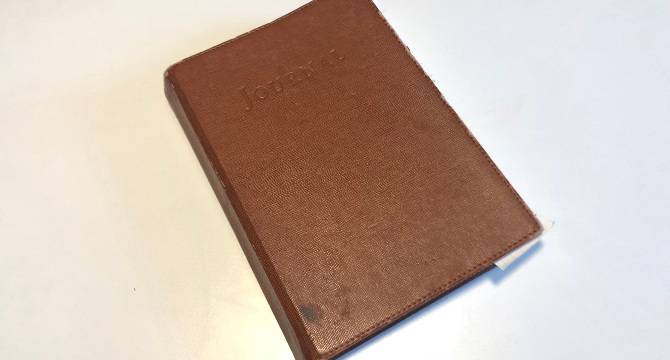
After my dad died, everything fell apart.
I know that sounds dramatic, but it’s the only way I can describe it. When you grow up with just one person in your corner, and that person disappears, the world feels louder and colder at the same time.
My name is Davina. I am 22 years old. For as long as I can remember, it was just me and my father, James, in a small house at the end of Maple Street.
No mother. No relatives who cared. No holiday dinners with extended family. Just the two of us in a creaky old place that smelled like motor oil and laundry detergent.
We were barely getting by.
Some months, we had to choose between fixing the heater or buying new shoes for me. Dad always made it seem like an adventure.
“Character building,” he used to say with a wink.
I believed him.
After he passed away last year, the silence in that house felt unbearable. I tried to keep it together. I picked up extra shifts at the diner. I learned how to argue with utility companies. I learned how to eat one meal a day without complaining.
Money is tight. It always has been. But after he was gone, I had to learn how to survive without the only person who ever truly showed up for me.
Most days still feel heavier than they should.
Last week, I went up to the attic to sort through old things. I had put it off for months. Every time I even thought about climbing that narrow staircase, my chest tightened. But I needed to sell or throw away whatever I could. The bills were stacking up on the kitchen counter like quiet threats.
The attic smelled like dust and old wood. Sunlight filtered through the tiny round window, catching floating particles in the air. There were dusty boxes, broken tools, and old bags. Pieces of a life we had lived together.
I opened one box and found my fourth-grade spelling bee trophy. Another held Christmas lights that hadn’t worked since I was 12. I almost laughed.
Then I found an old duffel bag shoved into the far corner.
It felt heavier than it should have.
I frowned and picked it up. It was stiff with age, and the zipper rusted halfway open. I assumed it was full of tools or maybe old shoes. As I was about to toss it aside, I felt something stiff sewn into the lining.
My hands froze.
It was not loose. It was hidden.
My heart began to pound in a way that made my ears ring. Dad was not the kind of man who hid things. Or at least, I never thought he was.
I carried the bag closer to the light and pressed my fingers against the lining again. The shape was rectangular. Solid.
I tore the fabric open.
The sound of ripping cloth echoed in the small space. For a second, I felt guilty, like I was breaking something sacred.
Inside was a small, worn notebook.
It was my father’s diary.
I stared at it for a long time before touching it. My dad had never seemed like someone who would keep a diary. He was practical. Quiet. He kept his emotions folded away like old receipts.
My hands trembled as I opened the first page.
The handwriting was unmistakably his.
Slightly slanted, careful, like he was afraid of taking up too much space even on paper.
I sat down right there on the attic floor and started reading.
At first, the entries were simple. Notes about work. Worries about money. Thoughts about me.
“Davina started middle school today. She looked scared but pretended she wasn’t.”
I swallowed hard.
“Couldn’t afford the field trip. Told her we’d plan something better ourselves. I hate when she says ‘it’s okay’ too quickly.”
Tears blurred the ink.
Page after page, I saw a man I never fully knew — his fears, regrets, and secrets.
He admitted that he often felt like he was failing me because he could not give me more. Some nights, he stayed awake calculating bills over and over, searching for a way to stretch what little we had.
He even described the fear that gripped him the first time I spiked a high fever, how he sat beside my bed, convinced he might lose me.
There were things I never noticed. Moments where he felt overwhelmed. Times when he questioned whether raising me alone was enough.
He never showed any of that.
To me, he was steady. Solid. Unshakeable.
And yet here, in ink, he was vulnerable.
I do not know how long I sat there. The attic grew warmer as the afternoon sun shifted. My legs fell asleep beneath me, but I kept turning pages.
Then I noticed something strange.
Two pages near the end were stuck together.
At first, I thought it was just moisture damage. But when I ran my finger along the edge, I realized they had been pressed together deliberately.
My breathing slowed.
I stood up and went downstairs to the kitchen. My mind was racing. I grabbed a small knife from the drawer and returned to the attic.
Carefully, I slid a knife between them and separated the paper.
The pages peeled apart with resistance.
My eyes widened instantly.
I did not even finish reading.
I felt like the air had been sucked out of the room. My heart was pounding so hard I thought I might faint.
I scrambled to my feet, nearly dropping the diary.
My brain could not process everything at once.
I read the lines again, just enough to confirm I had not imagined them.
Then I moved.
I grabbed my jacket from the hook by the door and ran outside. I did not even lock up properly. I just got into my car and drove.
Thirteen years ago, when I was nine, we sold our house. Dad told me it was time for a “fresh start.” I cried the day we left. I had carved my initials into the old oak tree in the backyard. I thought we would come back someday.
We never did.
Now, as I sped down the familiar roads, my hands gripping the steering wheel so tightly my knuckles turned white, I could barely breathe.
I did not call ahead. I did not think. I just drove straight to the house we had sold 13 years ago.
It looked smaller than I remembered. The paint was different. The porch light had been replaced. But it was the same house.
I walked up to the front door and knocked before I could lose my nerve.
A man in his 50s opened the door.
He looked confused at first, then cautious.
I realized how I must have appeared. A 22-year-old woman, pale, breathless, clutching a worn notebook like it was a lifeline.
“Hi. I’m Davina. We sold you this house 13 years ago,” I said, breathless. “I need to go to the basement.”
His eyebrows drew together.
“Why?” he asked.
His voice was not hostile, just guarded. He looked over my shoulder as if expecting someone else to appear behind me.
The afternoon sun caught in his graying hair, highlighting the fine lines etched around his eyes. He looked like a man who had settled into this place, who had made it his own.
Maybe he had raised children here.
Maybe he had repainted the walls or fixed the floors, covering over the patches my dad once repaired with his careful hands.
I swallowed. My throat felt dry.
“My father,” I began, forcing myself to stay steady. “James. He owned this house before you. He passed away last year.”
The man’s expression softened a little.
“I’m sorry for your loss,” he said quietly.
“Thank you.” I tightened my grip on the notebook. “I found something he left behind. Something that… mentions the basement. I just need a few minutes down there. Please.”
He hesitated.
“I’m not here to cause trouble,” I added quickly. “I won’t touch anything that’s yours. I just need to check something.”
He studied my face, maybe searching for a lie. Whatever he saw must have convinced him, because after a moment, he stepped aside.
“My name’s Robert,” he said. “You can come in.”
The house smelled different. Cleaner. Brighter. The old floral wallpaper in the hallway had been replaced with soft gray paint. The floors had been refinished. But beneath all of it, I could still sense echoes of the past.
Saturday mornings, when Dad made pancakes from a box mix. The time we danced in the living room when the power came back on after a storm.
Robert closed the door behind me.
“The basement’s through the kitchen.”
I nodded, unable to speak.
The kitchen had been remodeled, too. New cabinets. Granite counters. Nothing like the chipped laminate surfaces I grew up with. But the door to the basement was the same. White. Slightly uneven on its hinges.
My heart pounded as I reached for the knob.
Robert stood a few feet behind me. “What exactly are you looking for?” he asked, his tone gentler now.
I opened the diary and turned to the page that had sent me racing here.
My eyes scanned the familiar slanted handwriting.
“If anything ever happens to me,” Dad had written, “I pray Davina finds this. What’s hidden beneath the third step in the basement is hers. It was always hers.”
My chest tightened again at the memory of reading those words.
“There’s something under the third step of the basement stairs,” I said softly.
Robert blinked. “Under the step?”
“Yes.”
He crossed his arms, thinking. “Well, I’ve never noticed anything unusual. But go ahead.”
I opened the basement door and descended slowly.
The air grew cooler with each step. The faint smell of concrete and old wood hit me, instantly familiar. The light switch was in the same place. I flipped it on.
The basement looked different but not completely changed. The old workbench was gone. The shelves had been replaced. Still, the stairs creaked in the same way they always had.
I crouched down and ran my fingers along the third step.
Nothing looked unusual.
For a moment, doubt crept in.
What if I misunderstood? What if grief had made me reckless?
“Do you need tools?” Robert called from behind me.
“Maybe,” I replied.
He came downstairs and handed me a screwdriver from a nearby toolbox. “Let me know if I should be worried about my house collapsing,” he said with a faint smile.
I managed a weak smile back. “I’ll try not to destroy anything.”
My hands trembled as I carefully worked the edge of the screwdriver beneath the wooden plank. It resisted at first.
Then, with a small crack, it lifted.
Dust puffed into the air.
There was a hollow space beneath.
My breath caught.
Inside was a metal tin box. Small. Plain. The kind you might keep cookies in.
I stared at it for several seconds before reaching in and pulling it out. It felt heavier than I expected.
Robert leaned closer. “Well, I’ll be…”
I sat down on the cold concrete floor and placed the box in my lap.
My fingers hovered over the lid.
For a split second, I felt like I was nine years old again, sitting beside Dad while he fixed something broken. Back then, I believed he could solve anything.
Now I was about to uncover something he had hidden.
I lifted the lid.
Inside were neatly stacked bundles of cash, secured with old rubber bands. Beneath them was a sealed envelope with my name written across the front in his careful handwriting.
“Davina.”
My vision blurred.
Robert let out a low whistle. “That’s… a lot of money.”
I nodded, unable to count it yet. My hands were shaking too badly.
I opened the envelope.
The letter inside was shorter than I expected.
“My sweet girl,” it began. “If you’re reading this, then I didn’t get the chance to tell you everything in person. I’m sorry for the secrets. I needed to be sure you’d be safe.”
Tears slid down my cheeks as I kept reading.
“I know I couldn’t give you much growing up. But I saved every extra dollar I could. Overtime shifts. Side jobs. Things I never told you about because I didn’t want you worrying. This money is for your future. College. A home. A fresh start that doesn’t feel forced.”
My chest ached.
“I sold the house when you were nine because I needed to protect this. I was afraid that if I kept it in a bank, I’d end up using it just to survive another month. I wanted you to have something solid. Something certain.”
I pressed the letter to my lips, sobbing openly now.
All those nights, he came home exhausted. All the times he told me he was “just tired.”
He had been carrying this alone.
Robert shifted awkwardly beside me. “Your dad must have loved you very much,” he said quietly.
“He did,” I whispered. “He really did.”
For so long, I had believed we were just scraping by with nothing to show for it. I had thought he left me alone and unprepared. But even in his silence, even in his flaws, he had been planning for me.
Protecting me.
I wiped my tears and looked at Robert. “Thank you for letting me come down here.”
He gave a small nod. “I’m glad you did.”
I carefully placed the money and letter back into the tin.
As I stood up, something inside me felt lighter.
Not because of the cash, though I knew it would change everything. Tuition. Debt. Rent. The constant fear of the next bill.
It was lighter because I finally understood him.
My father had not been just surviving.
He had been building something for me, piece by piece, in the only way he knew how.
As I walked back up the basement stairs, I ran my hand along the railing one last time. The house no longer felt like a place I had lost.
It felt like proof.
Proof that even when everything seemed to fall apart, love had been quietly holding it together all along.
Outside, the late afternoon sun warmed my face. I clutched the tin box to my chest and looked back at the house that had once been my whole world.
For the first time since my dad died, the future did not feel heavy.
It felt possible.
But here is the real question: when the father you thought was barely holding life together was quietly building your future all along, how do you grieve him the same way? And once you uncover the love he hid beneath sacrifice and silence, how do you begin again, knowing you were never as alone as you believed?
