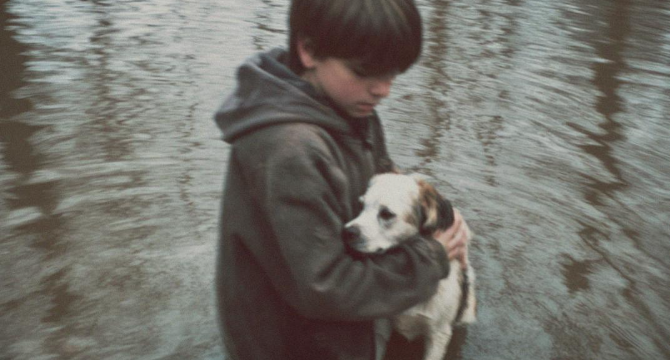
Derek was only 15, but fate had made sure he felt much older than his age.
Most kids his age were worried about grades, sports tryouts, and who was sitting with whom at lunch.
But Derek worried about different things.
He worried about things that he never said out loud because saying them would make them too real, and he’d spent a long time learning how to carry them in silence.
He had been diagnosed with a rare heart condition two years earlier, after a routine checkup turned into a series of increasingly serious conversations between doctors and his mother. He remembered sitting in the hallway outside the cardiologist’s office, watching his mom’s face through the small window in the door, and knowing from the way her shoulders dropped that the news wasn’t good.
The doctors were straightforward about it.
Without a highly specialized surgery, Derek wouldn’t live past 20. The surgery was performed at a handful of hospitals across the country by a small number of surgeons who knew what they were doing. It could save his life completely.
It also cost more money than his mother would ever be able to put together.
She was a single mom who worked two jobs and still came home to make sure there was a hot meal on the table. She was the strongest person Derek had ever known, and he hated the look she got when she thought he wasn’t watching. That look that was part guilt and part grief, like she was already mourning something she hadn’t lost yet.
So, Derek made a decision, quietly and on his own.
He decided not to fall apart. He went to school, did his homework, and made plans out loud. He’d decided to study architecture at college, but somewhere in the back of his mind, he wondered whether those plans were real or just something he built to keep his mother from crying.
He tried to live normally, and most days, he almost managed it.
That Tuesday afternoon, he was walking home from school along the path that ran beside the river when he heard a frantic, desperate sound that cut right through the noise of the wind and the water.
A dog was in the river.
Derek stopped and looked over the bank. The current was fast and dark, swollen from two days of heavy rain.
In the middle of it, a medium-sized brown dog was fighting to keep its head above the surface, legs churning uselessly against the pull of the water. Its barking had turned into something smaller and more exhausted, and Derek could see it losing ground with every second.
He stood there for one long moment.
He knew what the cold water could do to him.
His cardiologist had been clear about physical strain, about sudden temperature shocks, and about the specific ways his heart could be pushed too far. He could feel the logic of it laid out neatly in his head.
Then the dog went under for a second, came back up gasping, and Derek dropped his backpack.
He jumped.
The cold hit him hard, knocking the air out of his chest the instant he broke the surface. For a terrifying second, his body seized against it, and his heart hammered in his ears. But he kept moving, kicking hard toward the dog, grabbing the animal by its collar, and turning back toward the bank.
The current pushed back against him the whole way. His arms burned, and his chest ached with a dull, spreading pressure he recognized and tried not to think about.
By the time his feet found the riverbed and he hauled himself and the dog up onto the muddy bank, he was shaking so hard he could barely stand.
The dog shook itself, pressed its wet nose against Derek’s hand, and looked up at him with wide, exhausted eyes.
“Alright,” Derek breathed, sitting back in the mud. “Alright. You’re okay.”
He rested for a few minutes, then gathered himself, scooped the dog into his arms, and carried it to the nearest animal shelter a few blocks away. He handed the animal over to a staff member, turned down offers to be recognized, and stepped back out into the cold afternoon air.
He walked home slowly, each breath a little harder than the last, one hand pressed quietly against his chest.
That night at dinner, his mother looked at him across the table.
“You look pale,” she said. “Are you feeling okay?”
“I’m fine, Mom,” he said, and smiled at her. “Just tired from school.”
He coughed once into his sleeve and said nothing else.
Derek was still in bed the next morning when he heard his mother’s voice from the front of the house. Her voice sounded like something unexpected had happened.
He got up slowly, pulled on a hoodie, and walked down the hall.
Through the front window, he could see a sleek black SUV parked along the curb outside their modest home, the kind of vehicle that looked completely out of place on their street. His mother was standing in the open doorway, and a sharply dressed man in a dark suit was standing on their front step.
Derek came up beside his mother, and the man’s eyes shifted immediately to him.
“Are you Derek?” the man asked.
“Yeah,” Derek said carefully. “That’s me.”
The man looked at him for a moment. “You have no idea whose dog you saved last evening. Wanna take a ride with me?”
Derek’s mother put her hand on Derek’s arm.
“Who are you?” she asked. “And what is this about?”
The man reached into his jacket and produced a business card, holding it out to her. “My name is Gerald. I work for the Lawson Medical Foundation. The dog your son pulled out of the river yesterday belongs to our director, Mr. Lawson.” He paused, letting that settle. “Mr. Lawson would like to meet Derek personally. Both of you, if you’re willing.”
Derek’s mother looked at the card, then at Derek, then back at the man.
“Is my son in some kind of trouble?”
“No, ma’am,” Gerald said. “Quite the opposite.”
They agreed to go.
The drive was quiet, with Derek watching the city shift from their neighborhood into something noticeably different — wider streets, taller buildings, the kind of architecture Derek had always studied from a distance.
His mother sat beside him in the back seat, her hand resting over his, and neither of them said much.
What they hadn’t told Gerald yet — what they couldn’t have known he already knew — was that when Derek had dropped the dog off at the shelter the previous afternoon, the cold and the exertion had caught up with him faster than he’d expected.
He’d grown dizzy in the shelter’s waiting area.
A staff member had noticed that before Derek could pull himself together and leave quietly.
She’d insisted he sit down. She’d asked gentle questions, the way people do when they’re genuinely worried, and somewhere in the fog of trying to reassure her, Derek had admitted that he had a serious heart condition.
The shelter staff had mentioned this when Gerald came to collect the dog.
And Gerald had brought the information straight back to Mr. Lawson.
The foundation’s offices were in a tall building with glass walls and a lobby that echoed. An assistant led them upstairs to a corner office where a man in his 50s sat waiting.
Mr. Lawson was broad-shouldered but carried himself with a quietness that didn’t match the size of the room.
He stood when they entered and extended his hand to Derek first.
“Thank you for coming,” he said. “And thank you for what you did for Max yesterday. He’s been with me for nine years.”
“Is he okay?” Derek asked immediately.
Mr. Lawson smiled at that, just slightly. “He’s fine. Warm, dry, and completely ungrateful, as always.” He gestured to the chairs across from his desk. “Please, sit down. There are some things I’d like to explain to you both.”
He spoke quietly and carefully. He told them about his son, Nathan, a boy who had been diagnosed at 13 with the same rare heart condition Derek had. He told them about the years of searching for solutions and the surgery that came too late.
He told them how, after Nathan died, he had set up a scholarship fund in his name. It was a fully funded program designed to cover surgery, hospitalization, and recovery costs for teenagers with the same diagnosis who couldn’t afford treatment on their own.
He had been looking for the right candidate for over a year.
When Gerald told him that the boy who’d jumped into a freezing river to rescue a stranger’s dog, risking his own fragile health without a second thought, happened to carry the same diagnosis as Nathan, Mr. Lawson had stopped the conversation and said simply, “That’s him.”
Derek’s mother pressed her hand over her mouth, and Derek sat very still.
The rescue hadn’t been random.
Derek had jumped into that river because he couldn’t walk away from something suffering, even when it cost him something. And that single instinct, that stubborn, quietly heroic refusal to leave a helpless creature alone, had placed him directly in front of the one man in the world who had both the means and the mission to save his life.
“Mr. Lawson,” Derek said slowly, “I didn’t jump in because I was trying to be brave. I just… I couldn’t leave him there.”
The older man nodded, like that was exactly the right answer.
“I know,” he said. “That’s why you’re here.”
The meeting lasted nearly two hours, and by the end of it, Derek’s mother had cried twice — once when Mr. Lawson described Nathan, and once when the foundation’s medical coordinator laid out what the scholarship would cover in precise, generous detail.
Everything. The surgery, the hospital stay, the specialist fees, the follow-up care, the recovery. Every line item that had been sitting at the top of a mountain Derek’s family had no way to climb would be covered, in full, in Nathan’s name.
Derek sat through most of it in a kind of stunned quiet, listening carefully to every word, turning it over in his mind the way he did with things that didn’t quite fit the shape of his understanding yet.
Before they left, Mr. Lawson asked to speak with Derek alone for a few minutes.
His mother stepped out into the hallway, and the two of them sat across from each other in the large, quiet office.
“My son…” Mr. Lawson said, his voice unhurried. “He also loved dogs. We had three of them.” He looked out the window for a moment. “Nathan would’ve jumped into that river too. Without hesitating.”
Derek didn’t say anything, but he felt the weight of what was being shared with him.
“Thank you,” Derek said finally. It felt small for everything he meant, but Mr. Lawson nodded like he understood.
“Take care of yourself,” the man said quietly. “Please.”
Three weeks later, Derek met with the surgical team at a hospital two states over. They were a calm, thorough group of specialists who spoke about his future in a way no doctor ever had before. Not in limits. Not in careful, hedged language designed to soften difficult news.
They spoke about years. About long-term outcomes. About what his life could look like at 25, at 30, and beyond.
Derek sat on the edge of the exam table and listened, and somewhere in the middle of it, he realized that the plans he’d been making out loud — college, architecture, the buildings he wanted to design — had always been real.
He just hadn’t been able to let himself believe it until now.
His mother was in the waiting room when he came out, and she stood up the moment she saw his face.
“Well?” she said.
He looked at her and he smiled.
“They think it’s going to go really well,” he said.
She crossed the room and held onto him for a long time, and he let her.
Derek had jumped into a freezing river believing, somewhere deep down, that he had nothing left to lose. But that single, instinctive act of courage had set something in motion that he never could have planned or predicted.
It had carried him all the way to a second chance.
The dog he rescued had led him straight to the person who could save his life.
And for the first time since that afternoon in the cardiologist’s hallway, Derek allowed himself to imagine living past 20 and everything that might come after.
Derek jumped in without thinking twice, but if you knew the cold water could cost you your life, would you have done the same?

 admin
admin