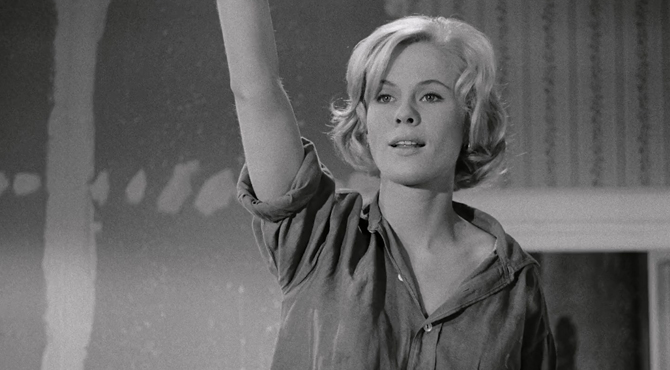
The world of cinema lost one of its most luminous and emotionally intelligent performers when Bibi Andersson passed away on April 14, 2018, at the age of 83. With a career spanning more than six decades, she left behind a body of work that continues to inspire filmmakers, actors, and audiences across generations. Her performances were not merely roles played on screen — they were deeply lived experiences that revealed the fragile, complex, and often contradictory nature of the human soul.
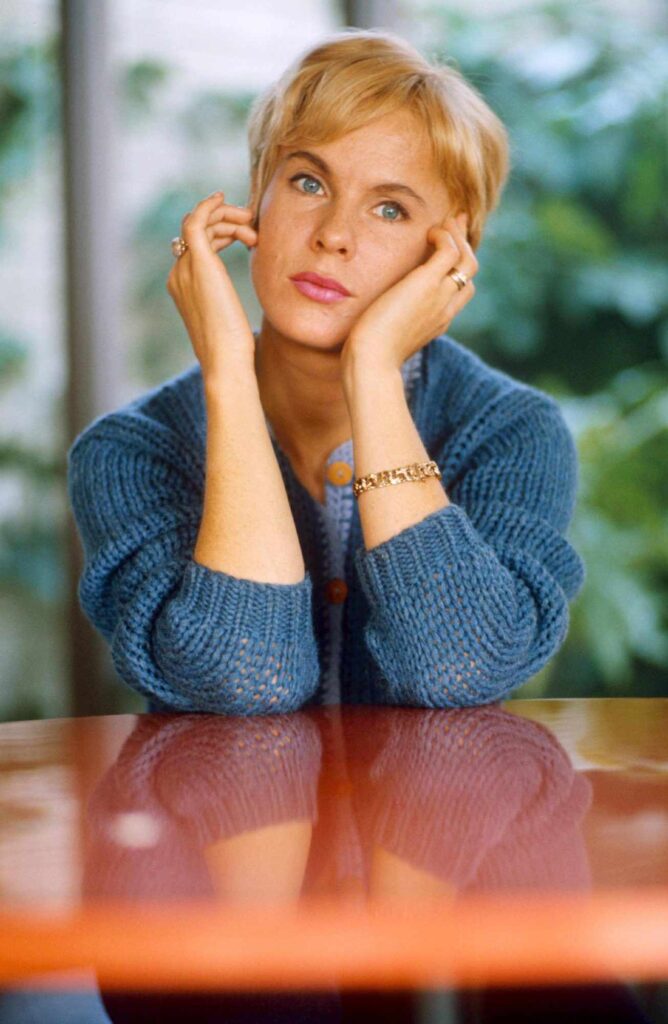
Born on November 11, 1935, in Stockholm, Sweden, Bibi Andersson began her artistic journey at a young age. She studied at the prestigious Royal Dramatic Theatre School, where her natural talent quickly became evident. It was there that she began shaping the expressive style that would later define her film career — subtle yet powerful, restrained yet emotionally explosive when needed.
Her collaboration with director Ingmar Bergman would become one of the most important artistic partnerships in European cinema. Andersson appeared in several of his films, delivering performances that remain studied and admired to this day. Through Bergman’s psychologically rich storytelling, she was given space to explore the inner conflicts of her characters with rare depth and authenticity.
One of her most celebrated roles came in Persona (1966), a film that challenged audiences and critics alike with its bold exploration of identity, silence, and emotional duality. Andersson’s portrayal of Alma, the talkative nurse caring for a silent actress, stands as one of the most remarkable performances in cinematic history. Her ability to shift between innocence, vulnerability, anger, and existential confusion demonstrated her extraordinary emotional range.
Beyond Persona, she also appeared in The Seventh Seal and Wild Strawberries, films that are now considered cornerstones of world cinema. In each project, Andersson brought a grounded humanity that balanced the philosophical weight of Bergman’s themes. She never overpowered a scene; instead, she illuminated it from within.
Yet Bibi Andersson was not confined to one director or one style. She worked internationally, appearing in American and European productions, proving her adaptability and broad artistic appeal. Whether performing in drama, romance, or period pieces, she consistently brought sincerity and intelligence to her characters.
What set Andersson apart was her expressive face — capable of conveying entire emotional landscapes with the slightest shift of her eyes or mouth. She understood the power of silence as much as dialogue. In many of her performances, what she did not say was just as impactful as the words written in the script.
Colleagues often described her as warm, professional, and deeply committed to her craft. She carried herself with grace and quiet confidence, never seeking excessive fame, yet earning profound respect within the artistic community. Her dedication to theatre remained strong throughout her life, and she continued acting on stage even as film roles became less frequent.
In later years, health challenges gradually limited her public appearances, but her legacy had already been firmly established. Film students continue to analyze her performances; critics continue to cite her as one of Sweden’s finest actresses; and audiences continue to discover her work through restored prints and digital streaming platforms.
Bibi Andersson represented a generation of performers who treated acting not as celebrity, but as serious artistic expression. She belonged to a golden era of European cinema that valued psychological depth, moral ambiguity, and emotional truth. Through her work, she helped shape how modern audiences understand character-driven storytelling.
Her passing in 2018 marked the end of an era, but it did not diminish her presence. The beauty of cinema is its permanence — her performances remain alive, breathing, and accessible to anyone willing to experience them. Each time Persona is screened, each time a Bergman retrospective is held, her artistry reaches new viewers.
Today, we remember Bibi Andersson not only for her filmography, but for the emotional courage she displayed on screen. She dared to portray women who were flawed, searching, uncertain, and deeply human. She allowed audiences to confront uncomfortable truths through her characters, and in doing so, she elevated the art of acting.
Her legacy is one of quiet brilliance — not loud or sensational, but enduring and profound. She reminded us that cinema can be intimate, thoughtful, and transformative.
Though she is no longer with us, her light continues to shine in every frame she left behind.
Rest in peace, Bibi Andersson. Your artistry remains timeless.
