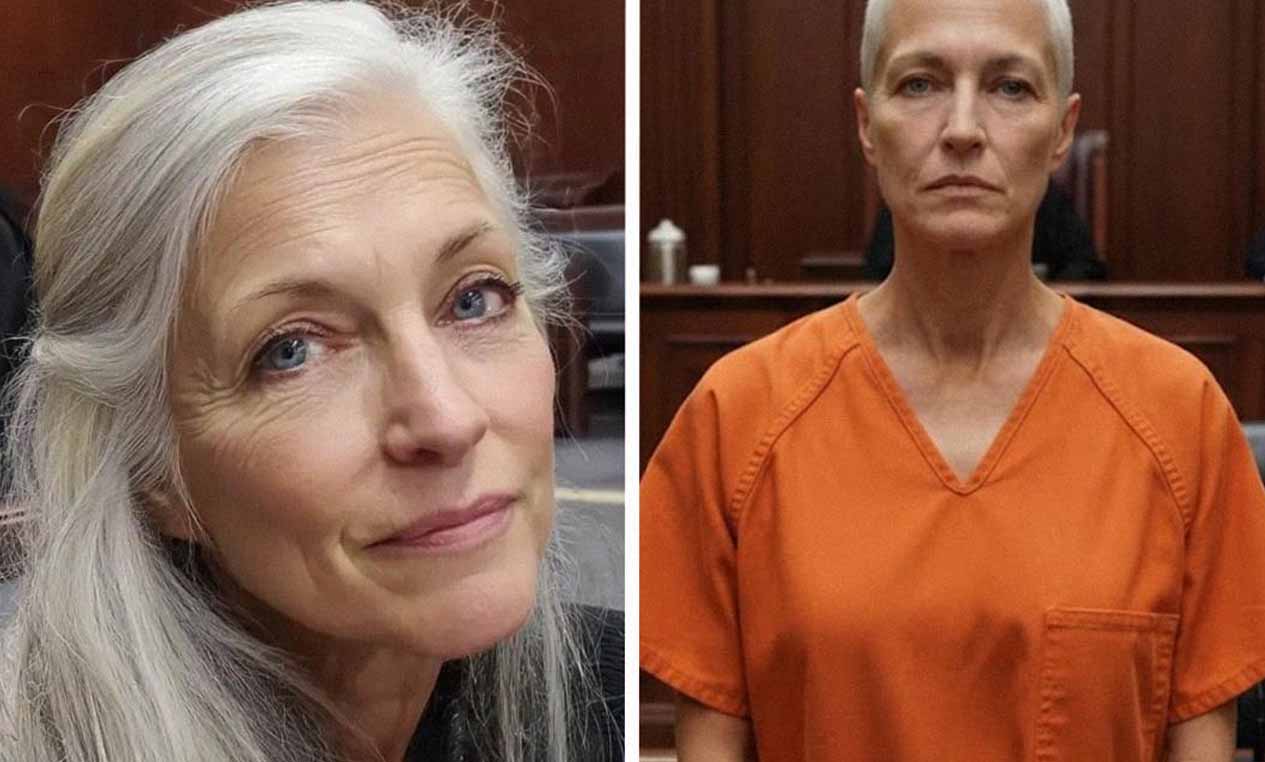
I’m 63. I’m a widow, a judge, and I have lived alone in a house that was always too quiet.
I have no kids, pets, or random phone calls.
I keep people at a distance because it feels cleaner that way, and loss hurts less when your life stays sealed shut.
I had no kids, pets, or random phone calls.
That morning had started like every other weekday.
I stood at the kitchen counter, warming my palms around my mug, and said out loud, just to hear a voice, “You should really get a cat.” The house didn’t answer. It never did.
When I was a kid, I didn’t pray for toys. I prayed for a sibling. Someone who would understand my parents’ moods, the long silences, and my mother’s smile that always felt like we were hiding something.
I used to picture a girl my age running up our driveway, calling my name as if she had always belonged.
She never came.
I prayed for a sibling.
I grew up quiet, careful, and “good,” because being good felt like the safest way to exist in my childhood home.
But one memory never quite fit.
When I was a teenager, I snooped in my father’s desk while my parents were at the grocery store.
My childish curiosity led me to find an old photo tucked beneath tax documents.
A little girl stared back at me, her head tilted the same way mine always tilted in pictures.
But one memory never quite fit.
She had the same eyes, mouth, and even the same tiny scar above the eyebrow that my parents told me I had gotten from falling off my bike.
My stomach turned.
On the back, in my mother’s handwriting, was one word:
CHRISTAL.
That night, I held the photo out with shaking hands and asked, “Who is she?”
My mother froze as if I had slapped her. My father snatched the photo and said, “Nobody.”
My stomach turned.
I said, “She looks like me.”
He didn’t blink.
“That’s just your imagination.”
My mother whispered, “Put it away,” and then they hid it and pretended it never existed.
That’s when I learned my parents could lie without blinking.
I buried my questions.
I built a career and married a good man named Thomas, who loved me gently and never pushed.
When he died, I chose peace because it was predictable.
That’s how I became a judge; it was my way of making sense of the secrets and silence everyone battled with.
“She looks like me.”
That morning in court, I adjusted my robe, took my seat, and reminded myself that routine kept chaos away.
The clerk called the case. It was an ugly one: the state versus a woman accused of burglary and assault.
A family’s peace had been destroyed.
They brought in the defendant. I looked up and went ice cold.
She was not just similar to me.
She was me.
It was an ugly one…
I was instantly transported back to age 15, when I saw the same eyes, mouth, and scar above the eyebrow looking up at me through a photo.
But this time, she was no longer a little girl. She was a woman in chains.
The woman met my gaze and smiled as if she had been waiting.
My heart pounded so hard I worried the microphone would pick it up.
I looked down at the file, then back at her.
She was a woman in chains.
My voice came out thin.
“Miss, can you please state your name for the record?”
She tilted her head and gave her full name.
Her first name nearly stopped my heart. It hit me low and hard, like a fist.
I whispered, without meaning to, “Christal, is it you?”
The courtroom murmured.
My clerk leaned toward me and hissed, “Judge?”
I straightened, heat flooding my face. “We will take a brief recess.”
“Christal, is it you?”
In my chambers, my clerk asked, “Are you feeling unwell?”
I said, “I need to recuse myself.”
Her eyes widened. “Because of the defendant?”
“Yes.”
She hesitated.
“Do you want to put that on the record?”
I nodded. “I have a conflict of interest.”
That was the truth.
Just not the whole truth.
“I need to recuse myself.”
Another judge took over, and I walked out past Christal without looking at her.
I could feel her gaze burning into my back.
That afternoon, I sat alone in my office long after the staff left.
I stared at the wall and said, “You do not exist,” because that was what my parents had taught me to do when reality didn’t fit.
I didn’t go home. Instead, I walked downstairs to the records section.
I could feel her gaze burning into my back.
The night clerk frowned. “Judge? Everything okay?”
“I need archived family court records,” I said. “From the late 1970s.”
She blinked. “Those are sealed.”
“I am aware,” I said evenly. “I’ll sign whatever is required.”
She hesitated. “May I ask why?”
I lied. “Judicial review.”
She clearly didn’t believe me, but still unlocked the door.
“Those are sealed.”
The burglary case file said the victim was a retired social worker named Karen. My chest tightened.
The name scratched at memory.
I said to myself, “That can’t be a coincidence.”
The next day, I visited the address listed in the report.
It was a small brick house with a broken window already boarded up.
A neighbor watering plants eyed me. “Are you here about Karen?”
“Yes,” I said. “I am a judge.”
My chest tightened.
She snorted. “Figures. She always said the system would come back for her.”
I asked,
“Did you know her well?”
“Well enough to know she was scared. Kept saying someone from her past was going to expose her.”
That night, I went through boxes of records until my eyes burned. Most files were mundane.
Custody disputes and foster placements.
But Karen’s name kept appearing, always attached to sealed adoptions.
I muttered, “What were you hiding?”
“She always said the system would come back for her.”
On the third night, my clerk caught me leaving late and said, “You’re going to get yourself in trouble.”
I said, “I already am.”
Eventually, I found a medical record amendment signed by my father years after my birth.
My hands shook as I read it.
A twin birth was recorded. One infant was marked deceased. Cause of death: complications.
I whispered, “No.”
The next document was a psychiatric commitment order.
My hands shook as I read it.
The patient’s name: Christal.
The reason for her commitment: juvenile dissociation, violent ideation.
The date matched the year I had broken my arm and spent two weeks in the hospital.
I finally understood the commitment order with Christal’s name on it.
After I had broken my arm, I remembered telling Karen, the social worker, that my father had coached me to lie about how it happened.
My father had gotten angry that day because I was throwing a tantrum, and he pushed me so hard that I broke my arm.
The reason for her commitment…
My parents protected themselves by erasing one of us, and having Christal committed under a fabricated diagnosis, letting the system believe she was unstable and had harmed me.
They got her sent away and prevented any further questions.
I sat back and said, “She took the blame, and I took her place.”
I drove to the detention center the following day under the pretense of observing conditions.
Christal sat across from me in a small room, hands cuffed.
She smiled. “Took you long enough.”
They got her sent away…
My throat closed. “Why didn’t you say anything in court?”
She leaned forward. “Would you have believed me?”
I whispered, “Our parents said you were nobody.”
She laughed softly. “They said I was everything wrong.”
I asked, “Did you break into Karen’s house?”
“Yes,” she said. “I needed the files.”
My throat closed.
“And the assault?”
Her eyes hardened. “After all these years, Karen recognized me. Must have been the scar. She said she would report me for parole violation under a false name. She raised her phone to dial. I panicked.”
I swallowed. “You were on parole?”
“For existing,” she said. “For being legally erased. I was released under a supervised identity after institutionalization.”
I reached for her hand, then stopped myself.
She said quietly, “You lived your life. I survived yours.”
“You were on parole?”
I stood to leave, legs unsteady, and said, “I’m going to fix this.”
She called after me, “Do not lie to yourself as they taught you.”
That night, alone in my quiet house, I said out loud, “If I do nothing, she disappears again.”
And for the first time in decades, silence scared me.
I didn’t sleep that night. I sat at the dining table with files spread out like a confession I couldn’t unread.
At 2 a.m., I finally said, “Enough,” and made a choice that would cost my reputation if it failed.
“I’m going to fix this.”
The next morning, I requested an emergency meeting with the presiding judge, Robert, who had once mentored me.
He frowned when I closed his office door.
“You recused yourself. You shouldn’t be anywhere near this case.”
“I know,” I said. “But I uncovered judicial fraud tied to sealed adoptions.”
He crossed his arms. “That’s a serious allegation.”
“So is imprisoning an innocent person for almost six decades.”
He blinked. “Explain.”
He frowned when I closed his office door.
I slid the documents across his desk.
“Our parents falsified medical records. One twin was declared dead when she became inconvenient. The surviving twin was flagged as evidence in a criminal investigation involving our parents. Christal took the blame and was institutionalized. She was legally erased.”
He read in silence. When he finished, he said, “Why come to me?”
“Because Karen handled those cases,” I said. “And because the burglary was to retrieve proof of crimes committed by state actors.”
“Why come to me?”
He exhaled slowly.
“This would reopen dozens of cases.”
“I know,” I said. “And I know what it will do to my name.”
He studied me. “Are you prepared for that?”
I thought of Christal’s smile in chains. “Yes.”
The following day, Robert filed a motion to suppress the burglary evidence under whistleblower protection and ordered an independent investigation into Karen’s records.
“Are you prepared for that?”
The prosecutor objected loudly. “This defendant assaulted a woman.”
I stood in the gallery and said, “With respect, she defended herself from unlawful coercion.”
The room went silent.
Robert addressed me. “Judge, you will sit.”
I did, heart racing.
Christal was brought back into court that afternoon. She looked confused when she saw me watching.
I mouthed, “Trust me.”
“Judge, you will sit.”
The investigator testified about falsified records, illegal adoptions, and erased identities.
The defense attorney leaned in and whispered, “You did this?”
I said, “We did.”
When Karen’s files were entered into evidence, the prosecutor’s shoulders slumped.
Finally, Robert said, “Based on new evidence, all charges against Christal are dismissed.”
Christal gasped.
She looked at me, eyes wet, and said, “You kept your word.”
“You did this?”
Outside the courthouse, cameras flashed. Reporters shouted questions.
“Judge, did your family commit crimes?”
I stepped forward. “Yes.”
A reporter asked, “Why speak out now?”
I said, “Because justice does not expire.”
That night, my phone rang. I had not heard it ring that late in years.
Christal, who got my number from my clerk, said, “They finally let me go.”
“Why speak out now?”
I laughed and cried at the same time. “Come over.”
She hesitated. “Are you sure?”
“I’ve been sure since I was 15,” I said.
When she arrived, she stood awkwardly in my doorway.
“You can come in,” I said. “It’s your home now, too.”
She stepped inside and touched the wall. “It’s quiet.”
I smiled. “We can fix that.”
I laughed and cried at the same time.
We sat at the kitchen table, hands wrapped around mugs.
She said, “I don’t know how to be a sister.”
“Neither do I,” I said. “But we can learn.”
She looked at me and said softly, “You look tired.”
I laughed. “I am.”
She reached across the table and squeezed my hand.
“You didn’t disappear.”
I squeezed back. “Neither did you.”
“But we can learn.”
Eventually, she said, “What happens next?”
I thought for a moment. “We start small. Breakfast, conversations, no lies.”
She smiled. “I like that.”
The house wasn’t quiet anymore. It felt full.
“What happens next?”

 admin
admin