When the man woke up in the hospital seven years earlier, the first thing he noticed was the ceiling. White tiles. A faint crack shaped like a crooked river. He stared at it for a long time, trying to remember why it felt important to be awake at all.
A nurse eventually noticed his eyes were open. She smiled, asked his name, and waited.
He opened his mouth, but nothing came out.
That was the moment everything began and ended at the same time.
He was estimated to be about 53 years old, according to the doctor who checked his chart later that day. No identification had been found on him. No wallet. No phone. No documents. No wedding ring.
His fingerprints were run through every available database, but nothing came back. No missing persons report matched his face. No family called the hospital. No one came rushing in demanding answers.
The doctors explained it carefully, as if soft words could make it less frightening. Severe amnesia caused by trauma. The brain protected itself by erasing what hurt too much to hold.
They asked if anything felt familiar. Names, places, faces.
He shook his head every time.
“I’m sorry,” he kept saying, though he did not know why he felt guilty.
One of the nurses brought him a mirror. He studied the stranger looking back. Gray threaded through dark hair. A crease between the eyebrows, like someone who had spent years worrying. Lines around the mouth that suggested he smiled often, once, or maybe, frowned just as much.
“Do you remember your name?” the nurse asked gently.
He searched his mind and found nothing but static. “No.”
When it became clear that no one was looking for him, the hospital social worker stepped in. She sat at the edge of his bed, clipboard balanced on her knee, and asked practical questions.
“Until we know more, you’ll need a name for the paperwork,” she said.
“Is there one you like?”
He stared out the window at the parking lot below. A man walked to his car carrying groceries. He had a life. A place to go.
“Mason,” he said after a moment. The name felt solid. Ordinary. Like something that could belong to anyone.
So he became Mason.
When he was discharged, they gave him pamphlets, a handshake, and a sense that the world expected him to figure it out from there.
He moved into a small rented room above a closed-down bakery. The landlord, a tired woman named Ruth, did not ask many questions.
She only wanted rent on time and quiet after 10 p.m.
Mason found simple work stocking shelves at a hardware store. The routine helped. Boxes arrived. Boxes were opened. Items were placed where they belonged. There was comfort in knowing exactly what was expected of him.
At night, he lay on the narrow bed and stared at the ceiling, different from the hospital’s but just as blank. He told himself stories about who he might have been. Maybe he was someone important. Maybe someone terrible. He stopped wondering after a while. It hurt less not to guess.
He learned how to live again without a past.
He learned which foods he liked and which songs made him uneasy for reasons he could not explain. He learned how to smile politely when coworkers asked where he was from.
“Long story,” he would say, and they usually laughed and dropped it.
Over time, the absence became normal. He told himself that maybe it was better this way. That whatever he had lost could not have been that important if no one came looking. People did not just forget someone they loved, he reasoned. If he had mattered, someone would have shown up at that hospital room.
Years passed.
Mason spent his days working, his evenings reading borrowed books, and his weekends walking aimlessly through town. Life became quiet, routine, almost peaceful.
He stopped expecting anything more.
That was why the thrift store trip felt so ordinary.
It was a Tuesday afternoon, slow and gray. He had finished his shift early and decided to kill time before heading home. The thrift store sat between a laundromat and a shuttered video rental shop, its windows crowded with faded mannequins and handwritten sale signs.
Inside, the air smelled faintly of dust and old fabric.
A bell chimed as he walked in. He wandered without thinking, fingers brushing over mismatched mugs and stacks of yellowed books. He was not looking for anything in particular.
Then something made his chest tighten.
He stopped walking.
On a dusty shelf near the back, partially hidden behind a stack of frames, was a photograph.
At first, he did not understand why he could not look away. His heart started pounding before he even understood why.
His breath grew shallow, his palms damp.
“Get it together,” he muttered to himself.
But his feet moved closer on their own.
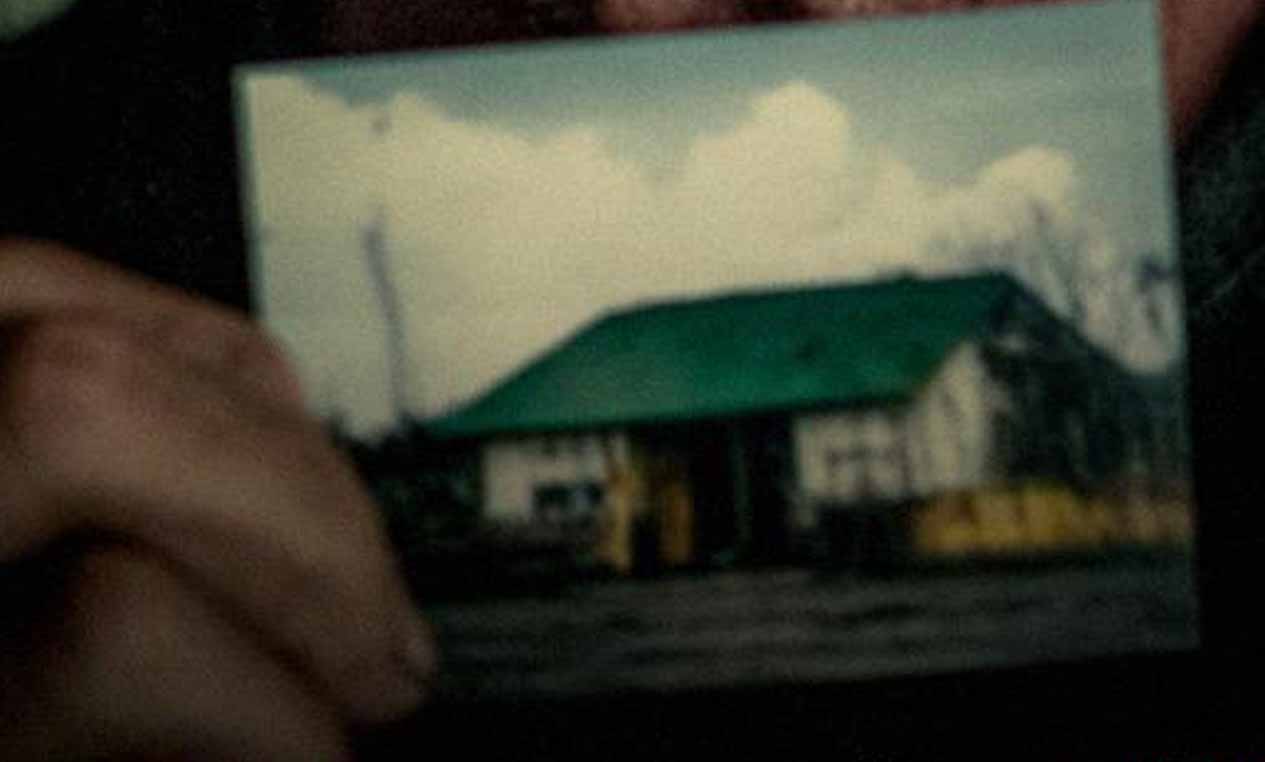
The photograph was framed in simple wood, the glass slightly smudged. It showed a house. A modest one-story place with a wide porch. A wooden railing. A large tree stood near the fence, its branches stretching protectively over the yard.
Mason stared at it, his mind suddenly too loud.
The layout. The porch. The tree by the fence.
His knees weakened as recognition slammed into him with no warning. Not slowly. Not gently. It was as if a dam had broken.
Images, sensations, memories collided all at once.
The creak of porch boards underfoot. The smell of cut grass. A hand resting on the railing that felt familiar because it had been his.
“It’s not possible,” he whispered, though tears were already blurring his vision.
It was his house.
His real home.
His hands shook as he lifted the frame from the shelf. The weight of it felt heavier than wood and glass. It felt like proof. Like accusation.
He turned and walked straight to the counter, barely aware of the aisles he passed. The cashier, a young woman with her hair pulled into a messy bun, looked up in surprise at his expression.
“Sir?” she asked.
Mason slammed the frame gently but urgently onto the counter. His voice came out louder than he intended, rough with something close to panic.
“WHERE DID YOU GET THIS PHOTO?” he demanded.
The cashier blinked, taken aback, her eyebrows knitting together. Other customers glanced over. Mason did not notice. His entire world had narrowed to that picture and the person standing between him and answers.
“I’m sorry,” she said cautiously, holding up her hands. “We get donations all the time. I’d have to check the tag.”
He leaned forward, gripping the edge of the counter as if he might fall otherwise. His reflection stared back at him from the glass of the frame. The same man from the hospital mirror, older now, but finally anchored to something real.
“Please,” he said, his voice dropping, cracking.
“I need to know.”
The cashier swallowed and turned the frame over, scanning the small sticker on the back. “It came in last week with a box of household items,” she explained. “No name, just dropped off.”
Mason closed his eyes. A week. Seven years. Time folded in on itself.
“Do you remember who brought it?” he asked, softer now.
She shook her head slowly. “I’m sorry. We really don’t keep track.”
He nodded, though disappointment burned through him. Even this was more than he had ever had before.
“I’ll buy it,” he said quickly. “Please.”
The cashier rang it up, still watching him with concern.
As she slid the frame into a paper bag, she hesitated. “Are you okay, sir?”
Mason took the bag with careful hands, as if it contained something fragile and alive. He forced a small smile that did not quite work.
“I think,” he replied quietly, “I finally am.”
He stepped back out onto the sidewalk, the bell chiming behind him. The gray afternoon no longer felt empty. It felt charged. Heavy with possibility.
For the first time in seven years, Mason did not feel like a man walking forward without footprints behind him.
He looked down at the bag in his hands, heart racing, knowing that whatever he had lost was no longer willing to stay hidden.
And somewhere, in a past that had just cracked open, the rest of the truth was waiting.
Mason did not go home right away.
He walked for nearly an hour, the paper bag tucked against his chest like something that could slip away if he loosened his grip.
Every few steps, he stopped and peeked inside, just to make sure the photograph was still there. Each time, the image sent a small jolt through him, as if his body was afraid it might forget again.
When he finally reached his rented room above the bakery, the stairs felt steeper than usual. He locked the door behind him and placed the frame on the small table by the window. Late afternoon light spilled across the glass, catching dust he had not noticed before.
He sat down slowly.
“Okay,” he murmured, steadying his breath. “Okay.”
The memories that had rushed in at the thrift store now came more carefully, like cautious visitors. He closed his eyes and let them surface.
The house was not just a structure. It was warmth. Laughter drifting through open windows. A woman’s voice calling his name from the kitchen, playful and impatient all at once. The smell of coffee in the mornings. Sunday repairs on the porch that always took longer than promised.
Her name came to him suddenly.
“Eleanor,” he said aloud.
Saying it made his throat tighten.
He stood and paced the room, heart racing, piecing together fragments. Eleanor had been his wife. Not recent. Not fleeting. Years. Decades, maybe. There had been a life built around that house, around shared routines and quiet evenings.
And then there was someone else.
A younger voice. Laughter, higher and faster. A girl running barefoot across the yard, the big tree by the fence casting long shadows as the sun went down.
“Our turn,” Mason whispered, the words slipping out before he realized they were not his own.
He sank back into the chair, hands trembling.
He had been a father.
The realization hit harder than anything else. He pressed his palms against his eyes, breathing through the sudden ache in his chest. A daughter. He could not yet grasp her face, but he felt her presence as clearly as if she were standing in the room with him.
“She must be grown now,” he said softly, speaking to no one.
The night fell without him noticing. When he finally looked up, the room was dark except for the streetlight glowing through the window. Mason turned on the lamp and studied the photograph again, this time with purpose.
On the back of the frame, beneath the thrift store sticker, was something faint. He tilted it toward the light and squinted. Pencil marks. Almost erased.
An address.
His heart thudded. He copied it onto a scrap of paper with shaking hands. The street name stirred something deep and undeniable.
“I know this,” he told himself. “I do.”
Sleep was impossible. At dawn, Mason put on his jacket and left the room, the photograph wrapped carefully under his arm. He did not tell Ruth where he was going. He was afraid that if he spoke it aloud, it might disappear.
The bus ride felt endless. Every stop brought him closer to something he both longed for and feared. When he finally stepped off, his breath caught.
The street was quiet. Tree-lined. Familiar in a way that made his knees weak.
He walked slowly, counting house numbers. When he reached the address, he stopped.
The house was there.
The paint was slightly faded, and the porch railing was newer than before. The tree by the fence stood taller now, its branches thicker but unmistakable.
“It’s real,” he said, voice barely audible.
A car sat in the driveway. Wind chimes tinkled softly near the door. Someone lived here. Someone had continued life in this place while he had vanished from it.
He climbed the steps and knocked.
Footsteps approached. The door opened, and the woman froze.
She was in her mid-30s, dark hair pulled back, one hand still on the knob. The shock hit her face instantly, color draining as her eyes locked onto his. She stared at him as if she were looking at a ghost.
For a brief moment, neither of them spoke.
Mason’s chest tightened. He knew her. The recognition was immediate and painful.
“Hi,” he managed. “I’m sorry to bother you. My name is Mason. I was hoping to ask about this house.”
Her gaze flicked to the photograph he held, then back to his face, as if confirming what she already knew. She stepped back abruptly, one hand flying to her mouth.
“Where did you get that?” she demanded, her voice sharp with disbelief.
“A thrift store,” he said, his voice shaking. “I think this used to be my home.”
She stared at him again, this time without hesitation, her eyes filling as the shock gave way to something raw and uncontrollable.
“Oh my God,” she whispered. “Dad?”
The word landed between them like something fragile.
Mason swayed slightly. “You’re…?”
“Clara,” she said, tears spilling freely now. “Your daughter.”
Before he could respond, she crossed the distance and wrapped her arms around him. He hesitated only a second before holding her back, the memory of that embrace flooding into his body as if it had never left.
“I thought you were dead,” she sobbed into his shoulder.
He closed his eyes, overwhelmed. “I didn’t know who I was. I’m so sorry.”
They went inside and sat at the kitchen table, hands clasped like anchors.
Clara spoke while Mason listened, absorbing every word.
Seven years ago, there had been an accident after a late-night argument. Mason had left the house upset, driving too fast in the rain. His car was later found wrecked near the river. There was no body, only debris and unanswered questions.
Eleanor had waited. She had searched and hoped.
“She passed away three years ago,” Clara said quietly. “Cancer.”
Mason bowed his head, grief tearing through him anew. He had lost her twice without knowing either time.
“I donated some of her things last month,” Clara continued. “I couldn’t keep everything. I guess the photo ended up in one of the boxes.”
Mason nodded slowly, understanding settling in.
The house had not been forgotten. He had not been unloved. He had simply been lost.
Clara squeezed his hand. “I don’t care how or why you’re here now. You’re here. And that’s what matters.”
Tears slipped down his face, unchecked. “I don’t expect forgiveness,” he said. “I just want to know you. If you’ll let me.”
She smiled through her tears. “I’ve waited seven years for this. I’m not letting you go again.”
That evening, Clara brought out a small folder from a kitchen drawer. Inside were old documents she had kept for years. Insurance papers. A mortgage statement. A faded copy of a driver’s license.
She slid it toward him.
Mason stared at the name printed at the top.
Daniel.
“My real name,” he said quietly.
“Yes,” Clara replied, watching him closely. “That’s who you were.”
He sat with it for a long moment, letting the name settle. It did not erase Mason. It simply filled in the missing space beside it.
In the weeks that followed, Daniel began rebuilding not from nothing, but from truth. He learned about Eleanor through stories and old photographs. He relearned his role in Clara’s life slowly, carefully, respecting the years he had missed.
The quiet life he had built did not disappear.
It expanded.
One evening, as they sat on the porch beneath the tree by the fence, Clara looked at him and said, “Funny how a thrift store gave me my father back.”
He smiled, the lines around his eyes deepening with something real at last. “Funny how a photo remembered me when I couldn’t.”
For the first time since waking up in that hospital bed, Daniel felt whole. Not because the past had returned perfectly, but because it had returned enough.
And this time, he was not alone.

 admin
admin