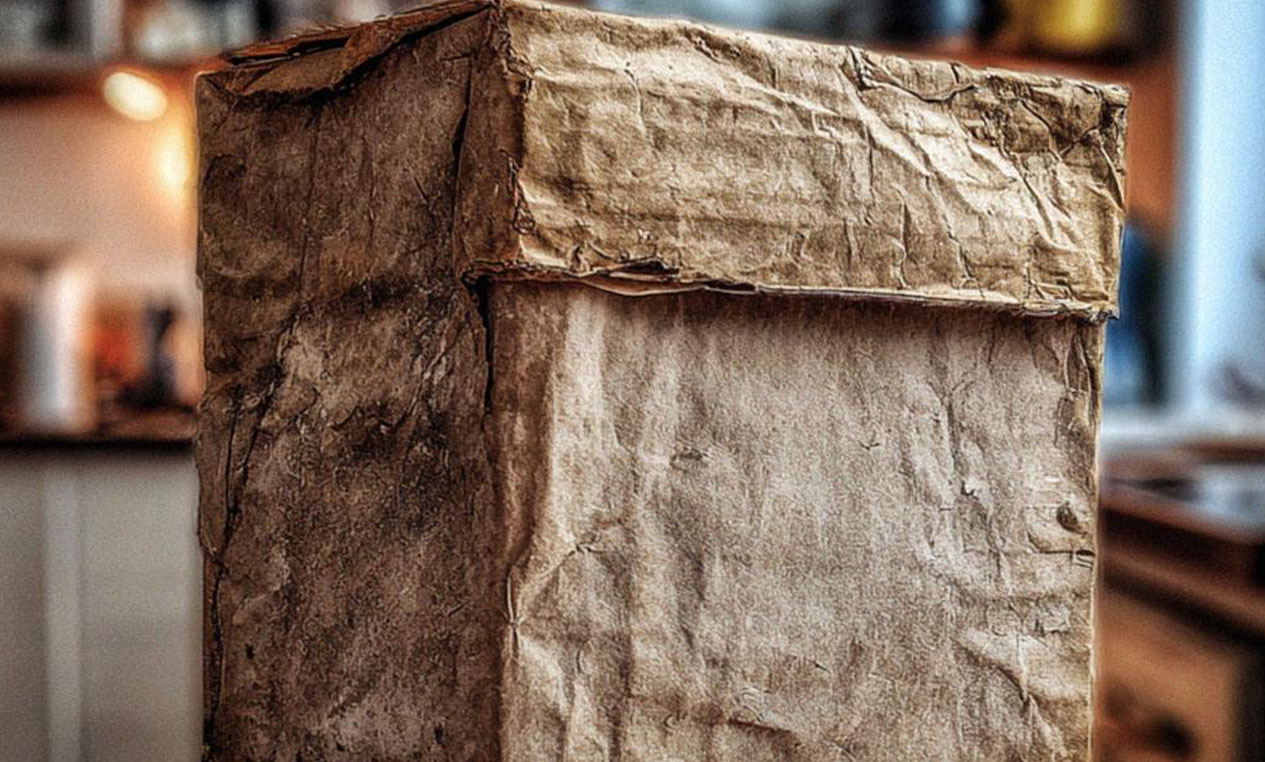
My mom kept a small cardboard box on the top shelf of her closet for as long as I can remember.
Funny thing is, the box wasn’t hidden, and that was the strange part.
“You’re going to knock something over,” she used to say whenever I lingered too long in her bedroom, my eyes drifting upward.
“I’m not touching anything,” I’d reply, even when I was already staring at the box.
The box always looked out of place — plain brown cardboard among folded sweaters and neatly stacked shoeboxes. On the lid, written in thick black marker, were three words that felt louder than they should have been:
“DO NOT OPEN.”
One afternoon, when I was maybe eight or nine, curiosity finally won. “What’s in the box?” I asked from the doorway. She didn’t answer right away. But I remember the sound of the drawer sliding shut. Slowly and carefully.
Then her voice — too calm, “Nothing you need.”
I replied, “But it says—”
“Don’t,” she said, sharply enough that I flinched.
She turned to face me, and for a moment we just stared at each other. Her eyes weren’t angry; they were scared. I didn’t have the word for it then, but I know it now.
“That box is not for you,” she said. “Promise me you won’t touch it.”
“I wasn’t going to,” I muttered.
“Promise,” she repeated.
“I promise.”
She nodded once, like that settled everything. It didn’t.
Years passed, I grew up, and stopped asking questions that made people uncomfortable. My mom and I loved each other, but we spoke around things, not through them. When conversations edged too close to something real, she’d redirect.
“Did you eat today?” “Work’s been busy.” “You should call more often.”
We became experts at avoiding silence.
After she died, the house felt hollow, like it was holding its breath.
“Take your time,” my aunt said at the funeral. “There’s no rush.”
So I stayed and talked to the house while I sorted through it.
“You always said this place was too big,” I murmured, folding my mom’s sweaters one afternoon. “Guess you finally got your way.”
The silence didn’t answer, but when I opened her closet, my chest tightened.
“There you are,” I whispered.
The box sat exactly where it always had.
“You really couldn’t just throw it away?” I asked the empty room. “You had decades.”
My voice sounded too loud. I waited for guilt to stop me, but it didn’t.
I reached up for the box, standing on my toes. But the box slid forward easily, brushing my fingers like it had been waiting.
It was lighter than I expected.
“That’s not good,” I said aloud, my heart racing.
I sat on the floor, back against her bed, the box resting in my lap. My hands trembled so badly I had to press them flat against the lid.
“You told me not to,” I whispered. “You were very clear about that.”
I imagined her standing in the doorway, arms crossed.
Some things are better left alone.
“I know,” I said. “I know. But you’re not here to explain anymore.”
My thumb traced the marker lines. The ink was slightly raised, stubborn even after all these years.
“If this changes how I remember you,” I said quietly, “that’s on you.”
The room felt colder.
I took a breath, then another, and I lifted the lid. The first thing I noticed was the smell. Papers. Old papers and something faintly familiar — lavender, maybe. Her perfume.
Inside the box were neatly stacked envelopes, all bundled together with a faded blue ribbon. On top sat a manila folder, its edges soft with age. I stared at it for a long time before touching anything.
“Letters,” I murmured. “You kept letters?” My voice sounded wrong in the room, like I wasn’t supposed to be speaking at all.
I picked up the bundle. Every envelope was addressed in my mother’s handwriting. Some were yellowed and corners bent, but none had stamps.
“You wrote all these,” I said. “And never sent them.”
My throat tightened as I loosened the ribbon. The first envelope slid free.
My name was written across the front. Not a nickname, not a pet name. My full name.
“This is dramatic,” I whispered, forcing a weak laugh. “You could’ve just talked to me.”
I opened it.
“If you’re reading this, then I’m gone — or I was too afraid to say this out loud.”
I stopped.
“No,” I said immediately. “No, no.”
I skimmed the next lines, my pulse roaring in my ears.
“I don’t know when the right time ever would’ve been. Every year I told myself: next year when you’re older. When you’re stronger.”
I dropped the letter into my lap and pressed my palm to my mouth. “You’re my mother,” I said to the empty room. “You don’t need permission to tell me things.”
My hand shook as I reached for the manila folder.
Inside were documents. Official ones. Crisp once, but now worn thin.
Birth records. Hospital forms and a name I didn’t recognize.
“That’s not…” I swallowed hard. “That’s not your name.”
I flipped the page, faster now. There were signatures, dates, and a different woman’s name where my mother’s should have been.
“No,” I said again, louder this time. “No, you’re wrong.”
The paper didn’t argue. I laughed, sharp and brittle. “This is a mistake. You loved paperwork. You would’ve said something.”
My eyes then fell to a final document.
ADOPTION RECORD – SEALED
The word burned. “You adopted me?” I whispered.
The room felt like it tilted. I grabbed another letter, my hands clumsy.
“You were so small the first time I held you. You stopped crying the moment I did.”
My vision blurred.
“She couldn’t keep you,” the letter continued. “She begged me to give you a life that wouldn’t break you the way hers had.”
I shook my head violently. “You’re lying,” I said to the page. “You don’t lie.”
Another letter.
“I was supposed to tell you when you turned 18.”
Another.
“Then 25.”
Another.
“Every birthday, I watched you blow out the candles and wondered if this would be the year I destroyed everything.”
I pressed the papers to my chest, gasping.
“So that’s it?” I cried out. “That’s why?”
Images rushed back — moments I’d never questioned.
Why did she never talk about my birth?
Why were there no hospital photos?
Why did she sometimes watch me like she was afraid I’d disappear?
“You were scared,” I whispered. “You thought I’d leave.”
My voice cracked. “I would’ve stayed.”
The last letter sat at the bottom of the box.
I already knew it would hurt the most.
The last letter was thicker than the rest.
“Please don’t say there’s more,” I whispered. “Please.”
My mother had always known when to stop talking and let silence do the work. I had a feeling this letter was where she finally said everything she’d been holding back.
I opened it.
“I need you to understand something before you read any further.”
My breath caught.
“I didn’t adopt you because I wanted to be a mother.”
The words knocked the air from my lungs.
“I don’t believe you,” I said aloud. “You made my lunches. You stayed up when I was sick. You cried when I moved out.”
The letter didn’t care.
“I adopted you because I promised her I would keep you alive.”
My hands started shaking so badly that I had to set the paper down.
“She was in danger,” the letter continued. “So were you.”
I read faster now, panic flooding my chest.
My mother wrote about a woman who showed up at her door one night, eyes hollow, arms wrapped around a newborn like she was holding onto the last solid thing in her life. She wrote about whispered conversations, about fear that seeped into the walls.
“Your biological father was not a safe man.”
I squeezed my eyes shut.
“Stop,” I begged. “Please stop.”
“She knew she couldn’t protect you. Not from him. Not from what he’d already done.”
I tasted something metallic and realized I’d bitten my lip hard enough to bleed.
“She gave you to me,” my mother wrote, “not because she didn’t love you — but because loving you meant letting you go.”
Tears blurred the ink.
“I was supposed to disappear with you. New city. New name. No records that could lead him back.”
I grabbed the edges of the letter.
“You changed my name?” I whispered.
My reflection stared back at me from the dark TV screen across the room. A stranger’s face. A borrowed identity.
“That box exists because I was terrified you’d find out before it was safe.”
My chest heaved.
“Safe from who?” I cried. “You never told me!”
The answer waited patiently on the page.
“He asked about you once.”
The room seemed to contract around me.
“You were 16. He didn’t have proof. Just a feeling. I told him you didn’t exist.”
A sound tore out of my throat — half laugh, half sob.
“You lied to him,” I said. “You lied for me.”
The final lines were written shakier than the rest.
“If you’re reading this, then I succeeded. He never found you.”
“But I need you to know something before you decide who you are now.”
I leaned closer, like the words might disappear.
“You were never a mistake.”
“You were never unwanted.”
“You were chosen in the most dangerous way possible.”
My tears soaked the page.
“I would’ve stayed,” I whispered again. “You didn’t have to be alone with this.”
I folded the letter carefully, pressing it to my chest like it might steady my heart.
The box lay empty now, its secret finally exposed. But the house didn’t feel quieter. If anything, it felt heavier — like the walls had been listening all along.
I returned the letters to the box and closed the lid.
This time, the words “DO NOT OPEN” felt like a warning meant for the past, not the future.
That night, I stood in the bathroom and stared at myself for a long time. “I don’t know who I was before today,” I said softly. “But I know who kept me alive.”
I turned off the light and let the darkness take the rest. Some secrets don’t just change what you know. They change what you are.

 admin
admin