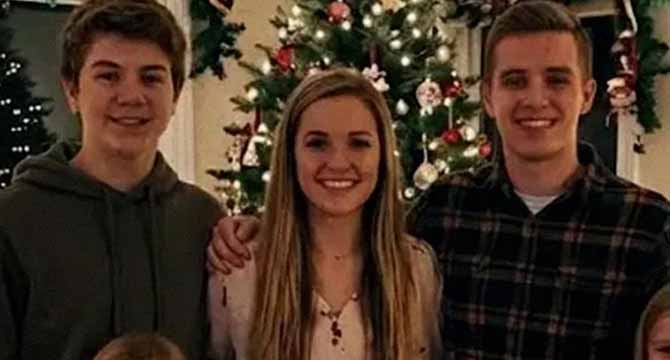
My name is Anna, and I’m one of a set of twins.
Daniel and I were twenty-four when things finally slowed down enough for me to breathe. But when our lives actually fell apart, we were barely eighteen.
I’m one of a set of twins.
Fresh out of high school. Still arguing about which dorm would be cheaper. Still believing adulthood came with warnings and instructions.
There were five of us. Daniel and I first. Then Liam. Then Maya. Then Sophie. Back then, they were nine, seven, and five. Small. Loud. Always hungry. Always asking questions that had no right answers.
“Can you pick me up early tomorrow?”
“Is Mom coming home tonight?”
“Why is Dad being weird?”
Nothing was okay, but no one had told them that yet.
There were five of us.
The diagnosis came on a Tuesday. I remember because Mom had made pancakes that morning and apologized for burning them.
“I’ll do better tomorrow,” she said, smiling too hard.
By Friday, we were sitting in a cold office with beige walls while a doctor used words I didn’t understand but somehow already hated. Cancer. Aggressive. Treatment.
Daniel squeezed my knee under the table. Dad didn’t say much. He just kept checking his phone.
Cancer. Aggressive. Treatment.
Three days later, Dad called a family meeting in the living room.
“I’ll keep this short,” he said.
That should’ve been my first clue. He didn’t sit down. He stood by the door like he already knew he wouldn’t be staying.
“I’ve been seeing someone,” he said. “For a while.”
Maya gasped. Sophie crawled into Mom’s lap. Liam stared at the carpet.
Dad called a family meeting in the living room.
“I can’t do this,” Dad continued. “I’m not strong enough to watch her get sick. I deserve some happiness too.”
Daniel stood up.
“So what, you’re just leaving?”
Dad shrugged. “I’m going to live with her. She gives me love and joy. I can’t live in constant sadness.”
Mom didn’t cry. That hurt more than if she had.
“What about the kids?” I asked.
“I’m not strong enough to watch her get sick.”
He looked at me like I’d asked something unreasonable.
“You’re adults now. You’ll figure it out.”
And then he packed a bag. No goodbye hugs. No promises. No plans. The front door closed, and something in our house never opened again. After that, he vanished.
No calls. No birthday cards. No money.
No texts asking how treatment was going.
Nothing.
And then he packed a bag.
Mom got smaller. Her voice softened. Her steps slowed. I slept in the hospital chair beside her bed when Daniel stayed home with the kids. Late one night, she reached for my hand.
“Promise me something,” she whispered.
“I promise,” I said, not knowing what she was asking yet.
“Don’t let them take the kids away. Keep them together.”
Daniel stood on the other side of the bed.
“We will,” he said. “I swear.”
She smiled. Just once. For the last time.
“Promise me something.”
Days later, we sat in the courtroom, and the judge looked tired. We probably did too.
“Do you understand the responsibility you’re taking on?” she asked.
Daniel nodded. “Yes.”
“So do I,” I said.
The gavel came down. And just like that, at eighteen years old, we stopped being siblings who lost their mother.
We became parents. Overnight. And standing there, holding court papers instead of college brochures, I had no idea that this wasn’t even the hardest part yet.
We became parents. Overnight.
The years that followed are hard to summarize, because at first they didn’t feel like years at all.
They felt like one long stretch of survival, where days blurred together and weeks passed without us noticing.
The beginning was brutal. Daniel and I enrolled in community college because it was the only option that made sense. Close to home. Flexible schedules.
Tuition we could barely afford but could still manage. We sat at the kitchen table late at night, laptops open, calendars spread out between empty mugs.
The beginning was brutal.
“If I take morning classes, I can do school drop-off,” I said.
“Okay,” Daniel replied. “Then I’ll work early and be back by three for pickup.”
“And Liam has a dentist appointment Thursday.”
“I’ll move my shift.”
That was how decisions were made. Not based on what we wanted, but on what the kids needed.
If one of us had an exam, the other stayed home. If one of us picked up an extra shift, the other handled homework, dinner, baths, and bedtime stories.
That was how decisions were made.
We learned to switch roles without discussion. We worked wherever we could.
I waitressed evenings and weekends. I learned how to smile through aching feet and customers who snapped their fingers at me. Daniel worked in construction early mornings. When money got tight, he stocked shelves overnight.
Sometimes we passed each other in the hallway at dawn.
“You going to sleep?” I asked once.
“Eventually,” he said, rubbing his eyes.
We learned to switch roles without discussion.
Sleep came in pieces. Two hours here. Three there. We survived on cold coffee and adrenaline. Every unexpected expense felt like a threat. When the fridge broke, I stared at it as it had personally betrayed me.
“We’ll fix it,” Daniel said calmly.
“We don’t have the money.”
“We’ll find it.”
We never let the kids see the fear. They had clean clothes. Packed lunches. Birthday cakes, even if they were homemade and slightly crooked.
We never let the kids see the fear.
Sophie once hugged me after blowing out candles.
“This is the best birthday ever,” she said.
I turned away so she wouldn’t see my eyes.
Our house was crowded. Loud. Messy. But it was stable. Safe. Daniel and I became a system. We didn’t argue about who did more. There was no time for that.
Slowly, painfully, things changed. We finished our degrees. Not on time. Not without setbacks. But we finished. Daniel found steady work. I did too. Bills didn’t make my chest tighten. The house felt lighter.
The kids noticed first. More laughter. More plans for the future. We believed the worst was behind us.
Daniel and I became a system.
Then came a Saturday morning. Pancakes on the stove. A loud knock echoed through the house. I wiped my hands and opened the door. And for a split second, I wanted to slam it shut and scream.
Because standing there was the man who had walked away from five children.
“Well,” he said, glancing inside, “you’ve managed. I’ll give you that.”
Daniel stepped closer. “Why are you here?”
There was the man who had walked away from five children.
Dad sighed, like this was tiresome.
“I’m done waiting. We need to talk.”
“About what?” I asked.
He looked at me directly. “About what belongs to me.”
“If that’s what you want, then fine.”
“Well,” he said, straightening his jacket, “this house. It was bought by your mother and me. After she died, everything became mine.”
“About what belongs to me.”
Daniel stiffened beside me. “You’re serious?”
Dad nodded, completely calm. “I am. I’ve been patient. But now I need it back.”
“For what?” I asked quietly.
“My life. My girlfriend and I are moving in. I think you’ve had enough time here.”
Something hot rushed through my chest. My hands went numb. I wanted to scream. To tell him he had no right. That he had walked away. That we buried Mom alone. That we raised his kids while he lived his “love and joy.”
But I didn’t.
I wanted to scream. To tell him he had no right.
“Okay,” I said.
Both of them looked at me.
Daniel turned sharply. “Anna—”
“It’s fine,” I cut in, not taking my eyes off our father. “If that’s how it is.”
Dad’s shoulders relaxed. He smiled, relieved. “Good. I knew you’d be reasonable.”
“When do you want to come back?”
“Tomorrow. Around two.”
“If that’s how it is.”
“Alright. Come. I’ll have everything ready.”
He left without another word.
The moment the door closed, Daniel exhaled sharply. “What are you doing?”
“Setting a trap.”
That night, we barely slept. We spread everything across the kitchen table. Papers stacked in uneven piles. Folders we hadn’t opened in years. Documents we kept because someone once told us, never throw these away.
That night, we barely slept.
“Guardianship,” Daniel murmured, flipping pages. “Court order’s here.”
“Adoption paperwork,” I said. “Copies.”
We worked in silence until my eyes burned.
At some point, I froze. “I remember something.”
Mom. Late at night. Hospital room dim. Her voice was soft from painkillers. If anything happens to me, talk to the lawyer.
“I think she planned for this,” I said.
By morning, we had an appointment.
“I think she planned for this.”
Our father came back the next day, exactly at two. Confident. Relaxed. Like a man collecting something he’d already won.
“Well?” he said, stepping inside. “I hope you didn’t waste my time.”
He barely glanced at the folders on the table.
“This won’t take long,” he added. “I’ve already waited long enough.”
Then a man stepped forward.
“Good afternoon. I’m the family attorney.”
Our father blinked. “Excuse me?”
“I’ve already waited long enough.”
The lawyer introduced himself and sat down. Everything shifted. The first document slid across the table. Then the second. Then the third. The smile disappeared from our father’s face.
“That’s the deed,” the lawyer said. “Revised.”
Dad leaned forward. “That’s wrong.”
“The will,” the lawyer continued. “Updated.”
“That’s not—”
“And these,” he said, tapping another folder, “are the guardianship and transfer filings.”
Dad stood up halfway. “She wouldn’t do that.”
“Revised.”
“She did,” I said quietly.
He looked at me, really looked, for the first time.
“Because she knew you.”
The lawyer’s voice stayed even. Professional. “Once your wife understood her prognosis, she took steps to protect her children. Given your abandonment of the family, you forfeited any claim.”
Dad’s face went pale. “This is ridiculous! I’m her husband.”
“You were,” the lawyer replied. “Legally, you have no claim to this property.”
Silence.
“This is ridiculous! I’m her husband.”
“You are not welcome to remain here,” the lawyer added. “If you refuse to leave, we’ll proceed accordingly.”
Daniel stood up and opened the door. “Get out.”
Dad looked around the house one last time. Then he left.
And this time, no one followed him.
Life didn’t suddenly become perfect after that. But it became ours again. The kids went back to their routines. Homework at the kitchen table. Arguments over music. Laughter drifted down the hallway late at night.
Daniel and I kept working. Kept building. Kept showing up.
The house stayed full of life.
Weeks later, our aunt called.n She told us the truth. The woman our father left our mother for had walked away.
No house. No money. No leverage. She left.
I didn’t feel happy hearing that. I felt done.
Because karma didn’t come as revenge. It came as truth.
And every time I unlock the front door of that house, I think of my mom. And the promise I kept.
Karma didn’t come as revenge. It came as truth.

 admin
admin