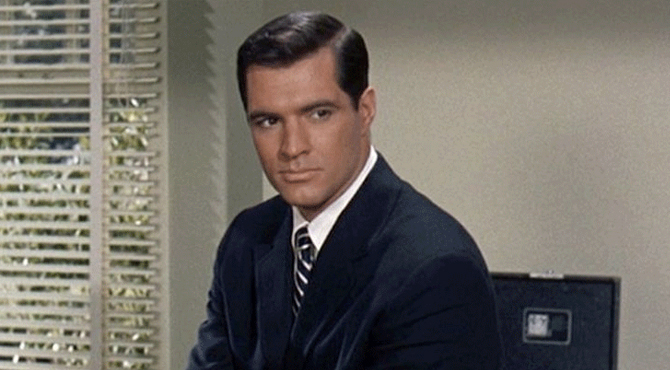
Today we remember and honor the life and legacy of John Gavin, a distinguished actor, diplomat, and classic Hollywood leading man whose quiet strength, intelligence, and elegance left a lasting mark on American film and public service.
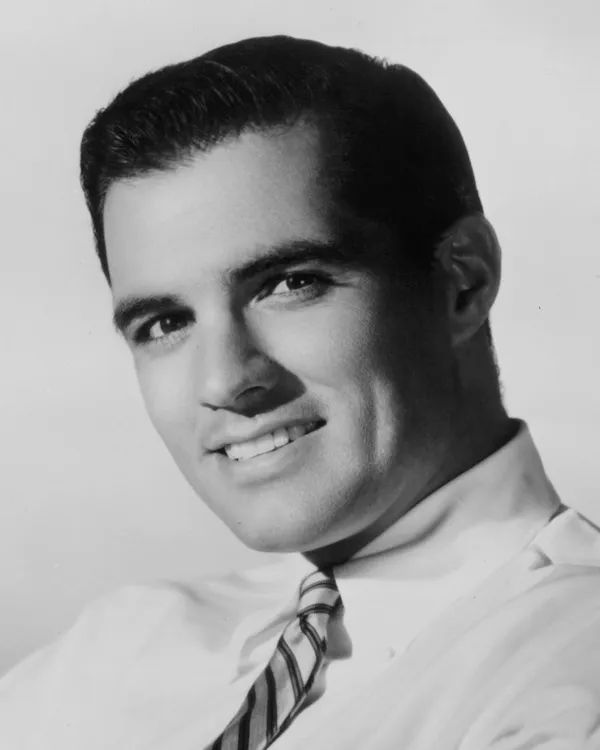
John Gavin represented a generation of performers defined not by excess, but by dignity, professionalism, and timeless screen presence. His career bridged the golden age of Hollywood and the modern era, and his contributions extended far beyond the silver screen.
Born John Anthony Golenor on April 8, 1931, in Los Angeles, Gavin came from a multicultural background and was as intellectually gifted as he was charismatic.
He earned a degree in economics and Latin American history from Stanford University, later serving in the U.S. Navy—an early indication of the discipline and sense of duty that would define his life.
Gavin rose to prominence in the late 1950s and early 1960s, becoming one of Universal Pictures’ most reliable leading men. Tall, commanding, and naturally refined, he embodied the ideal Hollywood hero of his era. One of his earliest notable performances came in Douglas Sirk’s melodrama Imitation of Life (1959), where his subtle emotional restraint added depth to the film’s powerful themes.
He followed this with another Sirk classic, Spartacus (1960), starring alongside Kirk Douglas, further cementing his reputation as a serious and capable actor.
Perhaps his most enduring cinematic legacy came the same year with Alfred Hitchcock’s Psycho (1960). As Sam Loomis, Gavin brought calm resolve and moral steadiness to one of the most influential films in cinema history.
While Psycho shocked audiences and redefined the thriller genre, Gavin’s performance provided grounding and humanity amid the terror, proving his ability to shine even in a revolutionary and unconventional film.
Throughout the 1960s, John Gavin appeared in a wide range of films, including historical epics, romantic dramas, war films, and Westerns.
Notable titles include Midnight Lace, Thoroughly Modern Millie, Romanoff and Juliet, and OSS 117. He also transitioned seamlessly into television, starring in series such as The Sixth Sense, where he played a psychic investigator—a role that showcased his versatility and commanding screen presence.
Yet Gavin’s legacy is remarkable not only for his acting career, but for what followed. In 1981, President Ronald Reagan appointed him U.S. Ambassador to Mexico, a role he performed with distinction until 1986.
Fluent in Spanish and deeply knowledgeable about Latin American history and culture, Gavin earned widespread respect as a diplomat who brought grace, intelligence, and sincerity to international relations. His service exemplified a rare blend of Hollywood prominence and genuine public dedication.
John Gavin passed away on February 26, 2018, at the age of 86, leaving behind a body of work that continues to be admired by classic film enthusiasts and historians alike.
He was a man of principle, refinement, and quiet authority—an actor who never needed extravagance to command attention, and a public servant who represented his country with honor.
In remembering John Gavin, we celebrate more than a movie star. We celebrate a life lived with purpose, integrity, and enduring class. His performances remain timeless, his contributions meaningful, and his legacy secure among the great figures of classic Hollywood.
Rest in peace, John Gavin. Your presence, both on screen and beyond it, will never be forgotten.
