
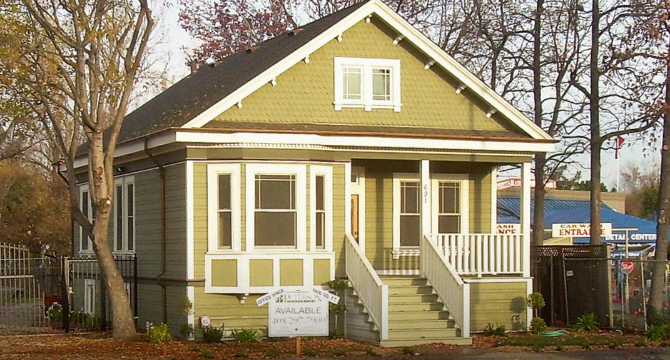
I’m 30 years old, and I live alone.
Well, alone except for my cat, Miso, who believes she owns the place and merely allows me to stay.
Three months ago, I left for a long business trip.
It was the biggest opportunity of my career so far.
I work in corporate event logistics, and this assignment meant overseeing a multi-city rollout for a major client.
It was demanding, exhausting, and exactly what I had worked toward for years.
Before leaving, I gave my spare key to my neighbor, Linda, and asked her to feed my cat and check on the house. She’d always been friendly. I trusted her.
Linda is in her late 40s, warm in an almost overly attentive way. She bakes banana bread when she’s anxious and waters her lawn even when it rains.
We weren’t best friends, but we shared porch conversations, holiday cookies, and the kind of neighborly trust that feels safe. She once told me, “If you ever need anything, Elena, I’m right here.”
So when I handed her the key, it felt natural.
“Just food and water for Miso,” I said, laughing nervously. “And maybe make sure the pipes don’t explode.”
Linda smiled and squeezed my arm. “Don’t you worry. I’ll treat this house like it’s my own.”
At the time, that sounded comforting.
The trip was supposed to last three months.
I packed like I was going to war. Spreadsheets, blazers, backup chargers. I triple-checked the stove, the windows, and the thermostat.
I remember standing in my living room before leaving, taking a slow breath. This house had been my first real achievement.
I bought it at 28 after years of saving.
Every corner held a memory of independence. My late-night takeout dinners on the couch. The chipped tile I kept meaning to fix. The soft lamp glow that made the space feel safe.
Leaving it for three months felt like leaving a part of myself behind.
But things wrapped up early.
By the end of the second month, we were ahead of schedule. Contracts signed. Venues secured. Budgets approved. My boss, Marianne, called me into her hotel conference room office.
“You’ve done exceptional work, Elena. We don’t need you for the final month.”
I blinked at her. “So… I can go home?”
She smiled. “Yes.”
I booked the earliest flight I could.
I didn’t tell anyone. Not my coworkers. Not the few friends I have nearby. Not even Linda. I decided to surprise everyone, including myself, and come home a month ahead of schedule.
The thought of sleeping in my own bed again made my chest ache in the best way. I imagined scooping Miso into my arms, burying my face in her fur while she pretended not to care.
I imagined the quiet. No hotel elevators. No forced small talk over catered breakfasts.
Just home.
As my taxi turned onto my street, I felt that familiar comfort. My house. My safe place.
The maple tree in the front yard was a little more golden than when I left. The porch light I always forget to turn off was, unsurprisingly, still on.
Everything looked the same.
Then I saw a car in the driveway.
Not Linda’s.
It was a large SUV I’d never seen before.
It was dark blue, slightly dusty, with a bike rack attached to the back. My pulse gave a small, confused jump.
I told myself it was probably just a visitor, maybe someone Linda had over. Her sister stopped by sometimes, and it would not have been unusual for her to have company.
It could have even been a repair service. I tried to convince myself I was overreacting, that I was simply exhausted from traveling and letting my imagination run ahead of me.
The taxi driver cleared his throat.
“Is this the place?”
“Yes,” I said quickly, handing him the fare. My voice sounded thinner than usual.
I stepped out onto the sidewalk, my heels clicking against the pavement. The air smelled like fallen leaves and someone’s fireplace starting up early.
I stared at the SUV again.
It was parked fully in my driveway. Not near the curb. Not casually angled. It sat there like it belonged.
A prickle crept up my spine.
I walked toward the house slowly, my suitcase wheels rattling behind me. The curtains in my front window were half open. I never leave them like that.
Then I glanced inside.
And my stomach dropped.
There were people in my kitchen.
A man. A woman. Two kids.
Sitting at my table.
Eating.
Like they lived there.
The man looked to be in his mid-30s, with broad shoulders and short dark hair. The woman had long blonde hair pulled into a loose ponytail. The kids, maybe eight and five years old, swung their legs under my table.
My table.
The one I assembled myself with an Allen wrench and stubborn determination.
There were plates in front of them.
My plates.
A cereal box sat on the counter.
My cereal.
For a moment, I genuinely wondered if I had walked up to the wrong house. But then I noticed the small crack in the window frame near the corner, the potted fern I always forget to water, and the dent in the mailbox that happened during last winter’s storm.
It was mine.
My heart started pounding so hard I could hear it in my ears.
My palms turned slick. A hot wave of disbelief washed over me, followed by something sharper. Anger. Fear. Violation.
I rushed to the door, fumbled with my keys, and burst inside.
“What is going on here!?” I screamed.
The sound tore out of me before I could think.
Four faces snapped toward me.
The little boy dropped his spoon. It clattered loudly against the bowl. The woman gasped and shot to her feet, knocking her chair backward. The man stood more slowly, his expression shifting from confusion to something defensive.
For a second, no one spoke.
I stood there in the doorway, suitcase tipped over behind me, hair still flattened from the plane ride, heart racing as if I had just run a marathon.
“This is my house,” I said, my voice trembling now but still loud. “Who are you?”
The woman looked at the man, then back at me. “I’m sorry,” she said cautiously. “Can we help you?”
Help me?
My laugh came out sharp and disbelieving. “Can you help me? You’re sitting in my kitchen!”
The older child stared at me with wide eyes. “Dad?” she whispered.
The man stepped slightly in front of his family.
“There must be some mistake,” he said carefully. “We’re renting this property.”
The words didn’t register at first.
“Renting?” I repeated.
“Yes,” he replied. “We signed a lease.”
My ears rang.
“A lease?” I said again, my voice rising. “This house isn’t for rent.”
The woman swallowed. “We were told the owner is traveling for several months.”
Traveling.
My gaze flicked toward the hallway.
My framed photos still hung on the wall. My couch cushions were rearranged. There was a backpack on the floor that definitely did not belong to me.
Something cold settled in my chest.
I thought of the spare key.
Of Linda’s reassuring smile.
“I’ll treat this house like it’s my own.”
I looked back at the strangers standing in my kitchen, my space, my sanctuary.
The man kept his arm slightly out in front of the children, protective but not aggressive. The woman’s face had lost its color. The little girl clutched the edge of the table like the ground might tilt.
“We signed a three-month lease,” the man said carefully. “We paid a deposit and the first month’s rent.”
“To whom?” I demanded.
He hesitated. “Linda.”
The word hit me harder than I expected.
“My neighbor?” I asked, my voice dropping into something dangerously quiet.
“Yes,” the woman answered. “She said she was managing the property while the owner was overseas. She showed us around. She had keys.”
Of course she did.
I pressed my fingers to my temples. I needed to think. Anger was bubbling inside me, but I could see the fear in their faces. They were not intruders in the way I first imagined. They looked like a family that had just been dropped into a nightmare.
“What are your names?” I asked, forcing myself to breathe.
“I’m Mark,” the man replied. “This is my wife, Tara. Our kids are Sophie and Ryan.”
Sophie gave me a shy, uncertain look. Ryan hid behind his father’s leg.
“I’m Elena,” I said, my voice unsteady. “And this is my house.”
Silence settled between us.
Tara’s eyes filled with tears. “We moved here two weeks ago. We relocated for Mark’s job. We signed paperwork. We have copies.”
“Show me.”
Mark nodded and hurried to a folder sitting on my kitchen counter. He handed me several sheets of paper.
My hands trembled as I scanned them.
There it was. My address. Rent amount. Signatures.
Linda’s signature.
But not mine.
The signature labeled “Owner” was a sloppy imitation of my name. Close enough to fool someone who did not know me. Not even close to the real thing.
“She forged this,” I whispered.
Mark ran a hand through his hair. “We found the listing online. She met us here. She knew details about the house. We had no reason to doubt her.”
Of course, they did not.
Linda had been inside these walls. She knew the creak in the hallway floorboard, the way the back door stuck in humid weather.
I felt suddenly exhausted.
“Where is my cat?” I asked sharply.
Tara blinked. “Your cat?”
“Yes. Miso. Gray. Very judgmental.”
The children exchanged a glance.
Linda had told them there were no pets.
Panic clawed up my throat.
I rushed down the hallway toward my bedroom. The door was open. My closet had been partially cleared. Some of my clothes were shoved to one side.
“Miso?” I called, my voice cracking.
For one terrible second, there was nothing.
Then I heard a soft, offended meow from inside my closet.
I dropped to my knees and pulled the door wider. She was curled in the back corner, eyes wide but unharmed.
Relief flooded through me so fast it made me dizzy. I gathered her into my arms, pressing my face into her fur.
“I’m so sorry,” I whispered.
When I walked back into the kitchen holding her, the tension had shifted. Mark and Tara did not look defensive anymore. They looked devastated.
“We would never have moved in if we knew,” Tara said, her voice breaking. “We have two kids. We would never do that to someone.”
I believed her.
“I know,” I replied quietly.
Mark exhaled slowly. “We paid her five thousand dollars. Deposit and the first month. We signed everything. She said the owner was grateful to have reliable tenants.”
Five thousand dollars.
I felt sick.
“I need to call her,” I said.
My fingers shook as I pulled out my phone. I dialed Linda’s number. It rang once. Twice. Then it went to voicemail.
“Hi, you’ve reached Linda,” her cheerful recorded voice chirped. “Leave a message.”
I ended the call without speaking.
Mark swallowed. “What happens now?”
That was the question, wasn’t it?
This was my house. Legally, they had no right to be here. But they had been deceived too. Two children now stood in the middle of a situation none of us created.
“I’m calling the police.”
Tara nodded immediately. “We understand.”
The officers arrived within 20 minutes. I explained everything while Mark handed over the lease documents. One of the officers examined the signature and frowned.
“This looks forged,” he said. “You’ll need to file a formal report. We’ll also try to contact Linda.”
“She lives next door,” I said bitterly.
We walked outside together.
Linda’s house was dark.
Her car was gone.
The porch where we used to sip lemonade on summer evenings sat empty.
One of the officers knocked firmly. No answer.
“She may have left,” he said.
Left.
The word echoed inside me.
Over the next hour, reality settled into something heavy but clear. The officers confirmed what I already knew. I was the legal homeowner. The lease was fraudulent. Mark and Tara were victims, too.
They stood on my front lawn, looking lost.
“We don’t have anywhere else yet,” Tara admitted softly. “Our savings went into this move.”
I looked at Sophie holding her brother’s hand. I looked at Mark, who seemed torn between pride and desperation.
Three months ago, I would have handled this differently. I would have drawn a hard line, demanded they leave immediately, and protected what was mine at all costs.
But standing there now, holding my cat, feeling the weight of what Linda had done, I realized something.
Home is not just walls and paperwork.
It is integrity. It is a choice.
“You can stay,” I heard myself say.
Mark blinked. “What?”
“For two weeks,” I clarified. “We’ll draw up a proper short-term agreement. No money. Just time for you to find somewhere else.”
Tears slipped down Tara’s cheeks. “Are you sure?”
“No,” I admitted honestly. “But it’s the right thing to do.”
That night, after the police left and we awkwardly shared the space that felt both mine and not mine, I sat in my bedroom with Miso curled against my chest.
I reflected on trust, on how easily we hand it over and how deeply it can wound us when it shatters.
Linda had not only taken money.
She had exploited kindness, closeness, and that quiet belief that neighbors are supposed to protect one another, not betray them.
In the days that followed, we learned she had scammed at least two other families in nearby neighborhoods. She disappeared before authorities could arrest her.
Mark and Tara found a small rental across town within ten days. Before they left, Sophie handed me a drawing of my house with a cat in the window.
“Thank you for not yelling at us anymore,” she said shyly.
I managed a small laugh.
“I’m sorry I did in the first place.”
When their SUV finally pulled out of my driveway, the silence that followed felt different than before. Not violated. Not fragile.
Just quiet.
I changed the locks the next morning.
I installed cameras.
And I sat at my kitchen table, the same table where strangers once ate cereal, and let myself feel everything.
Anger. Relief. Sadness.
But also strength.
At 30 years old, I learned that trust should be given wisely, not blindly. And that even when someone tries to take your safe place from you, you still get to decide what kind of person you are inside it.
And that, more than anything, is what makes a house a home.
 admin
admin