
Tipping can spark heated debates, especially when the service falls short of expectations. Andy recently found himself at the center of such a controversy after an unpleasant experience at a high-end restaurant. Frustrated by the waiter’s poor service, he decided to leave no tip.
What happened next, however, was far from ordinary—the situation escalated quickly, turning unexpectedly dramatic. Feeling lost and furious, Andy reached out to us for advice.
This is Andy’s letter:
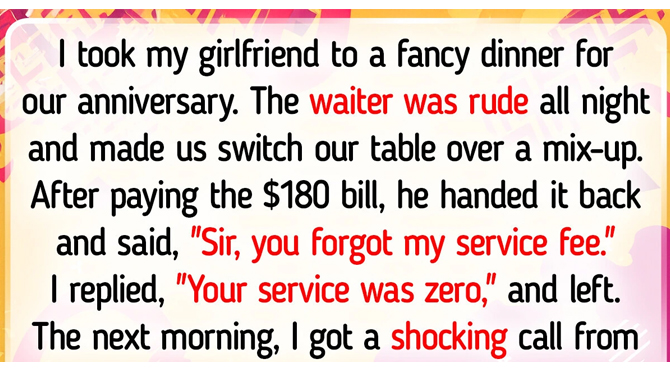
I took my girlfriend to a fancy dinner for our anniversary. The waiter was rude all night and made us switch our window table over a mix-up. After paying the $180 bill, he handed it back and said, “Sir, you forgot my service fee.” I replied, “Your service was zero,” and left.
The manager came, and to my shock, he made us feel bad for not tipping instead of apologizing and trying to calm me down. He claimed it was an “unwritten rule” to tip since waiters rely on them and mentioned that they had never had a customer leave a $0 tip. But I stood firm, saying they should focus on training their staff instead of lecturing customers.
Frustrated, I went home and wrote a detailed review about their unprofessionalism. The next morning, I got a shocking call from the restaurant group’s HQ, threatening legal action for defamation unless I removed the review or provided proof of the poor service I described. They even claimed that I was lying and exaggerating in order to tarnish the image of their establishment.
I’m even angrier now-I just wanted a nice night, and instead, I’m being called a liar. Andy
Hi Andy! Thank you for sharing your story. We’ve prepared some tips that can help you navigate through this situation.
Gather evidence of the incident.
If you haven’t already, document everything that happened during your dinner and the subsequent phone call. Include the details of the waiter’s rudeness, the manager’s confrontation, and the exact wording of the HQ’s threat. If possible, check your receipt for any notes or charges related to a service fee and save your review as proof.
This will help you defend yourself if the restaurant pursues legal action and show that your review was based on your genuine experience.
Respond to the HQ professionally.
Write a clear and professional email to the HQ, explaining the situation in detail and reiterating that your review reflects your honest experience. Politely mention that their legal threat is inappropriate and request a formal apology for their treatment.
This approach might de-escalate the situation and even prompt them to reevaluate their staff’s behavior instead of focusing on silencing your feedback.
Consult a lawyer about defamation laws.
Since they’ve threatened legal action, it’s wise to consult a local attorney familiar with defamation laws in your area. Explain the entire situation, including the HQ’s demands, and verify whether your review falls within your rights to free speech.
In many cases, as long as your review is factual and doesn’t include false accusations, you’re protected. This will give you clarity and confidence in how to proceed.
Amplify your story publicly (strategically).
If the restaurant persists in threatening you, consider sharing your story on public platforms or forums (e.g., social media or consumer complaint websites) to bring attention to their intimidation tactics.
Be careful to present your side clearly, with evidence, so you don’t escalate the situation unnecessarily. Often, public scrutiny can pressure businesses to address customer concerns more constructively instead of resorting to legal threats.
 Editor1