
My mother-in-law, Ivy, has a way of making cruelty look like concern.
She’ll touch your arm gently while gutting you. She’d tilt her head sympathetically while twisting the knife. Her voice never rises above a kind whisper, even when she’s destroying something you spent hours on.
My mother-in-law, Ivy, has a way of making cruelty look like concern.
I married her son, Ethan, seven years ago. We have Noah, who just turned six last month. Ivy lives close enough that she convinced Ethan that giving her a spare key “just made sense.”
“What if there’s an emergency and you can’t get home?” she’d said, dangling it like common sense instead of a warning.
The emergencies only ever happened when Ethan was at work.
“What if there’s an emergency and you can’t get home?”
Ivy let herself in while I was picking Noah up from kindergarten.
“Just tidying up a bit,” she’d say when we walked through the door. “Noticed the kitchen needed organizing.”
That’s when my meals started vanishing. I’d make dinner the night before and pack it carefully for leftovers. The following afternoon, I’d open the fridge to find empty space where the containers had been.
That’s when my meals started vanishing.
“Oh, that?” Ivy would say, her hands clasped like she was confessing a minor sin. “It didn’t look right to me. I didn’t want Noah to get sick.”
The first time, I thought maybe I’d missed something.
But then it happened again. And again.
Shepherd’s pie I’d made Sunday night. Salmon I’d baked on Monday evening. The lasagna Ethan specifically requested for Tuesday. All gone by Wednesday morning.
The first time, I thought maybe I’d missed something.
One day, I mentioned it carefully.
“Ivy, I think there’s been some confusion about what’s for dinner.”
“Sweetheart, I’m just trying to keep everyone safe. You’d do the same thing.”
I didn’t tell Ethan. I wanted to so badly.
But something in me hesitated.
I didn’t tell Ethan.
Deep down, I was afraid he’d take his mom’s side. And the thought of standing alone, with both of them looking at me like I was the problem? That was the one thing I couldn’t bear.
So I stayed quiet and pretended it didn’t hurt every time my food went missing.
But things escalated in ways I didn’t see coming.
My MIL stopped waiting for me to leave. She’d show up while I was folding laundry upstairs and “take care of the fridge” before I noticed. I’d come down to find her rinsing out containers at the sink, humming softly.
But things escalated in ways I didn’t see coming.
“What are you doing?”
“Cleaning, honey. This chicken looked a little gray.”
“I made it two hours ago.”
She’d smile. “Better safe than sorry when children are involved.”
I started labeling everything. Big letters. With dates.
“FOR DINNER TONIGHT.”
She threw it out anyway.
I started labeling everything.
One Thursday, I prepared beef stew in the crockpot. Eight hours on low. The smell filled the house when Noah and I walked in after his piano lesson.
I went to set the table and froze.
The trash can told the story. There, right beside crushed eggshells and junk mail, was my pot of beef stew, slumped over in a soggy paper bag like it had never meant anything at all.
The trash can told the story.
Ivy was already at the dining table, setting out napkins. “The stew seemed stale. I threw it out so you wouldn’t be embarrassed.”
“It was fresh this morning.”
“Really? It tasted stale to me.” She adjusted a fork. “Maybe check your oven temperature. And thank me later… I replaced it with my dinner.”
Ethan came home and saw me standing in the kitchen with my jaw clenched tight enough to crack teeth.
“I threw them out so you wouldn’t be embarrassed.”
“Everything okay?” he asked.
I couldn’t answer without screaming. So I just nodded.
Everything came apart on a Sunday. Noah had been asking all week.
“Can we make those meatballs? The ones with the sauce? And the fluffy potatoes?”
It was his favorite. I’d learned the recipe from my grandmother. It needed hours of work, but it was worth it to see his face light up.
Everything came apart on a Sunday.
I started early. Mixing meat. Shaping each ball carefully. Letting the sauce simmer until it was perfect.
We spent the afternoon at the park. Noah climbed everything, laughed with his friends, and came home grass-stained and happy.
The second we opened the front door, I knew something was off. The smell was wrong.
I walked into the kitchen. The pot sat on the counter, empty and rinsed. The mashed potatoes and meatballs were gone.
The smell was wrong.
Noah appeared beside me, confused.
“Where’s dinner, Mom?”
Ivy came out of the hallway, wiping her hands on a towel like she’d just finished some noble task.
“I took care of it,” she said brightly. “Food sitting out all afternoon? In this heat? Absolutely not safe.”
Noah’s face crumpled. “But that was my favorite.”
“You’ll survive, sweetheart. There’s peanut butter in the pantry.”
“Food sitting out all afternoon? In this heat? Absolutely not safe.”
I felt something crack inside me. Not anger… something colder.
But I stayed quiet. Because Noah went completely still. He didn’t cry or complain. He just stood there, staring at his grandmother with an expression I’d never seen before.
That night, after I tucked him in, he asked in a small voice, “Why does Grandma always trash your cooking?”
My heart ached. “I don’t know, baby.”
He was quiet for a long moment. Then said, “I don’t think she wants you to feed us.”
“Why does Grandma always trash your cooking?”
I sat down beside him, reached for his little hand, and wrapped it in both of mine. Like my heart was rearranging itself around the truth my son already knew.
The following week felt like holding my breath.
I kept cooking. Spaghetti. Pork chops. Roasted vegetables. Every single meal disappeared within 24 hours.
Ivy would smile, apologize, and offer some excuse about spoilage or safety or “just being cautious.”
Every single meal disappeared within 24 hours.
I stopped reacting. Just nodded, ordered takeout, and pretended it didn’t matter.
But Noah was watching her now. He’d study her when she came over. Follow her movements around the kitchen. I’d catch him staring at the fridge after she left, like he was taking inventory of what had vanished.
“Mom, where’d the chicken go?”
“Grandma threw it out.”
“Again?”
“Again.”
But Noah was watching her now.
He’d frown, writing something in a notebook he’d started carrying around. When I asked what he was doing, he said, “Just homework, Mom.” But it wasn’t homework.
The following Saturday was Ethan’s birthday. Ivy called that morning to announce she’d handle everything.
“I’ll bring the food. Set up the table. Decorate. You just relax, honey.”
Translation: She’d be in control. In my house. Serving her meals. Getting all the credit while I watched from the sidelines.
Ivy called that morning to announce she’d handle everything.
I agreed without arguing. What would be the point?
Noah tugged on my sleeve later that afternoon.
“Can I help Grandma with the plates?”
Ivy practically glowed when she heard. “Of course! My sweet boy. You can be my little assistant.”
He disappeared into the dining room with her. I heard them talking quietly, but couldn’t make out the words.
I should’ve known something was brewing.
By six, the house was full.
I should’ve known something was brewing.
The guests crowded around the table Ivy had set with her roasted turkey, glazed carrots, and mashed potatoes.
People praised her as if she’d cured cancer.
“Ivy, this is incredible!”
“You’re so talented!”
“How do you always manage to outdo yourself?”
She soaked it in, smiling modestly. “I just love taking care of my family.”
People praised her as if she’d cured cancer.
Ethan stood, raising his glass. “To Mom. For everything.”
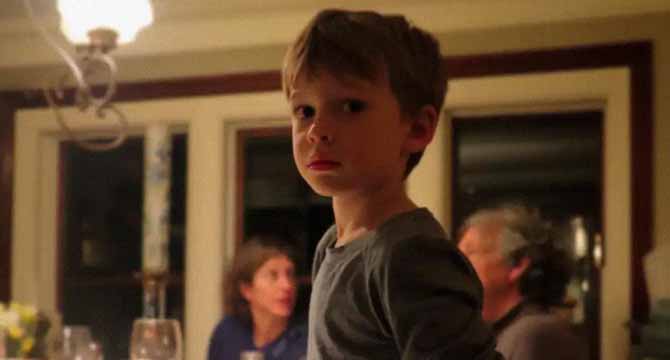
Everyone clinked glasses. Then Noah stood up. He was holding a folded sheet of notebook paper, the edges slightly crumpled from being gripped too tightly.
“I want to say something too,” he announced.
The table went silent.
Someone whispered, “How sweet!”
“I want to say something too.”
Noah looked directly at Ivy.
“Grandma, I need to ask you something.”
She beamed. “Of course, darling.”
“Why do you keep throwing Mom’s food in the garbage?”
The smiles froze.
“Grandma, I need to ask you something.”
Ivy’s face went blank for a second, then recovered with a nervous laugh.
“Oh, honey, that’s silly…”
“It’s not silly,” Noah interrupted. His voice was too calm for a six-year-old. “You do it all the time.”
He unfolded the paper. My heart raced when I saw what was written there.
A list. Dates. Meals. All in his careful handwriting.
“Last Sunday,” he read. “You threw away my meatballs and potatoes. The ones Mom made special.”
Ivy’s smile cracked.
My heart raced when I saw what was written there.
“Wednesday before that… soup. Thursday, the chicken. Two Saturdays ago, pasta.”
People shifted in their seats. Someone coughed awkwardly.
“You said they all went bad,” Noah continued. “But they didn’t. You threw them out when they were still good. I checked the trash.”
Ivy’s face flushed. “Sweetheart, you don’t understand…”
“I understand Mom gets sad when you do it.” Noah looked at me, then back at her. “If you don’t like her cooking, you shouldn’t come over anymore.”
“Sweetheart, you don’t understand…”
The silence that followed was suffocating.
Ethan set down his fork slowly. “Mom. What’s he talking about?”
“He’s confused…”
“Is it true?”
Ivy’s eyes darted around the table, looking for support that wasn’t coming. “I was protecting the family.”
“Protecting us from what?”
“From unhealthy meals!” Her voice rose, desperate. “She uses too much butter and too much salt. Those old recipes aren’t good for growing children.”
“I was protecting the family.”
I stood up, walked to the kitchen, and opened the fridge. The casserole I’d made that morning was gone. The fruit salad was gone, too. I turned back to the dining room.
“She’s been doing this for months.”
Ethan’s face went red. “You’ve been throwing out her food? On purpose?”
“I was trying to help her learn better habits, son.”
“Better habits?” I cut in. “Or were you punishing me?”
Ivy stood still.
I stood up, walked to the kitchen, and opened the fridge
The truth hit me suddenly. “You hate that Ethan asks for my grandmother’s recipes. The ones I learned growing up. The meals he requests over and over.”
My MIL’s face flushed deeper.
“You can’t stand that those are his favorites now,” I continued.
“That’s not…”
“Yes, it is,” Ethan said flatly. “Give me the key.”
The truth hit me suddenly.
Ivy went pale. “What?”
“The house key, Mom. Hand it over.”
She fumbled in her purse, pulled out the key with shaking hands, and set it on the table.
“Leave,” Ethan said.
Ivy looked around one more time and walked out.
The party ended within 20 minutes. People made awkward excuses, hugged us quietly, and left.
“Leave.”
Later that night, Noah climbed into my lap.
“Are you mad I told everyone, Mom?”
“No, baby. You did the right thing.”
“Grandma looked sad.”
“Sometimes people feel sad when they get caught doing something wrong.”
He nodded seriously. “Will she stop now?”
“Yeah, hopefully.”
“Will she stop now?”
Three months have passed since that night. Ivy doesn’t have a key. She doesn’t stop by unannounced. She doesn’t touch my fridge, my cooking, or my family’s meals.
And Noah still asks every week if we can make “Grandma’s meatballs” — meaning my grandmother, the one whose recipes live in a worn cookbook on my kitchen counter.
I always say yes.
She doesn’t stop by unannounced.
Those recipes aren’t just food. Their love is written in measurements and ingredients. They’re proof that some things are worth defending.
Sometimes justice doesn’t roar. It whispers from a six-year-old with a list and enough courage to tell the truth when nobody else would.