
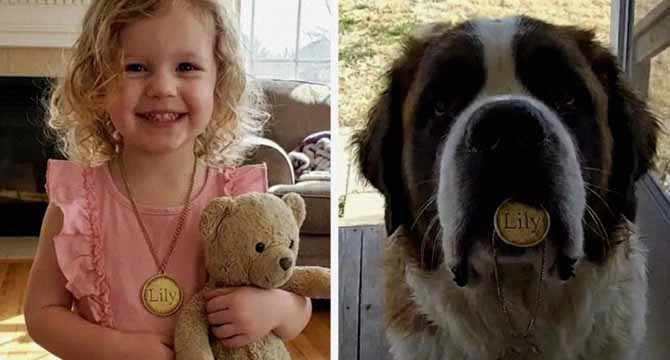
I do not even know how to start this without shaking. But I have to. Because what happened, what I survived, is not something anyone could make up.
But I have to.
My name is Meredith. I’m 35 years old, and I was married to a man named Garrett.
To the outside world, he was the kind of guy who made people lean in. Tall, put-together, unnervingly charming, rich, and powerful enough to make people overlook the small stuff.
While he smiled in public, behind closed doors, he was all control and silence, slowly erasing you in private.
Not the kind that yells or throws things, but the type that watches you like you’re a suspect in your own home. The kind that smiles while telling you what you’re allowed to wear.
My name is Meredith.
We had a daughter, Lily.
She was everything to me. My little girl was bright, fearless, stubborn, full of laughter, independence, and curiosity. The kind of child who would climb onto the kitchen counter just to get a better look at the rain through the window.
She was three years old when the world I knew turned to dust.
Before Lily was born, my grandmother gave me a delicate pendant, a small gold family heirloom engraved with our family initials.
We had a daughter, Lily.
She told me, “This is for the women in our line. It carries more than gold, Meredith. It carries us.”
I added Lily’s name to it after she was born. Garrett, oddly enough, encouraged it. Said it was sweet.
It became our tradition, our quiet bond, and in my darkest moments, I held onto that pendant as if it were oxygen.
I believed that no matter what happened, the pendant would always bind us together.
Said it was sweet.
But Garrett and I didn’t last long after Lily arrived.
Parenthood didn’t mellow him. If anything, it made him more obsessive, and life became unbearable. He wanted cameras in Lily’s nursery, strict routines, and background checks on everyone she came near.
I thought it was fatherly concern until I realized he was tracking me through her baby monitor.
What I once mistook for passion turned into control.
Parenthood didn’t mellow him.
I couldn’t leave the house alone or make decisions without him.
I tried to leave the marriage quietly by filing for divorce, but quiet isn’t something Garrett allows.
So I fought in court. And I won.
I got full custody. I moved out of our home and into a small but warm house nearby with Lily.
For the first time in years, I could breathe. I could sing in the kitchen. I could sleep in pajamas he had not picked out.
I felt safe.
And I won.
But Garrett didn’t let go.
He called often, mostly late at night. At first, it was under the guise of safety checks for Lily.
He said things like, “I just need to know what time she eats now. Her gut is sensitive.” Or, “I’m worried about the park near your house. There are a lot of weirdos.” Once or twice, he came over with his dog, claiming he just wanted to make sure we were okay.
I ignored most of it until one weekend, he called, sounding hollow.
But Garrett didn’t let go.
“Please, Meredith,” he said. “Just the weekend, just two days. I miss her so much. I want to take her somewhere special. Just her and me.”
Something in his voice cracked. It was a vulnerability I had not heard of ever since Lily’s birth. Against my gut, against everything I’d learned, I said yes.
She never came back.
She never came back.
He called me days later, not frantic or regretful. He sounded as if he had just stepped out of the shower.
He was calm and crisp.
“Meredith, I think you shouldn’t see her.”
My knees buckled. “What?”
“There was an accident,” he said. “I don’t think it’s healthy for you to see her this way. The funeral will be closed-casket.”
I screamed. I couldn’t breathe. I collapsed. The panic was so violent that I blacked out.
“What?”
When I came to, Garrett was there with his loyal dog.
He was holding my shoulders, repeating, “You cannot see her. It will destroy you. You’re not well enough for the funeral.”
The grief swallowed me whole.
There was no room for questioning, just the blur of arrangements and the impossible weight of absence. The house was quiet in a way I couldn’t bear.
Lily’s shoes still lay by the door. Crayon marks on the wall. Her favorite stuffed fox was lying sideways on her tiny bed.
The grief swallowed me whole.
I did not get to say goodbye, and I never saw Lily again.
I begged Garrett for just one thing. I said, “Please put the pendant in her coffin. It belongs with her.”
“I promise,” he said.
Weeks passed. I barely left the house. Grief curled around my spine like a parasite. People came and went, leaving behind casserole dishes and nervous hugs. I stopped answering calls.
Then, one gray morning, I heard a low, steady scratching at my door.
Weeks passed.
I opened it.
And there he was — Cooper, Garrett’s Saint Bernard. The dog was big, solemn-eyed, and carrying something in his mouth. He dropped it at my feet and looked up at me.
It was Lily’s pendant.
I stumbled backward. My breath caught in my throat. “Cooper? What… what is this? How did you get this?”
He nosed the pendant gently toward me, then turned and started walking. Slowly. Deliberately. Pausing every few steps to make sure I followed.
It felt insane, but I followed him.
I opened it.
We walked for what felt like miles.
Through back roads, overgrown alleys, downside streets I didn’t even know existed. My legs ached, my lungs burned, but I didn’t stop.
Eventually, we arrived in front of a house. My jaw dropped.
It was the old house I’d shared with Garrett after we got married. The one Lily grew up in, and the one he had told the court he sold after the divorce. The windows were blacked out.
But the yard was strangely not overgrown.
My jaw dropped.
I could hear something inside. Movement.
Cooper barked once. Sharp and urgent.
I crept toward the window. I cupped my hands against the glass, peering in through a narrow slit in the blackout curtains.
My heart stopped.
Lily. She was standing on a chair, facing the window, her tiny palms pressed against the glass. Her hair was longer, messier. But it was her. She was alive.
My heart stopped.
When she saw me, she smiled. Not a confused smile. A happy one. Then she waved.
“Oh my God,” I muttered to myself.
I staggered back, grabbing the brick wall to keep from collapsing.
She was alive.
Garrett had lied.
He had faked her death, buried an empty coffin, or maybe something worse, and kept her hidden in the house he claimed to have sold. I shook as the truth sank in. He had stolen her from me, twisted our pain into his sick little game.
She was alive.
I pulled out my phone, hands trembling, and called the police.
They came faster than I expected. I kept my distance until I saw them surround the house. One officer approached me gently.
“We’ve secured the child. She’s okay. Do you know a woman named Connie?”
“Who?”
“She says she’s the nanny. Claimed she was hired to care for the girl while the father was away on business.”
“Who?”
I didn’t understand. But I needed to see Lily. I needed to hold her.
When they brought her out, wrapped in a soft blanket, her cheeks rosy, her eyes wide with confusion and joy, I dropped to my knees.
“Mommy!” she screamed, running to me.
I sobbed into her hair. She still smelled of vanilla cookies.
I held Lily so tightly that one of the officers gently said, “Ma’am, she’s safe now,” and I realized my arms were shaking. Lily pulled back just enough to look at my face, her small hands pressing against my cheeks like she used to do when she wanted my full attention.
I didn’t understand.
“Mommy,” she said again, slower this time, like she was checking to see if I was real. “You came back.”
My heart stuttered. “I never left you, baby. I promise. I never left.”
She frowned, confused, then leaned in and whispered, “Daddy said you died because you were sick, and I would live with him now.”
That was when the anger truly hit me. Not sharp, not explosive, but deep and boiling, the kind that makes your vision narrow and your jaw lock. Garrett had taken not only my child, but he had also lied to her about me.
“You came back.”
An officer wrapped a blanket more securely around Lily and led us a few steps away from the house.
I kept my arms around her, my hand pressed protectively against her back.
That was when I noticed a woman standing on the porch, her hands clenched together so tightly that her knuckles were white. She looked exhausted, her hair pulled into a low ponytail, her face pale with shock.
“That’s Connie,” one of the officers said quietly. “She’s the nanny.”
“She’s the nanny.”
Connie looked at Lily, then at me, her eyes filling with tears. “You’re her mother,” she said, more a statement than a question.
I nodded, unable to speak yet.
“I swear to you,” Connie said quickly, her voice trembling. “I had no idea. He told me you were gone. He said you had passed away after a long illness. He said Lily didn’t remember you well enough for it to matter.”
Lily shifted in my arms and looked at Connie. “You said Mommy was a star,” she said softly.
I nodded, unable to speak yet.
Connie covered her mouth. “I was told to say that,” she whispered. “I thought it was kinder than the truth he gave me.”
I stared at her, searching for deception, but all I saw was horror and guilt. “How long?” I asked.
“He hired me right after your alleged death. He said Lily needed structure and privacy. The windows were blacked out because he claimed paparazzi were a concern, given how well-known he was.”
Of course, he did.
Of course, he did.
One of the officers interrupted, his tone firm. “Mr. Garrett is now in custody. He was apprehended at the airport on his way back. We’re going to need statements from both of you.”
The hours that followed blurred together. The police took statements, asked questions, and filled in paperwork.
A social worker knelt in front of Lily and asked gentle questions while I sat beside her, my hand never leaving hers. Cooper sat at my feet the entire time, his massive body pressed protectively against my leg.
The hours that followed blurred together.
At one point, an officer held up the pendant in an evidence bag. “Is this how you found her?”
I nodded. “He promised it would be buried with her. He lied.”
The officer shook his head. “Dogs know things people do not.”
Later that night, after Lily was cleared to leave with me, Connie approached me again. “I’ll testify,” she said firmly. “I’ll tell them everything. I can’t believe I helped him do this.”
“Is this how you found her?”
I studied Connie for a long moment, then nodded. “Thank you for taking care of her. Even under false pretenses.”
Tears slid down her cheeks. “She deserves better than all of this.”
So did I.
We went home just before midnight. Lily fell asleep in the back seat, her hand still clutching my sleeve. When we walked through the front door, she stirred and smiled faintly.
“Home,” she murmured.
“Yes,” I said, my throat tight. “We’re home.”
So did I.
In the days that followed, the truth unraveled quickly.
Garrett was charged with kidnapping, child endangerment, psychological abuse, fraud, and obstruction of justice. The fake death certificate. The closed-casket funeral. The manipulation of the court. It all came crashing down.
He never looked at me during the hearings. Not once.
The fake death certificate.
Lily started therapy. So did I.
Some nights she woke up crying, confused about what was real and what was a story she’d been told. I held her through every nightmare.
One evening, weeks later, she sat cross-legged on the living room floor, Cooper beside her, gently stroking his ears. She looked up at me and said, “Cooper brought you my necklace.”
“I know,” I said. “He’s very brave.”
She smiled and leaned against him. “He knew I needed you.”
“He’s very brave.”
I picked up the pendant from the table and fastened it around her neck. “This always leads us back to each other,” I said.
She touched it reverently. “Like magic.”
“Like love,” I corrected.
Cooper stayed with us. There was never any question.
Sometimes in quiet moments, I still feel the echo of that rage. But it no longer controls me. What controls me now is Lily’s laughter in the kitchen, Cooper’s steady presence, and the knowledge that truth has a way of surfacing, no matter how deeply it’s buried.
“Like magic.”
One night, as I tucked Lily into bed, she looked at me seriously and said, “Mommy, you didn’t really leave, did you?”
I brushed her hair back gently. “No. I was always coming back to you.”
She nodded, satisfied, and whispered, “I love you.”
“I love you more than anything,” I said.
As I turned off the light, Cooper settled beside her bed, watchful and calm. And for the first time in a long time, I slept without fear.
I brushed her hair back gently.